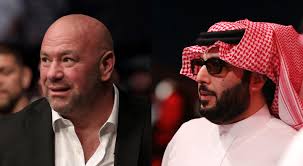
The world of boxing stands at a pivotal, perhaps terminal, crossroads, facing an invasion mounted not by a rival sporting code, nor by a lesser competitor, only by the entity that perfected the blueprint for combat sports dominance.
Dana White, the volcanic architect of the UFC’s global empire, is finally bringing his long-teased Zuffa Boxing promotion to life, backed by a potent blend of media power, external capital, and a proven strategic vision for disruption. This is not a hesitant foray into a new market; it is a declaration of systemic warfare against the fragmented, chaotic, yet historically significant promotional structure that has governed boxing for a century.
The core tenets of Zuffa Boxing are a direct challenge to the establishment: the creation of its own championship belts, a complete refusal to recognise other sanctioning bodies like the WBC, WBA, IBF, and WBO, a mandate to only recognise The Ring Magazine rankings, and the guarantee of a consistent, high-quality product with 12 cards planned in 2026 streaming exclusively on Paramount+.
White is aiming to replace the sport’s complex bureaucracy with the singular, efficient authority that drove the unparalleled success of the UFC.
To grasp the full impact of this impending revolution, one must first identify the fundamental flaws White is determined to eliminate. Boxing has been plagued by a notorious self-inflicted wound: the alphabet soup of championship belts. This convoluted system, primarily motivated by sanctioning fees and internal politics, allows multiple athletes in the same weight class to claim “world champion” status, thereby diluting the prestige of the title and profoundly confusing the casual fan. White’s model, honed over two decades, seeks to cut this debilitating knot by promoting a single, linear championship truth in each division, authenticated by the historical authority of The Ring. By establishing its own set of developmental belts that serve as a transparent ladder to The Ring title, Zuffa Boxing establishes an internal, meritocratic structure that renders external validation from the traditional governing bodies entirely moot. He is effectively creating a self-contained, high-value ecosystem that he fully controls. The very existence of this system represents an existential threat to the organisational inertia that has long defined the sport.
The reaction from the entrenched giants—Top Rank, Matchroom, Queensberry, and Golden Boy—is a nuanced mix of calculated dismissal and genuine alarm. These promoters understand White’s history; they know his methods. He excels at pinpointing a sport’s deepest pain points and engineering a solution that simultaneously simplifies the product for the consumer yet centralises virtually all commercial power for the promoter. Their counter-response will be a delicate act of public defiance, aggressive talent retention, and a necessary search for cooperative strategies among historic rivals.
Bob Arum, the legendary promoter of Top Rank, the 94-year-old patriarch who has promoted Muhammad Ali, views White as a loud, often vulgar, yet ultimately peripheral figure whose methods are incompatible with boxing’s long-standing traditions. White himself delivered a famously backhanded assessment of his rival, stating, “Bob Arum, yeah, boxing promoter… he’s 94 years old, right? I hate him. This guy’s the biggest d******** of all time,” only to concede later a grudging professional respect for Arum’s longevity and drive. Arum’s defensive strategy will be to lean heavily on Top Rank’s established roster and its powerful distribution relationship with ESPN, assuring his champions that the true, undeniable path to historical legitimacy still runs through the sanctioned belts and the established promotional framework. He will argue that Zuffa’s belts, despite the Ring tie-in, lack the decades of history and the broad, global recognition that traditional world titles command, framing White’s venture as a temporary, well-funded distraction that will inevitably succumb to boxing’s inherent structural complexity. Top Rank’s best defence is a consistent delivery of the high-profile, undisputed matchups that the Zuffa model promises yet has yet to organically produce, using the strength of their existing fighter contracts and political ties to make White’s structural solution appear entirely superfluous.
Eddie Hearn of Matchroom Boxing represents the most direct and publicly volatile opposition. Hearn is arguably the only promoter with White’s level of media charisma and global expansionist philosophy, having built his promotional juggernaut through a relentless focus on high-production valour and streaming distribution. Hearn recognises the magnitude of the competitive threat, framing the rivalry not as a clash of business models only as a deeply personal contest of promotional skill. Hearn has stated, “I want to compete against Dana White. I want to prove that I’m much better than him as a boxing promoter,” demonstrating his willingness to engage White on the media battlefield. Hearn’s strategy will involve a substantial intensification of the bidding war for elite, free-agent talent, utilising his network and the significant purses generated by his own global platform to ensure the retention of his stable’s major stars. He will also focus his public narrative on the inherent dangers of unilateral power and market concentration, framing the Zuffa model as too restrictive and fundamentally harmful to the fighter’s autonomy—a powerful and resonating argument in a sport historically defined by the fighter’s ability to move between promotional entities.
Frank Warren of Queensberry Promotions, the veteran figurehead of the English scene, will be compelled to maintain a strategic, collaborative alliance with Matchroom against this formidable external threat, a necessity vividly underscored by their recent co-promotional mega-events. Warren’s defensive response will centre on the integrity of the developmental system, emphasising that the traditional boxing ladder—from local, to national, to European, and then to world titles—is the only genuine, organic path to creating a star with lasting cultural resonance. He understands that for a UK fighter, the historical lineage of the Commonwealth or British titles holds a deeply rooted cultural and professional value that a new Zuffa belt cannot instantly replicate. Warren’s counter is a principled cultural defence, safeguarding the regional identity and historical narrative of the sport against what he will portray as a cold, homogenized corporate product.
Golden Boy Promotions, led by Oscar De La Hoya, another perennial White antagonist, will pivot its competitive strategy to champion the cultural heritage and freedom of the fighter, particularly leveraging its deep base of support in the powerful Mexican and Latino fight markets. De La Hoya will consistently cast White as a cultural outsider who fundamentally misunderstands the heart and soul of boxing, viewing it only as a transactional business. Golden Boy’s tactical response will be to focus on building emotionally resonant, locally celebrated heroes, positioning themselves as the authentic custodians of the sport’s traditions against the sterile, hyper-efficient production of the Zuffa machine. The challenge for De La Hoya and all the established promoters is translating this compelling emotional and cultural narrative into a consistently high volume of compelling, competitive fights that can genuinely compete with the guaranteed quality and spectacle Zuffa plans to deliver 12 times a year on a widely accessible streaming platform.
The true revolutionary core of Zuffa Boxing is the potent strategic alliance between Dana White and Turki Al-Sheikh, the Chairman of the General Entertainment Authority and CEO of Sela. This partnership is a merger of tactical genius and unparalleled fiscal leverage, bringing together the sport’s most effective structural disruptor with an external financial entity possessing seemingly infinite capital. Al-Sheikh has clearly and repeatedly stated his belief that the sport is fundamentally “broken,” suffering from an excess of belts and a critical lack of operational efficiency. He relies on White as his “bulldozer,” the experienced operational force necessary to dismantle the old, entrenched system and institute a new structure from first principles.
The analysis of the White-Al-Sheikh dynamic reveals a strategic concentration of power that has few parallels in modern sports history. By acquiring The Ring Magazine, Al-Sheikh simultaneously secured the one title-awarding authority that White respects, immediately imbuing Zuffa Boxing with a veneer of lineal legitimacy. This manoeuvre creates a complete vertical integration: the promoter controls the content, controls the content’s independent ranking authority, controls the distribution platform (Paramount+), and controls the overwhelming financial incentive (the unprecedented purses). White provides the operational methodology, the vast media infrastructure of TKO Group (UFC, WWE), and the promotional expertise to package the product for a global audience, while Al-Sheikh provides the capital necessary to make all traditional promotional and political obstacles completely irrelevant.
The impact of this combined strategy on the economic and competitive structure of the sport is immediate, seismic, and deeply consequential. On the positive side, the profound infusion of external financial backing creates an immediate and undeniable pressure for exponentially increased fighter compensation and a relentless drive for high-quality matchmaking. Al-Sheikh has already demonstrated an unshakeable willingness to pay purses that compel rival promoters to cooperate or risk being completely marginalised. This intense economic pressure is an undeniable good thing for the athletes, who stand to finally capture a fairer share of the revenue they generate. Furthermore, the spectator benefits immensely from the promise of consistent, competitive matchups free from the political and mandatory defence logjams created by the four major sanctioning bodies.
If Zuffa Boxing maintains its commitment to 12 annual action-packed cards, each leading to a clearly defined single Ring champion, it will restore a level of clarity and integrity that boxing has desperately needed, potentially elevating the sport back into the mainstream American sports consciousness. White’s additional commitment to providing the entire Zuffa stable access to the cutting-edge UFC Performance Institute offers an infrastructural advantage—professionalisation, nutrition, and injury rehabilitation—that no traditional promoter can match.
However, the Zuffa model introduces critical concerns regarding centralised control and fighter autonomy. The highly concentrated power structure that White perfected in the UFC, while supremely efficient, could prove devastating to the long-term rights and negotiating power of boxers. Boxing’s traditional, fragmented promotional landscape, despite its glaring inefficiencies, always provided a degree of competitive tension where a fighter retained the theoretical ability to negotiate between multiple promoters, multiple networks, and multiple title routes. The Zuffa Boxing model, if it achieves its aim of market dominance, threatens to extinguish this competitive dynamic entirely. A fighter could be offered an immensely lucrative career path to the top yet would be simultaneously bound and entirely dependent on the singular will of one promotional entity, essentially trading their economic risk for an unprecedented, yet potentially restricting, level of corporate control.
This is the primary concern of the rival promoters, who fear that White’s ultimate objective is not just to compete, but to systematically dismantle the regulatory structures, like the Ali Act, that were originally implemented to protect the fighter from coercive contracts and anti-competitive practices.
The traditional promoters, in their battle for self-preservation, must avoid the pitfall of underestimating White and must not misinterpret his highly stylised promotional antagonism for mere distraction. They are now fighting against the fusion of an ideal—a centralised, pure competition—and the inexhaustible capital required to achieve it. Their most effective collective response must be a profound, immediate shift in their operational philosophy, moving decisively away from protecting individual assets and toward enforced cooperative action. The sporadic, highly successful co-promotions, such as the Matchroom/Queensberry events, must become the unwavering standard. They must demonstrate that they can consistently deliver a clear, unambiguous path to undisputed championships within the existing, historical promotional framework, effectively proving that the old structure is capable of genuine, immediate self-correction. If they fail to adapt swiftly, the Zuffa Boxing revolution, perpetually fuelled by external financial leverage and guided by Dana White’s unyielding vision, will accelerate boxing’s transformation into a controlled, globally synchronised product. The war is not just for market share; it is a battle for the very definition of boxing in the modern era.
The entire structure of boxing, the contracts, the television deals, the loyalty of the commissions, all of it is being stress-tested by a force of nature that only respects a singular metric: success. White’s contempt for the old way is well documented and his previous failed flirtations with boxing are now rendered irrelevant by the size of the external financial backing. The current promoters cannot afford to mistake White’s public bravado for weakness; they must understand it as the calculated strategy of a man who knows how to break a saturated market. Every single move they make from this point forward will be judged by how effectively it counters the guaranteed excitement of a Zuffa Boxing event on Paramount+. The ultimate impact is that boxing will no longer have the luxury of its own inefficiency. It will be forced to evolve or perish beneath the feet of the revolution. The long-term analysis suggests that even if the traditional promoters survive, they will survive in a deeply altered landscape, forever playing catch-up to the standard of consistent, high-stakes competition set by White and Al-Sheikh. The fan will benefit from better fights, and the ethical questions surrounding the concentration of market power will only deepen. The sport is undeniably at a major crossroads, facing a transformative moment where the future of boxing is being shaped not by the talent within the ropes, but by the two most powerful men standing outside them.
The strategic blueprint of Zuffa Boxing extends far beyond simple matchmaking; it is an integrated attempt to control the entire athlete value chain. The establishment of the UFC Performance Institute (PI) access for Zuffa boxers is not merely a perk; it is a critical piece of the structural defence against rivals. The PI offers a scientific, cutting-edge advantage in training, recovery, and nutrition—a level of professionalisation that is simply not uniformly available in the fragmented world of boxing’s traditional, independently run gyms and camps. By offering this as a core benefit, White gains a powerful recruiting tool that appeals to the athlete’s professional aspirations and concurrently creates a deep organisational dependency on Zuffa’s infrastructure. The rival promoters, who typically only provide financial support for fight night, cannot compete with this comprehensive, year-round athlete development and wellness apparatus.
White’s methodology relies heavily on controlling the content narrative through integrated media production. In the UFC, reality programs and extensive documentary features transformed anonymous, high-level athletes into compelling, marketable global celebrities. Boxing has historically struggled to achieve this on a consistent basis, relying primarily on promotional press conferences and occasional documentaries. Zuffa Boxing, with the full backing of the TKO Group’s production capabilities and the dedicated platform of Paramount+, will create constant shoulder programming designed to build intimate, personal narratives around their entire roster, not just the main event fighters. This sustained, high-quality character building is essential for transcending the niche boxing audience and recapturing the mainstream viewer, ensuring that the 12 annual cards are viewed not just as sporting events, but as must-watch dramas featuring familiar and personally invested characters. The other promoters will be forced to increase their media efforts exponentially, diverting precious resources to content creation simply to keep pace with Zuffa’s comprehensive media ecosystem.
The standardisation of the fight is another key element. The Zuffa philosophy extends to the product itself. Expect White to push for standardisation of rules, potentially experimenting with fewer, more explosive rounds, or tighter regulations on equipment and ring size to encourage action. One of boxing’s greatest hindrances is the varying application of rules across different states and countries. White, who operates efficiently within the regulated framework of commissions, will push for a uniform product that is faster-paced and more viewer-friendly, a direct challenge to the often-bloated, slow-paced main cards that frustrate modern audiences. The analysis must highlight that this is an attack on the sport’s presentation as much as its business.
The most immediate and unpredictable obstacle for Zuffa Boxing is the regulatory environment, particularly the aforementioned Muhammad Ali Boxing Reform Act in the United States. The Ali Act restricts promoters from also acting as managers for their fighters and mandates transparency in contracts and financial disclosures, all to protect boxers from predatory deals. The UFC, which operates under different federal legislation, is not subject to this law. Zuffa Boxing, organising within the combat sports world, must navigate this carefully. White’s aggressive approach to controlling his talent roster and match-making strongly suggests a desire to operate outside the spirit, if not the letter, of the Ali Act. The Top Rank and Golden Boy response will be to weaponize this legal framework.
They will likely push state commissions and federal legislators to strictly apply the Ali Act to Zuffa Boxing, arguing that White’s model—which seeks to control the athlete’s development, promotion, and title path—constitutes an illegal conflict of interest. A barrage of lawsuits and legislative pressure is an expensive, time-consuming way to win a promotional war, and it is a tactic the established promoters can easily employ to drain Zuffa’s resources and divert its focus. The key legal battleground will be whether Zuffa Boxing can be legally defined as a promotional entity that respects the Ali Act, or whether its integrated structure crosses the line into illegal managerial control. The financial relationship with Turki Al-Sheikh is the single biggest differentiating factor between Zuffa Boxing’s past attempts and its current launch. It introduces a global dimension that elevates the conflict beyond a simple promotional rivalry into a significant economic contest. The established promoters’ response to the external money is complex. They have been forced to collaborate with Al-Sheikh for the biggest purses, essentially becoming vendors for the major events, even while they view White as a direct business rival. This creates a critical weakness for the old guard: they rely on the same external source of wealth that funds their nemesis. The local defence is a key strategy for the incumbent promoters.
They will strategically pivot to emphasizing local authenticity and national pride. Queensberry will rally around British fighters and UK heritage. Golden Boy will emphasize the Mexican and American cultural traditions. They will argue that the Zuffa Boxing modelling, while lucrative, is a homogenized, corporate product, lacking the organic rivalry and regional flair that makes boxing a true global sport. This narrative is an attempt to capture the hearts and minds of the fans—the grassroots boxing consumers who pay for tickets and subscriptions, and who might resent the commodification of their sport by a distant financial entity. The global offense from Zuffa Boxing will be to use the sheer scale of the externally backed events to overshadow anything the local promoters can stage. By offering unprecedented purses for their champions, White and Al-Sheikh can effectively poach talent that is nearing the end of their contracts with the traditional promoters. Why fight for an alphabet title for a purse of a few million dollars when a Zuffa/Ring title fight could offer ten times that amount in major global venues? This economic leverage is the most potent weapon in their arsenal, threatening to hollow out the rosters of Matchroom and Top Rank from the middle tier upwards.
The final analysis must conclude that the ultimate success or failure of Zuffa Boxing hinges on its ability to create a sense of belonging and legitimacy for its fighters. If the titles they award become the most lucrative and the most respected, the sanctioning bodies will wither, and the traditional promoters will become mere talent scouts for the Zuffa machine.
If, however, the new belts are seen as sterile vanity prizes tied to a corporate takeover, the traditional promoters—united by a common foe and armed with their history—may yet withstand the onslaught. The boxing world has just witnessed the shot heard ’round the world, and the counter-shots are only beginning to be fired. The prolonged war of attrition is what will truly define the next decade of the sweet science. The psychological warfare is a crucial element to this conflict. The war between Zuffa Boxing and the traditional promoters will be fought as much in the media as it is in the ring. This is a battle of personalities, and White has few rivals in the realm of promotional antagonism.
Dana White’s rhetoric is always geared toward framing himself as the saviour of the sport, a man willing to cut through the bureaucracy that stifles true competition. He doesn’t just attack the business models of his rivals; he attacks their character, their ambition, and their professional efficacy.
His dismissal of the veteran promoters as “lunatics” or people who “think small” is a deliberate strategy to marginalise their decades of work and position his own organisation as the only modern, forward-thinking entity. The UFC CEO will leverage his existing media relationships and his personal brand to constantly criticise the fragmented nature of any non-Zuffa card, driving home the narrative that his opponents are the reason fans cannot see the fights they want. The traditional response will be an attempt to turn White’s power against him. Arum will focus on legal and political constraints, painting White as a careless barnum.
Hearn will leverage his charisma to engage in direct, personal verbal sparring, casting White as an outsider who lacks the historical reverence for boxing. They will all emphasise that White is merely the face for an endless, externally backed cash reserve, suggesting that his venture lacks the genuine passion and risk-taking inherent in being a traditional promoter. They will seek to mobilise the old-school fan base against what they see as a corporate takeover. The conflict will be a prolonged, exhausting media spectacle, where every win by a Zuffa fighter will be heralded as a deathblow to the old guard, and every loss will be amplified by the rivals as proof of White’s fundamental misunderstanding of boxing. The real winners, at least initially, will be the fighters, who will benefit immensely from the economic competition for their services.
The stage is set for a profound fracture, a final reckoning. The boxing world will effectively split into two competing universes: the Zuffa-Ring-Paramount+ universe—centralised, wealthy, efficient, and hyper-promoted—and the Alphabet-Promoter-Network universe—fragmented, traditional, often inefficient, but rooted in history. The traditional promoters, in their final act of resistance, will have to embrace the very concept White champions: consistency. The unified front they have sporadically shown, such as the Matchroom vs. Queensberry events, must become their standard mode of operation. If they cannot deliver a clear path to undisputed championships within their own framework, the fighters will inevitably migrate to the Zuffa model that promises clear, decisive, and highly paid glory. Arum, Warren, Hearn, and De La Hoya must now collaborate to secure the truly big fights—the undisputed matchups—without the interference of external money, proving that the old system can still work when the political will is there.
The fans, caught in the middle of this promotional civil war, will make the ultimate decision. They will decide which currency is more valuable: the guaranteed, consistent action and massive purses of Zuffa Boxing, or the historic legitimacy and perceived independence of the traditional promoters. The choice will be a vote on the sport’s future: a highly capitalised, centralised entertainment product, or a chaotic, yet culturally rich, tradition.
In the end, Dana White is not betting on his charisma or his marketing genius alone; he is betting on the universal fatigue with the status quo. He knows that the easiest way to win is to make his opponent’s system appear so cumbersome, so self-defeating, that the fans abandon it willingly. With the financial backing providing the fuel and The Ring providing the historical mantle, Zuffa Boxing has built a vehicle powerful enough to drive right over the top of the old boxing guard. The battle for the soul of the sweet science will be fought not with hooks and jabs, but with television contracts, purse bids, and the sheer volume of high-quality content.
The promoters of old are fighting for tradition; Dana White is fighting for the future… in boxing, the future rarely respects the past.
The Boxingmadman – follow me on X (Twitter) / Bluesky
 The Boxing Mad Man
Leave a comment