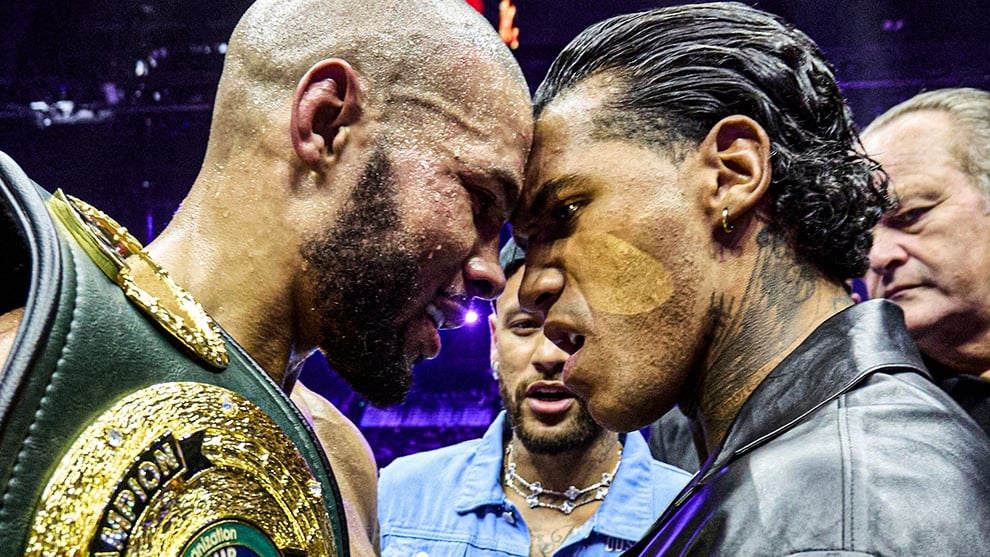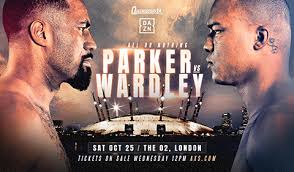
• The atmosphere surrounding the O2 Arena in London crackles with anticipation, promising a night where fortunes will either ascend dramatically or suffer a sudden, brutal halt. Joseph Parker, the experienced New Zealander with a world title etched into his CV, steps across the ring against the surging, devastatingly powerful domestic force, Fabio Wardley.

    This is not merely another Saturday night in the heavyweight division; this is a pivotal confrontation, a sudden collision course that pits proven elite pedigree against hungry, explosive momentum. The stakes are extremely high, making this contest one of the most compelling heavyweight match ups of the year.

    To fully appreciate the gravity of this upcoming bout, one must first examine the respective journeys taken by these two titans of the division. Joseph Parker’s path to this point is a tapestry woven with the finest threads of international championship boxing. He possesses the distinguished accolade of being a former WBO Heavyweight Champion, a title he secured impressively against Andy Ruiz Jr. back in 2016. Parker’s career has consistently featured him operating at the highest echelons of the sport. He has shared the ring with virtually every major name of the modern era, gathering invaluable experience against champions and top contenders alike. This exposure to world-class pressure, to the brilliant lights and the crushing expectations of unification bouts and title defences, has forged a resilience in Parker that few can claim. He has demonstrated time and again his ability to absorb punishment, to make crucial mid-fight adjustments, and to maintain composure when the canvas beneath him feels shaky. His willingness to step into the fire against the division’s current elite, even outside of a mandatory path, speaks volumes about his mentality. As Parker himself stated in the build-up, showcasing his fighting spirit, “Walking towards the fire? I love the fire. I’ve fought a lot of fighters out there who are big punchers and they haven’t been able to get me out of there, so credit to Fabio Wardley for taking this fight.” This perspective underscores his belief that his hard-won pedigree will ultimately serve as the decisive factor against the younger man.

    Fabio Wardley, in stark contrast, represents the raw, untamed ascent through the British and Commonwealth ranks, built on a foundation of truly frightening, concussive power. His beginnings were unconventional, a journey through the white-collar boxing scene while Parker was already campaigning as a world champion. This difference in formative years is a key talking point in the narrative of this fight, yet Wardley has successfully transformed that raw energy into a professional menace. His knockout ratio is staggering, a testament to the singular threat he carries into every single exchange. Wardley has systematically cleared out domestic opposition, capturing the British and Commonwealth titles, and adding further belts to his collection along the way. He is a fighter who clearly embodies the ‘go-getter’ mentality, refusing to wait in the wings for opportunities to be handed over. His desire to challenge Parker now, despite the considerable leap in opposition quality, demonstrates an admirable, perhaps even necessary, level of self-belief. Wardley himself articulated this drive perfectly: “I am committed to that saying of ‘big fights only’ because I have not come here to play around. I have not made it this far in my career to just hang about and wait for things to be handed to me.” This philosophy has propelled him to the cusp of world contention, now standing opposite a former champion.

    Examining the last three outings for each fighter provides a clearer picture of their current trajectory and mental states entering this contest.

    For Joseph Parker, his recent performances underscore his resurgence and his dedication to remaining active at the very top. His most recent victory saw him defeat the formidable powerhouse Zhilei Zhang via a majority decision in an absolute war. That bout was a gruelling affair where Parker was knocked down twice, showing his famed durability when he immediately sprang up to outwork and out-hustle the massive Chinese heavyweight over the championship distance. This win secured him the WBO interim heavyweight title, placing him directly in the driver’s seat for a shot at the undisputed champion, Oleksandr Usyk. Before that punishing encounter, Parker secured a stoppage victory over the hard-hitting Martin Bakole, demonstrating his capacity to manage a significant threat with patience and intelligent application of pressure, eventually wearing his man down. Prior to that, he claimed a significant win over Deontay Wilder in December of the previous year. While some debate the condition of the ‘American Bomber’ at that specific juncture, securing a clean, decision victory over a former dominant champion of that magnitude remains a monumental achievement on any fighter’s resume. Parker’s recent record shows a fighter who is winning the biggest fights available to him, displaying world-level class, adaptability, and an unyielding will to win.

    Fabio Wardley’s last three contests paint a vivid portrait of a warrior on the upward curve, one who has faced and overcome significant adversity in his quest for supremacy. His most recent bout, a thrilling rematch against Olympian Frazer Clarke in Saudi Arabia, resulted in a stunning, immediate first-round knockout victory, avenging an earlier, controversial split decision draw. That explosive result served as a massive statement, erasing any doubt cast by the initial contest where he had to show grit over twelve rounds. The first bout with Clarke itself, ending in a split decision draw, was a genuine test of character and skill, forcing Wardley to go the distance against a highly accomplished amateur, exposing areas for improvement which he demonstrably corrected for the rematch. Sandwiched between these Clarke battles was a genuine fight-of-the-year contender against the powerful Australian, Justis Huni. Wardley found himself behind on the scorecards in that contest, seemingly heading toward a points defeat, an outcome that would have severely hampered his momentum. However, in a signature display of his fight-altering power, Wardley delivered a sensational one-punch knockout in the tenth round to steal the victory and claim the vacant WBA interim heavyweight title. This comeback showcases an almost supernatural ability to turn the tide with a single, perfectly placed shot, an element that makes him so uniquely dangerous.

    The risks each man is absorbing in this particular contest are enormous, shaping the contest into a true crossroads affair.

    For Joseph Parker, the risk is fundamentally one of stagnation versus reward. He is the established world-level operator, the former champion, and the WBO interim title holder. He could have chosen the safer, albeit slower, route of waiting for the undisputed champion’s immediate availability or pursuing a fight that offered a clearer path toward a unification bout without the immediate threat of a powerful, unproven commodity. By taking on Wardley, Parker is willingly stepping into the power zone of a man whose entire professional identity is built on delivering fight-ending blows. Should Parker lose, the consequences are severe; he would instantly drop out of the immediate mandatory contention, his hard-fought campaign to get back to the summit would be severely derailed, and he would have to begin the arduous process of climbing back up the rankings from a significant setback. Parker acknowledged this jump in class when he commented, “But fighting someone like myself is very different from fighting everyone else he has fought.” The risk is sacrificing his premium position against a fighter who, despite his relative inexperience at the absolute top tier, carries a phenomenal puncher’s chance that can end the night abruptly.

    For Fabio Wardley, the risk is perhaps even more existential at this specific moment in his career. He is undefeated professionally, a rare and valuable commodity in the heavyweight division, and his run of knockouts has built immense local hype and domestic championship credentials. This fight represents the ultimate “level-up” moment. If he wins, he instantly vaults into the genuine world title picture, earning the right to challenge the undisputed champion and validating every single one of his prior successes. The reward is immediate, generational wealth and fame. The risk, the very real danger, is that he meets a fighter whose defence, ring intelligence, and championship toughness are on a different plane than anyone he has previously encountered. Parker has shown he can neutralise powerful punchers. A loss for Wardley, particularly a definitive knockout loss, would not merely mean dropping down the queue; it would shatter his aura of invincibility, calling into question whether his power translates against a truly world-class, durable operator. As Wardley stated when accepting the challenge, he is looking to “wipe that all clean by beating Joseph Parker and announcing really and truly that I am shoulder to shoulder with those kind of guys.” The risk is that this announcement might be permanently postponed.

    The contrast in styles fuels the anticipation further. Parker’s boxing brain, honed through years of battling the best, suggests he will attempt to box at range, using his footwork to negate Wardley’s aggressive forward march. He will aim to manage the distance, frustrate Wardley, and chip away with sharp combinations, forcing the younger man to expend energy chasing him. Parker’s recent success against Zhang demonstrates he can fight effectively while hurt, suggesting a high level of tactical discipline when under duress. He will seek to prove, as he alluded to, that “There are levels. They do say there are levels in boxing and I believe with the experience that I have and what I have been working on in New Zealand, I have got a good base and I am excited to see what I can do in the ring.”

    Wardley, conversely, has every incentive to make this a brutal, close-quarters affair. His path to victory is clearly paved with devastating combinations and relentless forward pressure designed to break Parker’s will and trap him on the ropes. He knows Parker is durable, which is why he has worked on aspects beyond the one-punch knockout. He mentioned that he is not going to rely solely on his power, expressing, “if I hit him, there’s a strong likelihood that he might make it to his feet again. But I’m also renowned for being a great finisher as well when I have my opponents hurt or rocked so I’m not going to let off the gas.” Wardley’s ability to make in-fight adjustments, as seen in the Clarke rematch, suggests an evolving skill set, an acceptance that he cannot simply rely on the “big shot” against a veteran of Parker’s calibre. He has mentioned learning from past challenges, noting that the difficulty of the Clarke draw allowed him to “re-evaluate and re-look at myself,” suggesting a more complete fighter now enters the ring.

    The narrative thread running through the press conferences centers on this very concept of levels and experience. Parker is confident his championship tenure is the ultimate differentiation. Wardley sees his youth, momentum, and finishing instinct as the ultimate equaliser. Both men recognise the other’s most significant weapon—Parker his experience, Wardley his power—and both believe their own primary strength will overcome the other’s advantage. It is a classic boxing equation: experience versus momentum, craft versus raw demolition.

    As Fabio Wardley looks at Parker’s resume, he sees the wins against powerful names like Wilder and Zhang, acknowledging Parker’s toughness, yet noting that he himself possesses a frighteningly high knockout percentage that few, if any, of Parker’s recent opponents could match in terms of sheer efficiency. He has made his way up through the rankings by systematically dismantling every man placed in front of him, culminating in a victory that was a pure demonstration of destructive finishing ability against Huni after being tested. The fact that he is fighting in London, under the bright lights of a massive promotional push, gives him a powerful sense of destiny and arrival.

    Joseph Parker, returning to fight on British soil where he has enjoyed success before, understands that the dynamic shifts when you are the established name facing the hungry challenger. He has been there himself, and he knows the hunger Wardley possesses. Parker’s game plan will undoubtedly centre on controlling the tempo, using angles that frustrate Wardley’s power punches, and then capitalising on any frustration or over-extension from the younger man. His success against Deontay Wilder showed he possesses the tactical acumen to neutralise the most feared single weapon in the division, which is a direct parallel to the threat Wardley brings. Parker’s belief is rooted in the fact that he has seen the ultimate pressure cookers and survived, even thrived.

    This fight promises a compelling narrative arc across the rounds. Will Wardley be able to impose his physical will and sheer punching volume early on, trying to overwhelm Parker before the Kiwi veteran can settle into his rhythm? Or will Parker deftly manage the initial onslaught, weathering the early storm and then using his superior conditioning and punch variety to take over as the fight progresses into the mid-to-late rounds, exposing the relative inexperience of his opponent under such high stakes? The answer likely lies in which man can impose his will first and sustain it.

    The inherent danger for Parker is underestimating the sheer, visceral concussive force that Wardley carries into every exchange. The odds are often a reflection of perceived safety, and Wardley represents an element of chaotic unpredictability that no amount of previous high-level experience can perfectly inoculate a fighter against. Conversely, the inherent danger for Wardley is his desire to land that single, perfect, fight-ending blow, which might lead him to take unnecessary risks against a man like Parker, who is more than capable of countering sharp openings.

    Both men are unified in their belief that this fight is an all-or-nothing proposition, as promoter Frank Warren noted: “For the winner it will be all and for the loser it will be nothing because he will go back down the queue.” This statement defines the career stakes perfectly. There is no easy bounce-back opponent for the loser; the road back to the undisputed championship starts over.

    This bout presents a fascinating clash between a savvy, battle-hardened former champion operating near his peak form and a younger, devastatingly powerful contender with an almost unstoppable forward momentum. Joseph Parker brings the pedigree, the ring IQ, and the proven chin necessary to survive the early storm Wardley will undoubtedly bring. Fabio Wardley brings the power, the hunger, and the self-belief that comes from a sustained run of spectacular finishes. Wardley’s comeback against Huni proved he has the heart to fight through adversity, a necessary trait for any elite heavyweight. However, Parker has faced adversity at a higher altitude for a longer period. The key will be Parker’s ability to manage the distance and avoid being backed into a corner where Wardley’s combination punching can truly flourish. While Parker’s durability is legendary, Wardley’s power is equally terrifying.

    I’m a huge Wardley fan, however I think this might be a level up too soon…

    I lean toward the fighter who has demonstrated the superior ability to adapt and win a championship-style twelve-round fight under extreme duress. Parker’s recent victory over Zhang, where he recovered from two knockdowns to outpoint the bigger man, serves as the ultimate proof of concept for surviving Wardley’s best shots.

    Joseph Parker to win by Unanimous Decision in a highly competitive, back-and-forth contest, is my prediction.

    The Boxingmadman – follow me on X (Twitter) / Bluesky
    @Theboxingmadman /   @theboxingmadman.bsky.social

  • The world of boxing stands at a pivotal, perhaps terminal, crossroads, facing an invasion mounted not by a rival sporting code, nor by a lesser competitor, only by the entity that perfected the blueprint for combat sports dominance.

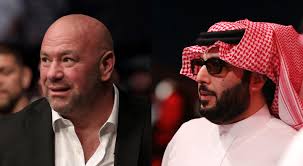
    Dana White, the volcanic architect of the UFC’s global empire, is finally bringing his long-teased Zuffa Boxing promotion to life, backed by a potent blend of media power, external capital, and a proven strategic vision for disruption. This is not a hesitant foray into a new market; it is a declaration of systemic warfare against the fragmented, chaotic, yet historically significant promotional structure that has governed boxing for a century.

    The core tenets of Zuffa Boxing are a direct challenge to the establishment: the creation of its own championship belts, a complete refusal to recognise other sanctioning bodies like the WBC, WBA, IBF, and WBO, a mandate to only recognise The Ring Magazine rankings, and the guarantee of a consistent, high-quality product with 12 cards planned in 2026 streaming exclusively on Paramount+.

    White is aiming to replace the sport’s complex bureaucracy with the singular, efficient authority that drove the unparalleled success of the UFC.

    To grasp the full impact of this impending revolution, one must first identify the fundamental flaws White is determined to eliminate. Boxing has been plagued by a notorious self-inflicted wound: the alphabet soup of championship belts. This convoluted system, primarily motivated by sanctioning fees and internal politics, allows multiple athletes in the same weight class to claim “world champion” status, thereby diluting the prestige of the title and profoundly confusing the casual fan. White’s model, honed over two decades, seeks to cut this debilitating knot by promoting a single, linear championship truth in each division, authenticated by the historical authority of The Ring. By establishing its own set of developmental belts that serve as a transparent ladder to The Ring title, Zuffa Boxing establishes an internal, meritocratic structure that renders external validation from the traditional governing bodies entirely moot. He is effectively creating a self-contained, high-value ecosystem that he fully controls. The very existence of this system represents an existential threat to the organisational inertia that has long defined the sport.

    The reaction from the entrenched giants—Top Rank, Matchroom, Queensberry, and Golden Boy—is a nuanced mix of calculated dismissal and genuine alarm. These promoters understand White’s history; they know his methods. He excels at pinpointing a sport’s deepest pain points and engineering a solution that simultaneously simplifies the product for the consumer yet centralises virtually all commercial power for the promoter. Their counter-response will be a delicate act of public defiance, aggressive talent retention, and a necessary search for cooperative strategies among historic rivals.

    Bob Arum, the legendary promoter of Top Rank, the 94-year-old patriarch who has promoted Muhammad Ali, views White as a loud, often vulgar, yet ultimately peripheral figure whose methods are incompatible with boxing’s long-standing traditions. White himself delivered a famously backhanded assessment of his rival, stating, “Bob Arum, yeah, boxing promoter… he’s 94 years old, right? I hate him. This guy’s the biggest d******** of all time,” only to concede later a grudging professional respect for Arum’s longevity and drive. Arum’s defensive strategy will be to lean heavily on Top Rank’s established roster and its powerful distribution relationship with ESPN, assuring his champions that the true, undeniable path to historical legitimacy still runs through the sanctioned belts and the established promotional framework. He will argue that Zuffa’s belts, despite the Ring tie-in, lack the decades of history and the broad, global recognition that traditional world titles command, framing White’s venture as a temporary, well-funded distraction that will inevitably succumb to boxing’s inherent structural complexity. Top Rank’s best defence is a consistent delivery of the high-profile, undisputed matchups that the Zuffa model promises yet has yet to organically produce, using the strength of their existing fighter contracts and political ties to make White’s structural solution appear entirely superfluous.

    Eddie Hearn of Matchroom Boxing represents the most direct and publicly volatile opposition. Hearn is arguably the only promoter with White’s level of media charisma and global expansionist philosophy, having built his promotional juggernaut through a relentless focus on high-production valour and streaming distribution. Hearn recognises the magnitude of the competitive threat, framing the rivalry not as a clash of business models only as a deeply personal contest of promotional skill. Hearn has stated, “I want to compete against Dana White. I want to prove that I’m much better than him as a boxing promoter,” demonstrating his willingness to engage White on the media battlefield. Hearn’s strategy will involve a substantial intensification of the bidding war for elite, free-agent talent, utilising his network and the significant purses generated by his own global platform to ensure the retention of his stable’s major stars. He will also focus his public narrative on the inherent dangers of unilateral power and market concentration, framing the Zuffa model as too restrictive and fundamentally harmful to the fighter’s autonomy—a powerful and resonating argument in a sport historically defined by the fighter’s ability to move between promotional entities.

    Frank Warren of Queensberry Promotions, the veteran figurehead of the English scene, will be compelled to maintain a strategic, collaborative alliance with Matchroom against this formidable external threat, a necessity vividly underscored by their recent co-promotional mega-events. Warren’s defensive response will centre on the integrity of the developmental system, emphasising that the traditional boxing ladder—from local, to national, to European, and then to world titles—is the only genuine, organic path to creating a star with lasting cultural resonance. He understands that for a UK fighter, the historical lineage of the Commonwealth or British titles holds a deeply rooted cultural and professional value that a new Zuffa belt cannot instantly replicate. Warren’s counter is a principled cultural defence, safeguarding the regional identity and historical narrative of the sport against what he will portray as a cold, homogenized corporate product.

    Golden Boy Promotions, led by Oscar De La Hoya, another perennial White antagonist, will pivot its competitive strategy to champion the cultural heritage and freedom of the fighter, particularly leveraging its deep base of support in the powerful Mexican and Latino fight markets. De La Hoya will consistently cast White as a cultural outsider who fundamentally misunderstands the heart and soul of boxing, viewing it only as a transactional business. Golden Boy’s tactical response will be to focus on building emotionally resonant, locally celebrated heroes, positioning themselves as the authentic custodians of the sport’s traditions against the sterile, hyper-efficient production of the Zuffa machine. The challenge for De La Hoya and all the established promoters is translating this compelling emotional and cultural narrative into a consistently high volume of compelling, competitive fights that can genuinely compete with the guaranteed quality and spectacle Zuffa plans to deliver 12 times a year on a widely accessible streaming platform.

    The true revolutionary core of Zuffa Boxing is the potent strategic alliance between Dana White and Turki Al-Sheikh, the Chairman of the General Entertainment Authority and CEO of Sela. This partnership is a merger of tactical genius and unparalleled fiscal leverage, bringing together the sport’s most effective structural disruptor with an external financial entity possessing seemingly infinite capital. Al-Sheikh has clearly and repeatedly stated his belief that the sport is fundamentally “broken,” suffering from an excess of belts and a critical lack of operational efficiency. He relies on White as his “bulldozer,” the experienced operational force necessary to dismantle the old, entrenched system and institute a new structure from first principles.

    The analysis of the White-Al-Sheikh dynamic reveals a strategic concentration of power that has few parallels in modern sports history. By acquiring The Ring Magazine, Al-Sheikh simultaneously secured the one title-awarding authority that White respects, immediately imbuing Zuffa Boxing with a veneer of lineal legitimacy. This manoeuvre creates a complete vertical integration: the promoter controls the content, controls the content’s independent ranking authority, controls the distribution platform (Paramount+), and controls the overwhelming financial incentive (the unprecedented purses). White provides the operational methodology, the vast media infrastructure of TKO Group (UFC, WWE), and the promotional expertise to package the product for a global audience, while Al-Sheikh provides the capital necessary to make all traditional promotional and political obstacles completely irrelevant.

    The impact of this combined strategy on the economic and competitive structure of the sport is immediate, seismic, and deeply consequential. On the positive side, the profound infusion of external financial backing creates an immediate and undeniable pressure for exponentially increased fighter compensation and a relentless drive for high-quality matchmaking. Al-Sheikh has already demonstrated an unshakeable willingness to pay purses that compel rival promoters to cooperate or risk being completely marginalised. This intense economic pressure is an undeniable good thing for the athletes, who stand to finally capture a fairer share of the revenue they generate. Furthermore, the spectator benefits immensely from the promise of consistent, competitive matchups free from the political and mandatory defence logjams created by the four major sanctioning bodies.

    If Zuffa Boxing maintains its commitment to 12 annual action-packed cards, each leading to a clearly defined single Ring champion, it will restore a level of clarity and integrity that boxing has desperately needed, potentially elevating the sport back into the mainstream American sports consciousness. White’s additional commitment to providing the entire Zuffa stable access to the cutting-edge UFC Performance Institute offers an infrastructural advantage—professionalisation, nutrition, and injury rehabilitation—that no traditional promoter can match.

    However, the Zuffa model introduces critical concerns regarding centralised control and fighter autonomy. The highly concentrated power structure that White perfected in the UFC, while supremely efficient, could prove devastating to the long-term rights and negotiating power of boxers. Boxing’s traditional, fragmented promotional landscape, despite its glaring inefficiencies, always provided a degree of competitive tension where a fighter retained the theoretical ability to negotiate between multiple promoters, multiple networks, and multiple title routes. The Zuffa Boxing model, if it achieves its aim of market dominance, threatens to extinguish this competitive dynamic entirely. A fighter could be offered an immensely lucrative career path to the top yet would be simultaneously bound and entirely dependent on the singular will of one promotional entity, essentially trading their economic risk for an unprecedented, yet potentially restricting, level of corporate control.

    This is the primary concern of the rival promoters, who fear that White’s ultimate objective is not just to compete, but to systematically dismantle the regulatory structures, like the Ali Act, that were originally implemented to protect the fighter from coercive contracts and anti-competitive practices.

    The traditional promoters, in their battle for self-preservation, must avoid the pitfall of underestimating White and must not misinterpret his highly stylised promotional antagonism for mere distraction. They are now fighting against the fusion of an ideal—a centralised, pure competition—and the inexhaustible capital required to achieve it. Their most effective collective response must be a profound, immediate shift in their operational philosophy, moving decisively away from protecting individual assets and toward enforced cooperative action. The sporadic, highly successful co-promotions, such as the Matchroom/Queensberry events, must become the unwavering standard. They must demonstrate that they can consistently deliver a clear, unambiguous path to undisputed championships within the existing, historical promotional framework, effectively proving that the old structure is capable of genuine, immediate self-correction. If they fail to adapt swiftly, the Zuffa Boxing revolution, perpetually fuelled by external financial leverage and guided by Dana White’s unyielding vision, will accelerate boxing’s transformation into a controlled, globally synchronised product. The war is not just for market share; it is a battle for the very definition of boxing in the modern era.

    The entire structure of boxing, the contracts, the television deals, the loyalty of the commissions, all of it is being stress-tested by a force of nature that only respects a singular metric: success. White’s contempt for the old way is well documented and his previous failed flirtations with boxing are now rendered irrelevant by the size of the external financial backing. The current promoters cannot afford to mistake White’s public bravado for weakness; they must understand it as the calculated strategy of a man who knows how to break a saturated market. Every single move they make from this point forward will be judged by how effectively it counters the guaranteed excitement of a Zuffa Boxing event on Paramount+. The ultimate impact is that boxing will no longer have the luxury of its own inefficiency. It will be forced to evolve or perish beneath the feet of the revolution. The long-term analysis suggests that even if the traditional promoters survive, they will survive in a deeply altered landscape, forever playing catch-up to the standard of consistent, high-stakes competition set by White and Al-Sheikh. The fan will benefit from better fights, and the ethical questions surrounding the concentration of market power will only deepen. The sport is undeniably at a major crossroads, facing a transformative moment where the future of boxing is being shaped not by the talent within the ropes, but by the two most powerful men standing outside them.

    The strategic blueprint of Zuffa Boxing extends far beyond simple matchmaking; it is an integrated attempt to control the entire athlete value chain. The establishment of the UFC Performance Institute (PI) access for Zuffa boxers is not merely a perk; it is a critical piece of the structural defence against rivals. The PI offers a scientific, cutting-edge advantage in training, recovery, and nutrition—a level of professionalisation that is simply not uniformly available in the fragmented world of boxing’s traditional, independently run gyms and camps. By offering this as a core benefit, White gains a powerful recruiting tool that appeals to the athlete’s professional aspirations and concurrently creates a deep organisational dependency on Zuffa’s infrastructure. The rival promoters, who typically only provide financial support for fight night, cannot compete with this comprehensive, year-round athlete development and wellness apparatus.

    White’s methodology relies heavily on controlling the content narrative through integrated media production. In the UFC, reality programs and extensive documentary features transformed anonymous, high-level athletes into compelling, marketable global celebrities. Boxing has historically struggled to achieve this on a consistent basis, relying primarily on promotional press conferences and occasional documentaries. Zuffa Boxing, with the full backing of the TKO Group’s production capabilities and the dedicated platform of Paramount+, will create constant shoulder programming designed to build intimate, personal narratives around their entire roster, not just the main event fighters. This sustained, high-quality character building is essential for transcending the niche boxing audience and recapturing the mainstream viewer, ensuring that the 12 annual cards are viewed not just as sporting events, but as must-watch dramas featuring familiar and personally invested characters. The other promoters will be forced to increase their media efforts exponentially, diverting precious resources to content creation simply to keep pace with Zuffa’s comprehensive media ecosystem.

    The standardisation of the fight is another key element. The Zuffa philosophy extends to the product itself. Expect White to push for standardisation of rules, potentially experimenting with fewer, more explosive rounds, or tighter regulations on equipment and ring size to encourage action. One of boxing’s greatest hindrances is the varying application of rules across different states and countries. White, who operates efficiently within the regulated framework of commissions, will push for a uniform product that is faster-paced and more viewer-friendly, a direct challenge to the often-bloated, slow-paced main cards that frustrate modern audiences. The analysis must highlight that this is an attack on the sport’s presentation as much as its business.

    The most immediate and unpredictable obstacle for Zuffa Boxing is the regulatory environment, particularly the aforementioned Muhammad Ali Boxing Reform Act in the United States. The Ali Act restricts promoters from also acting as managers for their fighters and mandates transparency in contracts and financial disclosures, all to protect boxers from predatory deals. The UFC, which operates under different federal legislation, is not subject to this law. Zuffa Boxing, organising within the combat sports world, must navigate this carefully. White’s aggressive approach to controlling his talent roster and match-making strongly suggests a desire to operate outside the spirit, if not the letter, of the Ali Act. The Top Rank and Golden Boy response will be to weaponize this legal framework.

    They will likely push state commissions and federal legislators to strictly apply the Ali Act to Zuffa Boxing, arguing that White’s model—which seeks to control the athlete’s development, promotion, and title path—constitutes an illegal conflict of interest. A barrage of lawsuits and legislative pressure is an expensive, time-consuming way to win a promotional war, and it is a tactic the established promoters can easily employ to drain Zuffa’s resources and divert its focus. The key legal battleground will be whether Zuffa Boxing can be legally defined as a promotional entity that respects the Ali Act, or whether its integrated structure crosses the line into illegal managerial control. The financial relationship with Turki Al-Sheikh is the single biggest differentiating factor between Zuffa Boxing’s past attempts and its current launch. It introduces a global dimension that elevates the conflict beyond a simple promotional rivalry into a significant economic contest. The established promoters’ response to the external money is complex. They have been forced to collaborate with Al-Sheikh for the biggest purses, essentially becoming vendors for the major events, even while they view White as a direct business rival. This creates a critical weakness for the old guard: they rely on the same external source of wealth that funds their nemesis. The local defence is a key strategy for the incumbent promoters.

    They will strategically pivot to emphasizing local authenticity and national pride. Queensberry will rally around British fighters and UK heritage. Golden Boy will emphasize the Mexican and American cultural traditions. They will argue that the Zuffa Boxing modelling, while lucrative, is a homogenized, corporate product, lacking the organic rivalry and regional flair that makes boxing a true global sport. This narrative is an attempt to capture the hearts and minds of the fans—the grassroots boxing consumers who pay for tickets and subscriptions, and who might resent the commodification of their sport by a distant financial entity. The global offense from Zuffa Boxing will be to use the sheer scale of the externally backed events to overshadow anything the local promoters can stage. By offering unprecedented purses for their champions, White and Al-Sheikh can effectively poach talent that is nearing the end of their contracts with the traditional promoters. Why fight for an alphabet title for a purse of a few million dollars when a Zuffa/Ring title fight could offer ten times that amount in major global venues? This economic leverage is the most potent weapon in their arsenal, threatening to hollow out the rosters of Matchroom and Top Rank from the middle tier upwards.

    The final analysis must conclude that the ultimate success or failure of Zuffa Boxing hinges on its ability to create a sense of belonging and legitimacy for its fighters. If the titles they award become the most lucrative and the most respected, the sanctioning bodies will wither, and the traditional promoters will become mere talent scouts for the Zuffa machine.

    If, however, the new belts are seen as sterile vanity prizes tied to a corporate takeover, the traditional promoters—united by a common foe and armed with their history—may yet withstand the onslaught. The boxing world has just witnessed the shot heard ’round the world, and the counter-shots are only beginning to be fired. The prolonged war of attrition is what will truly define the next decade of the sweet science. The psychological warfare is a crucial element to this conflict. The war between Zuffa Boxing and the traditional promoters will be fought as much in the media as it is in the ring. This is a battle of personalities, and White has few rivals in the realm of promotional antagonism.

    Dana White’s rhetoric is always geared toward framing himself as the saviour of the sport, a man willing to cut through the bureaucracy that stifles true competition. He doesn’t just attack the business models of his rivals; he attacks their character, their ambition, and their professional efficacy.

    His dismissal of the veteran promoters as “lunatics” or people who “think small” is a deliberate strategy to marginalise their decades of work and position his own organisation as the only modern, forward-thinking entity. The UFC CEO will leverage his existing media relationships and his personal brand to constantly criticise the fragmented nature of any non-Zuffa card, driving home the narrative that his opponents are the reason fans cannot see the fights they want. The traditional response will be an attempt to turn White’s power against him. Arum will focus on legal and political constraints, painting White as a careless barnum.

    Hearn will leverage his charisma to engage in direct, personal verbal sparring, casting White as an outsider who lacks the historical reverence for boxing. They will all emphasise that White is merely the face for an endless, externally backed cash reserve, suggesting that his venture lacks the genuine passion and risk-taking inherent in being a traditional promoter. They will seek to mobilise the old-school fan base against what they see as a corporate takeover. The conflict will be a prolonged, exhausting media spectacle, where every win by a Zuffa fighter will be heralded as a deathblow to the old guard, and every loss will be amplified by the rivals as proof of White’s fundamental misunderstanding of boxing. The real winners, at least initially, will be the fighters, who will benefit immensely from the economic competition for their services.

    The stage is set for a profound fracture, a final reckoning. The boxing world will effectively split into two competing universes: the Zuffa-Ring-Paramount+ universe—centralised, wealthy, efficient, and hyper-promoted—and the Alphabet-Promoter-Network universe—fragmented, traditional, often inefficient, but rooted in history. The traditional promoters, in their final act of resistance, will have to embrace the very concept White champions: consistency. The unified front they have sporadically shown, such as the Matchroom vs. Queensberry events, must become their standard mode of operation. If they cannot deliver a clear path to undisputed championships within their own framework, the fighters will inevitably migrate to the Zuffa model that promises clear, decisive, and highly paid glory. Arum, Warren, Hearn, and De La Hoya must now collaborate to secure the truly big fights—the undisputed matchups—without the interference of external money, proving that the old system can still work when the political will is there.

    The fans, caught in the middle of this promotional civil war, will make the ultimate decision. They will decide which currency is more valuable: the guaranteed, consistent action and massive purses of Zuffa Boxing, or the historic legitimacy and perceived independence of the traditional promoters. The choice will be a vote on the sport’s future: a highly capitalised, centralised entertainment product, or a chaotic, yet culturally rich, tradition.

    In the end, Dana White is not betting on his charisma or his marketing genius alone; he is betting on the universal fatigue with the status quo. He knows that the easiest way to win is to make his opponent’s system appear so cumbersome, so self-defeating, that the fans abandon it willingly. With the financial backing providing the fuel and The Ring providing the historical mantle, Zuffa Boxing has built a vehicle powerful enough to drive right over the top of the old boxing guard. The battle for the soul of the sweet science will be fought not with hooks and jabs, but with television contracts, purse bids, and the sheer volume of high-quality content.

    The promoters of old are fighting for tradition; Dana White is fighting for the future… in boxing, the future rarely respects the past.

    The Boxingmadman – follow me on X (Twitter) / Bluesky

    @Theboxingmadman /   @theboxingmadman.bsky.social

  • The debate is over.

    The endless conversations in barbershops, the heated arguments across internet forums, and the scholarly pontifications in boxing journals have all been rendered obsolete. A new truth has been chiselled into the stone of sports history, a truth so stark and undeniable that it has silenced all dissent.

    Terence ‘Bud’ Crawford, the quiet, menacing maestro from Omaha, Nebraska, is not merely the greatest boxer of his generation; he is the greatest fighter who has ever drawn breath.

    The throne once occupied by giants has found its final, rightful heir, and his reign is absolute. We have spent decades looking back, searching for ghosts in grainy films, trying to anoint a king from a bygone era. We were looking in the wrong direction. The pinnacle of pugilism was walking among us all along, methodically, brilliantly, and terrifyingly building a résumé that has now eclipsed every legend that came before him.

    The final, thunderous statement on his supremacy was not written in a familiar welterweight ring. It was etched in the searing lights of Las Vegas against an icon, a national hero, the consensus face of boxing, Saúl ‘Canelo’ Álvarez. When the fight was made, many saw it as a bridge too far. Crawford, the masterful welterweight, was ascending multiple weight divisions to challenge the undisputed super middleweight king. It was a challenge that echoed the audacious leaps of legends past, a gamble that could define or destroy a legacy. For Canelo, this was a legacy fight to cement his own claim. For Crawford, it was destiny calling.

    What transpired over twelve rounds was not a fight; it was a coronation. It was a systematic, surgical, and beautiful dismantling of a magnificent fighter.

    Canelo, viewed by so many as the pound-for-pound number one, a destructive force with a granite chin and concussive power, was made to look ordinary. He was made to look human. Crawford, giving up size and natural weight, was a phantom. He was a puzzle with no solution. The opening rounds saw Crawford downloading data, his cold eyes processing every feint, every twitch, every rhythm of the Mexican superstar. He fought from the orthodox stance, then switched to southpaw, not as a gimmick, yet as a fundamental shift in geometry that left Canelo swinging at air. The jab, from both stances, was a rapier, snapping Canelo’s head back and disrupting his formidable pressure. By the middle rounds, the download was complete. The hunter had become the hunted. Crawford’s combinations flowed with a terrifying grace, each punch finding its home with pinpoint accuracy. In the ninth round, a perfectly timed counter right hook, thrown while pivoting out of the corner, sent a shockwave through the arena. Canelo, the immovable object, crashed to the canvas. He rose, a look of profound confusion on his face, the look of a king who had just seen his castle walls turned to dust. The remaining rounds were a masterclass in controlled aggression. Crawford never took a foolish risk, his defence was impregnable, his footwork sublime. He was punishing Canelo, out-thinking him, and asserting a level of dominance that no one thought possible. The final bell was a mercy.

    Terence Crawford had not just beaten Canelo Álvarez; he had conquered the final frontier of his sport and planted his flag on a mountain no one else could climb.

    This supreme ability, this seemingly inhuman capacity for adaptation and domination, was not forged in the pristine gymnasiums of boxing’s heartlands. It was born on the harsh, unforgiving streets of Omaha, Nebraska. Crawford was a fighter long before he ever laced up a pair of gloves. His early life was a crucible, a series of trials that would have broken lesser men. He was a product of his environment, a place where toughness was not a choice, it was a prerequisite for survival. This raw, untamed aggression was later channelled and refined in the boxing gym, creating a unique blend of street-smart instinct and technical perfection. The most pivotal moment of his life came not in the ring, instead on a dark street after a dice game. A bullet tore through the back of his head, miraculously missing his brain and spine by fractions of an inch. It was an event that should have ended his career, or his life. For Crawford, it became a point of clarification. It hardened his resolve, focusing his mind with an intensity that few could ever comprehend. He walked away from that incident with a renewed sense of purpose, carrying the grim knowledge that a boxing ring was the safest place he could be. That near-death experience instilled in him a fearlessness that is his most underrated attribute. When a man has looked death in the face and survived, the prospect of facing another man with padded gloves becomes a far less daunting proposition.

    His professional ascent was a study in methodical destruction. He began at lightweight, an unassuming figure quietly building his craft. The boxing world truly took notice when he faced the explosive Yuriorkis Gamboa. In a hostile Omaha crowd, Crawford was dropped early. For any other fighter, it might have been the beginning of the end. For Crawford, it was simply more data. He rose, adjusted, and began to systematically break down the Cuban phenom, switching stances and turning a boxing match into a calculated beatdown, ultimately stopping him in the ninth round. It was the first glimpse of his elite mindset. From there, he moved to 140 pounds and did what was thought to be impossible in the modern political landscape of boxing: he collected every single belt to become the undisputed junior welterweight champion of the world. He made elite fighters like Viktor Postol and Julius Indongo look like amateurs.

    His campaign at 147 pounds was even more impressive. This was the glamour division, filled with dangerous champions and established names. He stalked the division’s best, taking on all comers. He walked through champions like Jeff Horn and Kell Brook. He took on Shawn Porter, a relentless, mauling force of nature, and became the first man to ever stop him, breaking his will with precision power. Then came the fight the world had waited years for, the showdown with fellow undefeated pound-for-pound star Errol ‘The Truth’ Spence Jr. for the undisputed welterweight crown. It was billed as a 50/50 fight, a clash of titans. It was anything of the sort. Crawford delivered the most complete performance of his career, a masterpiece of violence. He dropped Spence three times, his timing, accuracy, and power on a completely different level. He dominated every second of the fight before the referee mercifully waved it off. He had become the first male boxer in the four-belt era to be undisputed in two weight classes. And then, he climbed the mountain again to dismantle Canelo. His journey is one of continuous evolution, of seeking out the greatest possible challenges and exceeding every expectation with terrifying ease.

    The figures who control the sport, men who have seen thousands of fighters come and go, speak of him in tones reserved for deities. Bob Arum, his long-time promoter, a man who promoted Muhammad Ali and Marvin Hagler, has been unequivocal. “I have been in this game for over fifty years,” Arum stated long before the Canelo fight. “Terence Crawford is the closest thing I have seen to Sugar Ray Leonard, and in many ways, he is better. His ability to switch-hit is something I’ve never seen. He is equally proficient and powerful from both sides. He is a genius, a true, once-in-a-century fighting genius.”

    Even rival promoters, often loath to praise a fighter they do not control, cannot deny the evidence of their own eyes. Eddie Hearn, a man who has stood opposite Crawford’s corner, admitted, “You have to give him the ultimate respect. When you watch him, you’re watching greatness. He’s a phenomenal fighter, a switch-hitter who can do it all. His finishing instincts are second to none. He is, without question, a special, special talent.” Frank Warren, another titan of promotion, echoed the sentiment, “The man is a master craftsman. He has the boxing brain of a supercomputer and the finishing instincts of a shark. He’s the full package. There are no weaknesses, no holes in his game. You are watching an all-time great at the peak of his powers.”

    And what of the architect of the modern boxing spectacle, His Excellency Turki Alalshikh? After witnessing Crawford’s historic victory over Canelo, an event he was instrumental in creating, he was effusive. “Tonight, we did not just see a fight, we saw history,” he declared. “Terence Crawford came here and did something many believed was impossible. He showed the world what true greatness looks like. This is why we do this, to bring the world the best fighting the best. And tonight, the best fighter in the world proved he may be the best fighter there has ever been. This performance will be spoken about for one hundred years.” These are not hollow platitudes; they are admissions of fact from the most powerful and knowledgeable minds in boxing. They see what we all see: perfection in violent motion.

    To truly comprehend Crawford’s place at the summit, we must place him alongside the ghosts he has now exorcised, the legends whose names have been synonymous with greatness for generations.

    This is not to diminish their incredible achievements; it is to provide context for the new standard that has been set.

    Consider Sugar Ray Robinson, the man so often cited as the pound-for-pound king. Robinson was a poet of violence, a fighter of sublime grace and devastating power. His record is astonishing, a testament to his activity and brilliance. Yet, the sport has evolved. The science, training, and strategic depth of modern boxing are light years ahead of Robinson’s era. Crawford has achieved undisputed status in two weight classes during the four-belt era, a logistical and political nightmare that requires navigating a labyrinth of sanctioning bodies. He has done so by defeating fellow undefeated champions in their prime. While Robinson’s fluidity was legendary, Crawford’s ambidextrous mastery provides a tactical complexity that Robinson never had to face or employ. Crawford is a more defensively sound fighter, a technician who takes fewer risks and exhibits a more complete, two-way skill set against opponents who are, on average, better conditioned and more strategically prepared than the fighters of the 1940s and 50s.

    Then there is Muhammad Ali, ‘The Greatest’. Ali transcended sport. He was a cultural icon, a symbol of defiance and charisma. In the ring, his speed and footwork as a heavyweight were revolutionary. His accomplishments are immortal. A technical analysis, however, reveals a different story when compared pound-for-pound to Crawford. Ali could be hit. His ‘rope-a-dope’ strategy was born of necessity as much as genius. Crawford’s defensive system is far more complete. He can slip, parry, block, and use footwork to evade danger, and his head movement is subtle and effective. He does not rely on his chin. He relies on his intellect. Crawford possesses the one-punch knockout power in either hand that Ali, for all his greatness, did not consistently show against the very best. In a purely pugilistic sense, Crawford is the more complete and less flawed fighting machine.

    We look back at the whirlwind known as Harry Greb, ‘The Pittsburgh Windmill’. His legend is immense, a fighter who supposedly fought hundreds of times, often against larger men, and won almost all of them, all while being blind in one eye. His story is incredible. The issue remains that we have almost no footage of him. His greatness exists in newspaper clippings and second-hand accounts. We must rely on boxing folklore. With Terence Crawford, we have thousands of hours of high-definition evidence. We can dissect every feint, every pivot, every combination. His genius is not a matter of hearsay; it is a verifiable, observable fact. Crawford’s precision and surgical application of power stand in stark contrast to the volume-based, mauling style attributed to Greb. Crawford represents the apex of boxing evolution, while Greb remains a magnificent, albeit mythical, benchmark from its primordial past.

    Henry ‘Homicide Hank’ Armstrong’s feat of holding world titles in three weight classes simultaneously (featherweight, lightweight, and welterweight) is one of boxing’s most cherished accomplishments. It is a mark of his incredible stamina and will. The context of the eight-belt era is important, however. Armstrong accomplished this at a time with fewer weight divisions and only two major sanctioning bodies. Crawford’s journey from 135 to 140 to 147 and then his conquest at 168 is arguably a more arduous journey through deeper talent pools. To become undisputed at 140 and 147 in the four-belt era, and then to jump three weight classes to dethrone a fellow pound-for-pound great in Canelo, demonstrates a strategic and physical dominance that meets and perhaps exceeds Armstrong’s legendary pressure-fighting campaign. Crawford is a far more versatile fighter, capable of winning in more ways than Armstrong’s all-out assault style allowed.

    Finally, we have Willie Pep, the defensive ghost, the man who supposedly won a round without throwing a single punch. His defensive acumen was otherworldly, a master of evasion and ring craft. He was a pure artist. Crawford, however, is both the artist and the assassin. He possesses defensive skills that rival Pep’s. His use of distance, his subtle movements, and his ability to read an opponent are sublime. And he marries this defensive wizardry with a destructive offensive arsenal and a killer instinct that Pep never possessed. Pep was a master of winning on points; Crawford is a master of finishing the fight. He is the synthesis of impenetrable defence and inescapable offence. He embodies the complete package. He is what you would get if you combined Willie Pep’s defence with Thomas Hearns’ finishing ability and wrapped it in a mind as sharp as Pernell Whitaker’s.

    The case is closed.

    Terence Crawford’s career is a tapestry woven with threads of grit, intelligence, adaptability, and ruthless finishing. From the streets of Omaha to the pinnacle of the sport, he has met every challenge, answered every question, and silenced every doubter. His victories are not just wins; they are statements.

    Crawford became the first fighter to be undisputed champion across three weight divisions in the four-belt era.

    His victory over Canelo Álvarez was transcendent. He has mastered the art of boxing to a degree that we have never witnessed before. He is the switch-hitting savant with knockout power in both hands. He is the defensive genius who can take you into deep water and drown you. He is the calm, calculating mind that downloads your every move and then turns your own strengths into weaknesses.

    The legends of the past are giants, and their shadows are long. Today, however, a new figure stands on their shoulders, casting a shadow that eclipses them all.

    The debate has ended. Long live the king.

    His name is Terence Crawford. 👑

    The Boxingmadman – follow me on X (Twitter) / Bluesky

    @Theboxingmadman /   @theboxingmadman.bsky.social

  • The landscape of modern boxing is often marked by anticipation, negotiation, and sometimes, frustration. Yet, every so often, the stars align to create a contest that transcends the typical championship bout, a fight that captures the imagination of the entire sporting world.

    In a matter of days, on September 13th in the glittering boxing capital of Las Vegas, such an event is set to unfold. Saul ‘Canelo’ Alvarez, the reigning, undisputed king of the super-middleweight division, will defend his Ring Magazine, WBA, WBC, IBF, and WBO titles against none other than Terence ‘Bud’ Crawford, the undefeated maestro who has conquered multiple weight classes below. It’s a clash of titans, a battle for pound-for-pound supremacy, and a fight layered with intrigue, legacy implications, and no small amount of controversy.

    Saul Alvarez, the flame-haired icon from Guadalajara, Jalisco, Mexico, is more than just a boxer; he’s a global phenomenon, the face of the sport for nearly a decade. His journey has been nothing short of remarkable, a testament to skill, resilience, and astute career management. Turning professional at the astonishingly young age of 15 back in 2005, Canelo quickly carved a path through the ranks. His early years were marked by a relentless schedule, honing his craft against older, often overmatched opponents. By 2011, at just 20 years old, he captured his first major world title, the WBC light-middleweight belt, defeating Matthew Hatton. This victory heralded the arrival of a major new force in boxing. Canelo wasn’t just a champion; he possessed a rare combination of power, technical skill, defensive acumen, and crucially, star power. His fanbase grew exponentially, drawn to his exciting style and quiet charisma.

    His reign at 154 pounds saw him unify titles against Austin Trout in 2013, showcasing his ability to adapt against a skilled boxer. That same year, however, he experienced his first taste of defeat, a comprehensive boxing lesson administered by the legendary Floyd Mayweather Jr. For many young fighters, such a high-profile loss could be detrimental. For Canelo, it proved to be a catalyst for evolution. Under the guidance of his long-time trainer Eddy Reynoso, Alvarez refined his style, adding layers to his game, particularly improving his head movement and counter-punching prowess. He moved up to middleweight, engaging in memorable catchweight bouts against fighters like Erislandy Lara, James Kirkland, and Miguel Cotto, defeating the latter in 2015 to capture the WBC and Ring middleweight titles in a fight that felt like a passing of the torch.

    Canelo’s middleweight tenure is perhaps best defined by his epic rivalry with Gennady ‘GGG’ Golovkin. Their first encounter in 2017 ended in a controversial split draw, a result many felt Golovkin deserved. The rematch a year later was another fiercely contested battle, with Canelo securing a narrow majority decision victory, adding the WBA (Super) belt to his collection. These fights showcased Canelo’s chin, his body punching, and his ability to fight effectively on the front foot and the back foot. Never content to rest on his laurels, Canelo continued to seek challenges across weight divisions. He briefly stepped up to super-middleweight to snatch the WBA (Regular) title from Rocky Fielding in 2018, then returned to middleweight to unify the IBF belt against Daniel Jacobs in 2019.

    Perhaps his most audacious move came later that year when he leaped two weight classes to challenge Sergey Kovalev for the WBO light-heavyweight title. Facing a naturally bigger man and a feared puncher, Canelo employed a patient strategy, breaking Kovalev down before delivering a spectacular knockout in the 11th round. This victory made him a four-division world champion, joining an elite club in boxing history. However, it was at 168 pounds, super-middleweight, where Canelo set his sights on ultimate supremacy. In an unprecedented campaign spanning just eleven months from December 2020 to November 2021, Canelo systematically dismantled the division’s best. He outclassed the undefeated Callum Smith to win the WBA (Super) and Ring titles, along with the vacant WBC belt. He forced the slick Billy Joe Saunders to retire on his stool after shattering his orbital bone to add the WBO title. Finally, he methodically broke down Caleb Plant to capture the IBF belt, becoming the first-ever undisputed super-middleweight champion in the four-belt era.

    A subsequent attempt to capture another title at light-heavyweight in May 2022 resulted in his second career loss, a clear unanimous decision defeat to the masterful Dmitry Bivol. Following this setback and a trilogy win over an ageing Golovkin, Canelo focused again on the 168lb division. He defended his undisputed status successfully until being stripped of the IBF belt in 2024 for not facing the mandatory challenger, William Scull. However, just recently in May 2025, Canelo faced and defeated Scull, who had picked up the vacant belt, via unanimous decision in Riyadh, thus becoming a two-time undisputed super-middleweight champion and setting the stage for this colossal showdown with Crawford. With a record now standing at 63 wins, 2 losses, and 2 draws, with 39 knockouts, Canelo Alvarez enters this fight as the established force at 168 pounds, a calculating power-puncher known for his vicious body attacks, educated pressure, and superb counter-punching ability.

    Facing him across the ring will be a man widely considered his equal, if not superior, in pure boxing skill: Terence ‘Bud’ Crawford. Hailing from Omaha, Nebraska, Crawford represents the pinnacle of boxing adaptability and ring intelligence. Like Canelo, Crawford had a solid amateur background, even scoring wins over future champions Mikey and Danny Garcia, though he narrowly missed out on Olympic qualification. He turned professional in 2008, and while his early career didn’t have the immediate spotlight of Canelo’s, he steadily built a reputation as a supremely talented, switch-hitting menace. His breakout performance came in 2014 when he travelled to Scotland to dethrone WBO lightweight champion Ricky Burns in his backyard, showcasing his poise and technical superiority. He defended that title twice, including a thrilling knockout victory over Yuriorkis Gamboa, before deciding to move up.

    It was at light-welterweight (140 pounds) that Crawford truly established himself as an elite force. He captured the vacant WBO title against Thomas Dulorme in 2015 and quickly added the WBC belt by dominating Viktor Postol in 2016. His crowning achievement at the weight came in August 2017 when he faced fellow unified champion Julius Indongo. In a stunning display of destructive precision, Crawford knocked out Indongo in just three rounds to become the undisputed light-welterweight champion, holding all four major belts (WBO, WBC, IBF, WBA) simultaneously. He was the first man to achieve this feat at 140lbs in the four-belt era and only the second male boxer overall at the time, after Bernard Hopkins.

    Having conquered one division, Crawford immediately set his sights on another, moving up to the glamourous welterweight division (147 pounds). Many questioned whether his power and dominance would translate against bigger, stronger opponents. Crawford answered emphatically. In June 2018, he dismantled Jeff Horn to win the WBO welterweight title. He then proceeded to reel off a string of impressive stoppage victories against formidable opposition, including Amir Khan, Kell Brook, and Shawn Porter. His performances were characterised by his seamless ability to switch stances from southpaw to orthodox, his pinpoint accuracy, underrated power, and exceptional finishing instincts. He seemed to dissect opponents, figuring out their weaknesses before clinically exploiting them.

    The fight the world demanded at welterweight was a showdown with fellow undefeated champion Errol Spence Jr. After years of anticipation and negotiation hurdles, the fight finally materialized in July 2023. What was expected to be a competitive, potentially fifty-fifty fight turned into a startlingly one-sided masterclass. Crawford systematically broke Spence down, dropping him multiple times before securing a ninth-round TKO victory. It was a career-defining performance that cemented Crawford’s status as the undisputed welterweight champion and, in the eyes of many, the pound-for-pound best fighter on the planet. This historic win also made Crawford the first male boxer ever to become undisputed in two different weight classes in the four-belt era, a truly remarkable achievement.

    Following the Spence triumph, Crawford further demonstrated his ambition by moving up again, this time to super-welterweight (154 pounds). In August 2024, he faced the dangerous Israil Madrimov for the WBA and interim WBO titles, winning a comfortable unanimous decision. Now, holding those belts and an immaculate record of 41 wins, no losses, with 31 knockouts, Crawford is taking arguably the biggest gamble of his career. He is skipping the middleweight division entirely and jumping straight to super-middleweight (168 pounds) to challenge the established king, Canelo Alvarez. It’s a move fraught with risk, requiring him to overcome a significant size and natural weight disadvantage against one of the most powerful and proven fighters in the sport.

    The stylistic matchup is utterly fascinating, a classic confrontation between contrasting philosophies and physical attributes. Canelo, the orthodox fighter, is a master of calculated aggression. He stalks his opponents, applying educated pressure, cutting off the ring effectively. His defence relies heavily on upper body and head movement, slipping and rolling with punches while staying in position to unleash devastating counter-hooks, particularly to the body. His left hook to the liver is legendary, a weapon that has debilitated numerous opponents. He possesses genuine one-punch knockout power in either hand and is incredibly strong physically at 168 pounds. He is patient, often taking the early rounds to download information before increasing his offensive output.

    Crawford, primarily a southpaw but comfortable fighting orthodox, is the epitome of fluidity and adaptability. His defence is built on footwork, distance control, and sharp reflexes. He uses his long reach and exceptional jab to dictate the range, often frustrating opponents before they can even get into position to punch. His ability to switch stances seamlessly disrupts rhythm and creates unusual angles for his attacks. Crawford is a clinical counter-puncher himself, possessing deceptive power and hand speed. His ring IQ is considered among the best in the sport; he makes adjustments on the fly, identifies openings with uncanny precision, and possesses a killer instinct when he senses an opponent is hurt. He isn’t just technically brilliant; he’s mean in the ring, willing to trade when necessary but always with calculated intent.

    The tactical battle promises to be a high-stakes chess match. Canelo’s path to victory likely involves negating Crawford’s movement and speed advantage. He must effectively cut off the ring, forcing Crawford towards the ropes or corners where his elusiveness is diminished. Once in range, Canelo needs to invest heavily in body work early and often. Attacking Crawford’s body could slow down his legs, reduce his ability to switch stances effectively, and potentially create openings upstairs later in the fight. Canelo needs to impose his strength and power, making Crawford feel the difference in weight classes, forcing him into exchanges where Canelo’s heavier hands could be decisive. Patience will be key, avoiding reckless lunges that Crawford could expertly counter.

    For Crawford, the challenge is immense but not insurmountable. His primary weapon will be his movement and boxing IQ. He needs to utilize lateral movement, angles, and feints to keep Canelo turning and resetting, preventing the Mexican star from planting his feet to deliver power shots. Establishing his jab, from both stances, will be crucial for controlling distance and disrupting Canelo’s rhythm. Crawford must resist the urge to stand and trade for prolonged periods, instead focusing on sharp, accurate counter-punching, exploiting the openings Canelo presents when he commits to his own offence. Speed will be his ally – speed of hand and speed of foot. He might look to outwork Canelo, potentially targeting the champion’s perceived tendency to fade slightly in the later rounds. The biggest question mark remains whether Crawford’s power will be sufficient to earn Canelo’s respect at 168 pounds and whether his chin can withstand Canelo’s proven power at this weight.

    While the boxing world eagerly anticipates this incredible matchup, the fight doesn’t exist in a vacuum. Its announcement immediately sparked discussion about another fighter: David Benavidez. Known as ‘The Mexican Monster’, Benavidez is an undefeated (30-0, 24 KOs) former two-time WBC super-middleweight champion, known for his relentless pressure, volume punching, and concussive power. He holds the record as the youngest super-middleweight champion in history. Many purists and hardcore fans believe Benavidez, a natural 168-pounder (though recently moved up to light-heavyweight himself, capturing WBA and WBC titles there) with Mexican heritage, represents the biggest and most dangerous challenge to Canelo in the division. For years, calls for a Canelo vs. Benavidez fight have grown louder, fueled by Benavidez’s impressive performances and outspoken desire for the bout.

    The perception among critics is that Canelo has actively avoided facing Benavidez, opting instead for challenges perceived as less threatening or, in Crawford’s case, significantly smaller. Benavidez himself has voiced this frustration, suggesting Canelo sees him as the “most dangerous fighter” and is unwilling to take the risk. Canelo, for his part, has dismissed these claims, questioning Benavidez’s resume and stating he’s earned the right to choose his opponents after fighting “all the best” at 168. Choosing to fight Crawford, a fighter moving up two weight classes, over the man many see as his prime divisional rival, has undeniably cast a shadow over this super-fight for some observers. They see it as Canelo potentially cherry-picking a smaller, albeit supremely skilled, opponent while avoiding the brute force and natural size of Benavidez.

    Regardless of the Benavidez situation, the Canelo vs. Crawford fight is undeniably a mega-event with the potential to shatter records. Pitting two of the sport’s biggest stars, both consistently ranked at the apex of pound-for-pound lists, against each other for the undisputed super-middleweight championship guarantees enormous global interest. Pay-per-view numbers are expected to be colossal, and the gate receipts in Las Vegas could reach historic levels. It’s the kind of fight that transcends the boxing bubble and captures mainstream attention. Crawford, despite his incredible credentials and undefeated record, will likely enter the ring as a slight underdog, purely due to the physical realities of moving up 14 pounds from his last undisputed weight class to face an established and powerful champion like Canelo.

    So, how does this titanic encounter unfold? The fight presents two distinct, compelling narratives for victory. For Terence Crawford to win, he must produce a performance that eclipses even his masterclass against Errol Spence Jr. He needs to be a phantom, a puzzle that Canelo simply cannot solve. His victory would be painted with lateral movement, sharp jabs from both stances, blistering-fast counter-punches, and an almost preternatural sense of timing and distance. He would need to frustrate Canelo, make him miss, make him pay, and avoid being cornered at all costs. He would have to win a war of a thousand cuts, accumulating points round after round, potentially stunning Canelo late if the champion becomes desperate. A Crawford victory would be a monument to pure boxing skill triumphing over raw physical advantage.

    For Canelo Alvarez, the path to victory is more direct, more grounded in the physical truths of combat sports. He must be the bull to Crawford’s matador, but an intelligent, patient bull who knows how to cut off the ring. His victory would be built on a foundation of relentless, thudding body shots, designed to sap Crawford’s speed and drain his gas tank. He would use his strength to walk through Crawford’s punches, accepting one to land two of his own heavier blows. He would methodically break down the smaller man, forcing him to stand and fight, turning a boxing match into a war of attrition. A Canelo victory would be a testament to the old adage that a good big man will always beat a good little man.

    When all is said and done, and a prediction must be made, one must look past the brilliance of the individual and focus on the fundamental physics of the matchup. Terence Crawford is a generational talent, a genius in the squared circle. If anyone can jump two weight divisions and dethrone an elite champion, it is him. However, the chasm between welterweight and super-middleweight is vast, and Canelo is not merely a champion at 168 pounds; he is a strong, durable, and powerful force who has been competing at or above middleweight for the better part of a decade. While Crawford’s demolition of Spence was spectacular, Spence was a fellow welterweight. Canelo has fought and knocked out a legitimate light-heavyweight.

    The most likely outcome is that the early rounds will be a tactical affair, with Crawford’s speed and movement causing Canelo problems and likely allowing him to bank a few rounds. But Canelo is patient. He will continue to stalk, continue to invest in the body, and sooner or later, his heavier shots will begin to find their mark. The cumulative effect of those punches will begin to slow Crawford down by the middle rounds. His movement will become less crisp, his ability to pivot out of danger will diminish, and he will be forced to stand his ground more often. This is when Canelo will take over.

    The weight, power, and strength advantage will become the deciding factor. While Crawford’s skill will keep him competitive, Canelo’s relentless pressure and body attack will ultimately be too much I feel.

    Prediction: Saul ‘Canelo’ Alvarez by Unanimous Decision.

    Do you agree? 🤔

    The Boxingmadman – follow me on X (Twitter) / Bluesky
    @Theboxingmadman /   @theboxingmadman.bsky.social

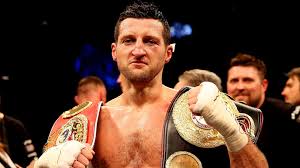
  • Carl Froch, ‘The Cobra’ from Nottingham, stands as one of the most compelling and divisive figures in modern British boxing history. He was a man fuelled by a seemingly inexhaustible well of self-belief, a conviction so strong it often bordered on what critics perceived as arrogance. He spoke of his granite chin, his world-class power, and his place among the elite with a certainty that was both captivating to his fans and grating to his detractors.

    The ultimate question that hangs over his Hall of Fame career is a simple one, layered with complexity…. was he truly as good as he proclaimed himself to be?

    His fellow pugilists often viewed him through a lens of grudging respect. They saw the technical flaws, the low-held hands, the sometimes ponderous footwork, and believed they saw a path to victory. Jermain Taylor certainly thought he had it figured out for eleven and a half rounds in their American showdown. Yet, what they also saw, and what they ultimately had to contend with, was a relentless force of nature. Andre Ward, the man who handed Froch his most definitive defeat, never downplayed The Cobra’s toughness. Ward acknowledged Froch’s immense physical strength and his unwavering will to win, even while being confident in his own superior boxing intellect and skill set. Mikkel Kessler, his great European rival, developed a relationship forged in the crucible of two epic battles. Their mutual respect was palpable; they were two warriors who knew they had faced someone of equal mettle and heart. George Groves, his final and most bitter adversary, spent years engaged in a war of words, dismissing Froch as a crude brawler. Following their two monumental clashes, that animosity softened into a recognition of the champion’s resilience and his undeniable ability to deliver under the most intense pressure imaginable. The consistent thread among his peers was an acknowledgement of his supreme toughness and his dangerous power. Few would call him a boxing purist, yet none who shared the ring with him would dare to call him anything less than a formidable world-class fighter.

    The boxing world as a whole, encompassing trainers, promoters, journalists, and fans, held a similarly divided opinion. In the United States, a market that often prizes slick defensive skills and explosive athleticism, Froch was sometimes viewed as a somewhat one-dimensional, come-forward brawler. They respected his grit, particularly after the thrilling late-show knockout of Taylor, although they never quite held him in the same pound-for-pound esteem as their own champions like Andre Ward. Conversely, in the United Kingdom, he was a folk hero. His blue-collar, no-nonsense persona resonated deeply with the British public. He wasn’t a showman in the mould of a Naseem Hamed or a Tyson Fury; he was a workman who turned up, did his job with frightening intensity, and spoke his mind with unfiltered honesty. His fans loved him for his heart, his thrilling style, and his willingness to fight anyone, anywhere. They saw a throwback fighter who guaranteed excitement. The critics and boxing purists would point to his vulnerabilities, his susceptibility to a fast jab, and his reliance on that legendary chin. They argued that his style, while effective, lacked the sublime artistry of a Joe Calzaghe, the very fighter Froch chased for a career-defining domestic showdown that never materialised. Calzaghe himself was often dismissive, believing his speed and skill would have been more than enough to neutralise Froch’s power. This debate encapsulates the wider perception of Froch: a phenomenal fighter and world champion, although perhaps a step below the truly transcendent, once-in-a-generation talents.

    To truly assess his quality, we should have a look at hos CV highlights. His career began its ascent to the world level with a vacant WBC super-middleweight title fight against the formidable Jean Pascal. It was a savage, twelve-round war of attrition, a phone-box brawl that set the tone for the rest of his reign. Both men stood and traded, refusing to give an inch. Froch emerged victorious, his hand raised, his face a mask of swelling and bruises, and his reputation as a man who would walk through fire firmly established. This was followed by the aforementioned trip to America to face Jermain Taylor. For much of the fight, Froch looked out of his depth. Taylor’s speed and movement were causing him fits, and he was dropped heavily in the third round. He was trailing significantly on all scorecards heading into the final round. A lesser man would have accepted defeat. Froch, however, cornered his man and unleashed a desperate, furious assault, stopping Taylor with just fourteen seconds remaining on the clock. It was a stunning display of heart and power, a victory snatched from the jaws of certain defeat. It proved his self-belief was not just talk; it was a functional weapon that allowed him to operate and succeed when conventional victory seemed impossible.

    The defining period of Carl Froch’s career was undoubtedly his participation in the Super Six World Boxing Classic. This unprecedented tournament pitted six of the world’s best super-middleweights against one another in a league format, followed by knockout semi-finals and a final. It was a gauntlet that would have broken lesser fighters. His journey began with a contentious split decision victory over the slick and elusive Andre Dirrell in his hometown of Nottingham. Dirrell’s awkward style frustrated Froch, and many observers felt the American had done enough to win. This performance showcased Froch’s limitations against a pure boxer. He struggled to pin down his opponent and often looked clumsy in his pursuit. It was a win, although it was a win that raised more questions than it answered.

    His next challenge took him to the hostile territory of Herning, Denmark, to face the ‘Viking Warrior’ Mikkel Kessler. In the shadow of an erupting Icelandic volcano that had grounded air travel across Europe, the two men engaged in a classic, brutal European showdown. It was an incredibly close, back-and-forth contest, a fight where every round was fiercely contested. In the end, Kessler was awarded a unanimous decision. It was Froch’s first professional defeat. He lost no shame in the loss; he had met a fellow warrior on his home turf and had come up just short in a fight of the year contender. The loss revealed a vulnerability, yet it also reinforced his reputation as a warrior who would never shy away from a challenge.

    Character is often revealed not in victory, instead in the response to defeat. Froch’s response was spectacular. He faced the fearsome power-puncher Arthur Abraham, a man known for his devastating knockouts. Many expected another slugfest. Instead, Froch produced one of the most disciplined and technically astute performances of his career. He utilised his height and reach advantage, pumping out a stiff jab and controlling the distance masterfully. He gave Abraham a twelve-round boxing lesson, winning every single round on two of the judges’ scorecards. This was the fight that silenced many who claimed he was merely a brawler. He demonstrated a high boxing IQ, an ability to stick to a game plan, and the skill to completely neutralise a dangerous opponent. He followed this with a solid, workmanlike victory over the grizzled veteran Glen Johnson to book his place in the Super Six final.

    In that final, he met the undefeated American prodigy, Andre Ward. This was the fight that would ultimately define the ceiling of Carl Froch’s abilities. Ward, an Olympic gold medallist, was a boxing genius, a master of controlling distance, fighting on the inside, and nullifying his opponent’s strengths. Over twelve rounds, Ward put on a clinic. He was too fast, too smart, and too skilled for the man from Nottingham. He smothered Froch’s work on the inside, beat him to the punch on the outside, and never allowed him to get his fearsome power shots off with any consistency. The defeat was comprehensive. Ward was simply the better boxer, a generational talent operating at the peak of his powers. It was Froch’s second loss, and it was a clear one. This is the primary exhibit for anyone arguing that Froch’s self-assessment was inflated. He was not the best super-middleweight in the world, because Andre Ward was.

    Many careers would have tailed off after such a conclusive loss. Froch’s, remarkably, entered its most iconic phase. He returned to Nottingham for a showdown with the undefeated IBF champion Lucian Bute. Bute was a highly respected champion, and with Froch coming off the Ward loss, many had the Canadian pegged as the favourite. What transpired on that electric night was not a fight; it was a demolition. Froch, fighting like a man possessed, tore into Bute from the opening bell. He walked through Bute’s punches and returned fire with a ferocity that was terrifying to behold. He bludgeoned Bute into submission in five brutal rounds, reclaiming a world title and producing arguably the single greatest performance of his entire career. The victory was a stunning rejuvenation, a powerful statement that he remained a dominant force in the division.

    With his status restored, he set his sights on revenge. The rematch with Mikkel Kessler was arranged for a sold-out O2 Arena in London. The fight was another compelling, high-stakes encounter, filled with drama and violent exchanges. This time, Froch was the stronger man down the stretch. He hurt Kessler on several occasions and boxed with a controlled aggression that showed the maturity and experience he had gained. He won a clear unanimous decision, avenging his earlier loss and unifying world titles. The victory was sweet, a testament to his resilience and his burning desire to right the wrongs on his record. He had climbed the mountain once more, defeating his great rival and cementing his position at the very top of the sport.

    What followed was the final, defining chapter of his story: the two-fight saga with George Groves. The rivalry was intensely personal and captured the imagination of the British public like few before it. In their first encounter, the younger, faster Groves shocked the world by dropping Froch heavily with a booming right hand in the very first round. For the next several rounds, Groves proceeded to outbox the champion. Froch looked slow and vulnerable, a step behind his challenger. He began to claw his way back into the fight through sheer grit and pressure, yet he was still in trouble when referee Howard Foster stepped in to stop the contest in the ninth round, a decision widely seen as premature. The controversy was immense and only fuelled the demand for a rematch.

    The second fight was not just a boxing match; it was a national event. It was held at Wembley Stadium in front of a post-war record crowd of 80,000 spectators. The pressure on Froch was monumental. He was the established champion, the older man, and he had a point to prove after the controversial ending of the first fight. For eight rounds, the two men engaged in a tense, tactical battle. It was a cagey affair, a high-stakes chess match with a constant undercurrent of menace. Then, in the eighth round, it happened. Froch feinted with a jab, drawing a reaction from Groves, and then unleashed a right hand of such devastating perfection that it instantly entered boxing folklore. It connected cleanly on Groves’ jaw, and the fight was over the second it landed. There was no controversy, no debate. It was a conclusive, spectacular, and iconic finish.

    So, was he as good as he thought he was? The answer is not a simple yes or no. If his self-belief meant he was the most technically gifted boxer of his era, then no, he was not. Andre Ward proved that definitively. He did not possess the sublime defensive wizardry of a Floyd Mayweather or the blinding handspeed of a Roy Jones Jr. His style had its flaws, and he was hittable.

    Nevertheless, if being as good as he thought he was meant being one of the toughest, most resilient, and most effective fighters of his generation with an iron will and a resume packed with elite names, then the answer is an emphatic yes. His self-belief was his greatest asset. It was the engine that drove him to get off the canvas against Taylor, to rebuild after the Kessler loss, to come back stronger after the Ward schooling, and to find that one perfect punch at Wembley. He fought Pascal, Taylor, Dirrell, Kessler twice, Abraham, Johnson, Ward, Bute, and Groves twice. It is a list of opponents that stands up to the closest scrutiny. He never ducked a challenge.

    He unified world titles and retired at the pinnacle of the sport, having just delivered the most famous punch in a generation of British boxing. He may not have been a purist’s dream, yet his legacy is written not in the textbook of perfect technique, instead in the annals of unforgettable nights, epic wars, and a career built on blood, courage, and an unshakeable conviction in his own ability to find a way to win.

    The 80,000 people who roared at Wembley as he stood over his vanquished rival would surely testify that, on that night and many others, Carl Froch was every bit as good as he said he was.

    The Boxingmadman – follow me on X (Twitter) / Bluesky

    @Theboxingmadman /   @theboxingmadman.bsky.social

  • The world of boxing is no stranger to unexpected matchups, where the allure of a massive payday often trumps traditional sporting hierarchies. In recent times, one name has consistently echoed through the boxing sphere as a potential mega-attraction: Jake Paul. 

    The YouTube sensation turned professional boxer has, with increasing frequency, called for a showdown with none other than former unified world heavyweight champion, Anthony Joshua. While the idea might seem outlandish to purists, the financial incentives are so staggering that this audacious proposition warrants serious consideration.

    To understand the dynamics of such a fight, we must first examine the professional standing of both individuals…

    Jake Paul (12-1, 7 KOs) has carved out a unique, and undeniably lucrative, niche in boxing. His record, as of June 2025, reflects a journey from internet celebrity to a fighter who, despite facing criticism for his choice of opponents, has consistently drawn massive pay-per-view numbers. His recent unanimous decision victory over Julio Cesar Chavez Jr., a former middleweight champion and the most credible boxer he has faced to date, further solidified his self-proclaimed legitimacy in the sport. Paul’s wins include stoppage victories over former MMA stars and fellow influencers, showcasing a powerful right hand and an evolving, if still raw, boxing skillset. His sole professional loss came against Tommy Fury in February 2023, a fight that demonstrated his vulnerability against a more seasoned, albeit still developing, professional boxer. Paul’s approach to boxing has been characterized by aggressive self-promotion, outlandish call-outs, and a remarkable ability to generate hype and revenue.

    Anthony “AJ” Joshua (28-4, 25 KOs) stands as a stark contrast. A two-time unified world heavyweight champion and Olympic gold medalist, Joshua’s career has been defined by high-stakes encounters against the division’s elite. His impressive knockout ratio of nearly 89% speaks to his formidable power and aggressive style. Joshua’s resume boasts victories over names like Wladimir Klitschko, Joseph Parker, and Kubrat Pulev. However, his career has also seen significant setbacks, notably his two losses to Oleksandr Usyk, which cost him his unified titles, and a shocking upset against Andy Ruiz Jr. in 2019. More recently, in September 2024, Joshua suffered another setback, losing to Daniel Dubois by knockout in the fifth round. Despite these defeats, Joshua remains a colossal figure in the heavyweight division, a proven pay-per-view draw, and a physically imposing presence. His current record reflects a champion grappling with the challenges of an unforgiving division, however, his pedigree is undeniable.

    Jake Paul has been vocal in his desire to fight Anthony Joshua. Following his recent win over Chavez Jr., Paul asserted, “I want to fight Anthony Joshua… because I know I will f****** beat Anthony Joshua’s a**. He doesn’t have a chin, and he has no skill, and he’s stiff.” Such inflammatory remarks are classic Paul, designed to provoke a response and generate headlines.

    The question then becomes, why would Anthony Joshua, a legitimate heavyweight contender, even consider stepping into the ring with a fighter who, by boxing standards, operates in a different league? 

    The answer, as it so often is in modern combat sports, comes down to one overwhelming factor: money.

    Promoter Eddie Hearn has openly discussed the astronomical figures a Joshua vs. Paul fight could generate. He estimates the fight could realistically break pay-per-view records, potentially reaching 10 million buys globally. This could translate into an eye-watering payday for Joshua, with figures of £100 million being circulated. For a fighter whose career has already earned him immense wealth, such a sum represents an unprecedented financial opportunity, a sum that might be difficult to attain even in a traditional world title fight against another elite heavyweight.

    The financial allure is not merely about accumulating more wealth; it also offers a degree of freedom and strategic leverage. A massive payout from a Paul fight could allow Joshua to dictate his terms for future, more traditional boxing contests, or even set him up for comfortable retirement. It’s a chance to secure his financial legacy beyond anything imaginable, irrespective of the outcome in the ring. While the reputational risk for Joshua is high, the financial reward could be transformative.

    Despite Jake Paul’s bravado and his improving boxing skills, a fight against Anthony Joshua presents an entirely different proposition than any he has faced before. Joshua possesses a combination of size, power, speed, and genuine world-class boxing experience that Paul simply does not.

    Paul’s recent win against Chavez Jr. showed glimpses of vulnerability, with Chavez Jr., despite his limited output in early rounds, rocking Paul in the later stages. Anthony Joshua, even given his recent loss to Dubois, is a different beast entirely. His punches carry concussive power, honed over decades in the amateur and professional ranks. His ability to cut off the ring, work the body, and deliver devastating combinations would be unlike anything Paul has experienced.

    While Paul has demonstrated resilience and a willingness to learn, the jump from fighting former MMA fighters, older legends, and even a declining Julio Cesar Chavez Jr. to a prime (or near-prime) Anthony Joshua is monumental. Joshua’s professional record includes 25 knockouts, many of them against opponents with far more boxing pedigree than Paul.

    The most likely outcome of a hypothetical clash between Jake Paul and Anthony Joshua, in a legitimate boxing contest, is a severe and decisive victory for Joshua. While Paul’s determination and surprising power might allow him to land a few shots, Joshua’s overwhelming advantages in skill, experience, and raw punching power would almost certainly lead to Paul being overwhelmed. 

    The notion of Jake Paul ending up in hospital is not a hyperbolic scare tactic; it is a stark reality reflecting the immense power disparity between a true heavyweight champion and a celebrity boxer still learning the ropes at a professional level. Joshua is a destructive force, and Paul would be stepping into the path of a genuine professional who plays for keeps.

    While the money might tempt Joshua, the fight itself would be a stark reminder of the brutal realities of professional boxing at the highest level. Should this unlikely matchup ever materialise, it would undoubtedly draw unprecedented attention, however, the script for Jake Paul could very well end with him in a place no boxer ever wants to be: hospital. 

    The financial reward often proves a compelling counterpoint to the threat of injury, and in this potential showdown, that may well be put to it’s most extreme test…

    The Boxingmadman – follow me on X (Twitter) / Bluesky

    @Theboxingmadman /   @theboxingmadman.bsky.social

  • British boxing, especially the heavyweight division, has been blessed with an array of compelling figures over the past twenty years. Anthony Joshua, for instance, exploded onto the scene as an Olympic gold medallist, carrying the immense hopes of a nation. His early professional career was a spectacle of explosive power and undeniable athleticism, quickly becoming a mainstream superstar and unifying titles. He cultivated a formidable presence, dispatching opponents with a concussive force that electrified arenas. Then there is Tyson Fury, a phenomenon of a different kind. His journey has been one of remarkable resilience, unparalleled boxing IQ, and an unorthodox style that has befuddled the best in the world. From his rise through the domestic ranks to his eventual undisputed status, Fury has captivated audiences with his unique blend of agility, pressure, and self-belief. Both Joshua and Fury have undeniably left colossal imprints on the sport, defining eras of British heavyweight boxing with their contrasting styles and momentous achievements.

    In the storied annals of British heavyweight boxing, a new name is being etched with increasing prominence and an air of inevitability: Moses Itauma. At just 20 years old, Itauma has not only captured the attention of the boxing world but is rapidly establishing himself as the most formidable British heavyweight talent to emerge in the last two decades. His unblemished professional slate of 12 wins, with a staggering 10 knockouts, speaks volumes about his raw power and finishing ability. When one meticulously dissects his early professional journey and places it within the context of recent British heavyweight history, a compelling narrative emerges – Moses Itauma is not merely following in the footsteps of previous giants; he is forging a distinct and highly accelerated path of unprecedented dominance, signalling the dawn of a new, prolonged era of British heavyweight supremacy.

    Yet, Moses Itauma, still a nascent force in the professional sphere, is generating a level of excitement and demonstrating a trajectory that suggests a future even more dominant. His progression, while still early, showcases a rapid acceleration and a devastating effectiveness that sets him apart. He is not just accumulating wins; he is making emphatic statements with each outing, demonstrating a rare blend of power, precision, and poise for such a young fighter.

    Consider his recent victory over Mike Balogun in Glasgow on May 24, 2025. Itauma dismantled a seasoned professional, dropping him multiple times before the referee intervened in the second round. This performance was not just a win; it was a clinical display of burgeoning power and strategic aggression. Balogun, a fighter with a respectable record (21-2-0 at the time of the fight), was systematically broken down with a calculated brutality that highlighted Itauma’s superior skill set. Prior to that, his first-round demolition of Demsey McKean in Riyadh on December 21, 2024, sent shockwaves through the division. McKean (22-1-0 coming into the fight), a previously highly-rated and durable opponent, was not merely beaten, however, utterly overwhelmed by Itauma’s relentless assault and devastating power. These victories, coupled with his earlier emphatic stoppages of fighters like Mariusz Wach (a veteran who had gone rounds with top heavyweights) and Michal Boloz, highlight a consistent pattern of dominance against opponents with credible, albeit not elite, records. He hasn’t just beaten them; he’s often annihilated them with a frightening efficiency.

    Itauma’s amateur pedigree, including gold medals at the Schools, Juniors, and Youth European Championships, culminating in a World Youth Amateur Championship, provided a robust foundation upon which his professional success is being built. This extensive amateur experience equipped him with a technical proficiency, tactical awareness, and a calm under pressure that is strikingly evident in his professional performances, allowing him to bypass many of the typical growing pains seen in developing heavyweights. His transition has been seamless, almost preordained, demonstrating a readiness for the professional game that belies his age.

    The boxing world is abuzz with anticipation regarding Itauma’s future, and the opinions of two of the sport’s most influential promoters, Frank Warren and Eddie Hearn, only amplify this excitement. Frank Warren, Itauma’s promoter, has consistently lauded his protégé’s exceptional talent and potential, seeing him as a generational talent from very early on. After Itauma’s impressive victory over Mike Balogun, Warren was quoted saying, “Moses, I feel, is something special. He’s only 20 years of age and he’s looking the business. As he’s maturing, he’s only going to get better and better.” Warren further highlighted Itauma’s rare combination of power and composure, stating, “He’s not one of those guys that when, when he gets in trouble, he rushes in and he loses his space, falling in on you. He keeps his space so he can deflect shots. He steps back and lets them go and moves them. And what impressed me with the last knockdown was he did it going backwards. Very few fighters can do that, you know, have that power to be able to do that.” These are not just the words of a proud promoter; they are the observations of a man who has guided countless champions, recognising truly unique attributes and suggesting a fast-track to the top.

    Even from the opposing camp, Eddie Hearn, while promoting rival fighters and undoubtedly eager to find a future opponent for his stable, has acknowledged the undeniable talent of Moses Itauma. Hearn has, in the past, recognised Itauma’s immense potential and acknowledged him as a genuine threat to the established order of the heavyweight division. He has spoken of Itauma’s rapid progression, admitting that he is on a fast track and will likely have a busy schedule, with predictions of “at least another three fights this year” (as of May 2025). This recognition from a competing promoter underscores the widespread acceptance of Itauma’s exceptional abilities and the inevitability of his rapid rise through the ranks. When even your rivals are speaking of your talent and trajectory, it speaks volumes about the impact you are making.

    Adding further intrigue to Itauma’s ascent are his own perspectives on his standing in the global heavyweight landscape. Following his win over Balogun, which saw him remarkably elevated to the WBO’s number one contender spot – an extraordinary achievement for a fighter with just 12 professional bouts – Moses Itauma displayed a calm self-assurance, typical of champions in the making. He was quoted stating, “I know where I am. The rankings will take care of themselves, I believe I am already among the top contenders in the world. My performances speak for themselves, and with each fight, I am proving that I belong at the very top. I am not in this for short-term glory; I am building a legacy.” This statement, delivered with the maturity of a seasoned veteran despite his tender years, reveals a fighter with unwavering belief in his destiny and a clear long-term vision for his career. The WBO’s decision to place him at #1, while perhaps accelerated by some metrics, speaks to the immense potential and undeniable talent recognised by sanctioning bodies who are clearly keen to have him in their title picture.

    Itauma’s boxing ability is a captivating blend of raw, concussive power and remarkably refined technique. As a southpaw, he presents an awkward challenge for opponents, however, it’s his lightning-fast hands and exceptional footwork for a man of his stature (6 ft 4½ in, approximately 254 lbs) that truly set him apart. He can switch angles effortlessly, creating openings for his devastating power punches. His ability to generate knockout power with both his left and right hands makes him a constant and unpredictable threat. Furthermore, his ring IQ is remarkably advanced for his age. He demonstrates patience when needed, setting up his attacks with calculated precision, and possesses a killer instinct to finish opponents when they are hurt. He doesn’t waste shots and rarely appears flustered, exhibiting a composure that many heavyweights take years to develop.

    Former world champion George Groves noted, “A word on Moses, I think he has one of the best boxing brains in the heavyweight division. So he is a very skillful fighter, but he’s got much more to do to become a complete fighter. But lots of the heavyweights are big guys, strong guys, maybe good athletes in that field, but not natural with a vast boxing IQ, but Moses does.” Tony Bellew, another respected former champion, added, “He’s the biggest star in British boxing. He’s the future. He’s the future, that boy.” These insights from experienced figures in the sport underscore the depth of his technical prowess and his unique mental fortitude.

    His most notable wins serve as prime examples of his multifaceted skillset. The TKO victory over Mike Balogun on May 24, 2025, in Glasgow, was a clinical display of sustained pressure and fight-ending power, dropping Balogun twice in the first round and again in the second before the referee waved it off. This showed his ability to impose his will and finish effectively against a durable opponent. The first-round destruction of Demsey McKean on December 21, 2024, in Riyadh, highlighted his explosive power and ability to capitalise on early openings against a fighter who had previously extended Joseph Parker. Itauma’s quick finish of McKean was a truly eye-catching performance on a major international card, signaling his arrival on the global stage. His dominant second-round TKO against the experienced Mariusz Wach on July 27, 2024, further underscored his ability to dispatch seasoned veterans who have taken some of the best in the division into deep waters. Wach had previously gone the distance with the likes of Wladimir Klitschko and Alexander Povetkin, making Itauma’s swift stoppage all the more impressive and a clear marker of his elite power. These victories are not just notches on his belt; they are statements of his burgeoning dominance and a clear indication of his championship pedigree.

    Beyond these headline-grabbing victories, his earlier professional fights saw a consistent pattern of early stoppages, demonstrating a level of power and aggression that is rare in young heavyweights. His amateur career, with a remarkable 24 wins and no losses, including a World Youth Amateur Championship, provided a strong foundation. His transition to the professional ranks has been seamless, almost effortless, with each fight showcasing further development and refinement of his already formidable skills. He’s not just relying on raw power; he’s a student of the game, constantly evolving and adapting, proving that he has the intelligence to complement his physical gifts.

    The trajectory of Moses Itauma is not merely that of a promising prospect; it is the ascent of a future king. His blend of natural talent, dedicated training, an insatiable hunger for improvement, and a steely determination sets him apart from any British heavyweight to emerge in the last two decades. He possesses a unique aura of dominance and a demonstrable path to global supremacy. He is not just aiming for world titles; he is poised to redefine heavyweight boxing with a style that is both devastatingly powerful and surprisingly finessed. He embodies the best of British boxing, combining the grit and resilience that defines the nation’s fighters with a rare, almost generational talent.

    Therefore, it is with unwavering conviction and a clear understanding of his phenomenal potential that we can state: once Moses Itauma reaches the pinnacle of the heavyweight division and claims a world championship, his reign will not be fleeting. His exceptional talent, relentless drive, strategic career management by Frank Warren, and the comprehensive foundation he has built in his early career indicate a fighter destined for sustained dominance. He possesses all the physical and mental attributes to remain at the summit for an extended period, silencing doubters and solidifying his place in boxing history.

    The next decade of heavyweight boxing will be defined by the era of Moses Itauma, a British champion who will hold his world title for at least ten to fifteen years, leaving an indelible mark on the sport and solidifying his place as not just the biggest and best British boxer of his generation but also one of the all-time greats.

    The future is now, and its name is Moses Itauma.

    The Boxingmadman – follow me on X (Twitter) / Bluesky

    @Theboxingmadman /   @theboxingmadman.bsky.social

  • Deontay Wilder. The name itself conjures images of devastating knockouts, a physique seemingly carved from stone, and a persona, “The Bronze Bomber,” that promised destruction.

    For five years and 10 defences, Wilder reigned as the WBC heavyweight champion, a fearsome puncher who instilled genuine fear in his opponents. His right hand was, and perhaps still is, considered one of the most potent single weapons in boxing history. He amassed a highlight reel of concussive finishes that thrilled casual fans and solidified his reputation as a must-watch attraction. Many lauded him, some even whispered his name in the hallowed halls of all-time greats.

    However, beneath the veneer of invincibility and the thunderous power lay a more complex and, for boxing purists, a more troubling reality. Was Deontay Wilder a truly elite boxer, a master of his craft? Or was he a phenomenal athlete blessed with a once-in-a-generation equaliser, whose technical deficiencies were often masked by the sheer terror his power induced and, as some argue, a carefully managed career? This exploration delves into the career of Deontay Wilder, from his late start in the amateurs to his reign as a world champion, his epic and defining trilogy with Tyson Fury, and ultimately, a critical assessment of his place in the often brutal, always revealing, landscape of heavyweight boxing. We will examine the dichotomy of his immense power versus his debated boxing skills, the arguments for his greatness, and the stark contention that he was, in essence, a powerful puncher who feasted on a curated list of opponents, only to be found wanting when faced with truly world-level, adaptable opposition.

    Unlike many pugilists who are practically born into the gym, Deontay Leshun Wilder’s journey into boxing was a relatively late one, driven by circumstance rather than a lifelong ambition. Born on October 22, 1985, in Tuscaloosa, Alabama, Wilder’s early athletic pursuits were focused on American football and basketball at Tuscaloosa Central High School. His dream was to play college football for the Alabama Crimson Tide, a path many young men in the state aspire to. However, life threw a curveball in 2005 when his daughter, Naieya, was born with spina bifida, a congenital spinal condition. The medical expenses associated with Naieya’s condition were substantial, and Wilder, then 19 and attending Shelton State Community College, needed a way to provide for his family. Boxing, a sport he had little prior exposure to, presented itself as a potential avenue. In October 2005, at the relatively advanced age of 20 for an amateur boxer with no prior experience, Wilder walked into the Skyy Boxing Gym in Northport, Alabama, run by Jay Deas, who would remain his coach and mentor throughout his career.

    His natural athleticism and, crucially, his nascent punching power, were immediately apparent. Standing at an imposing 6-foot-7 with an incredible reach, Wilder possessed the physical attributes that, even raw, could be molded. He was a quick study in some respects, particularly in leveraging his physical gifts into concussive force. His amateur career was a whirlwind, a compressed education in the sweet science. He compensated for his lack of deep-seated technical refinement with aggression, athleticism, and that ever-present, developing power. Wilder’s rise through the amateur ranks was meteoric, almost improbably so given his late start. He won the National Golden Gloves in 2007, a significant achievement, by defeating a highly touted amateur named Quantis Graves in the final. He also won the US amateur championships at 201 lbs the same year, signaling his arrival as a genuine Olympic prospect.

    The pinnacle of his amateur career came at the 2008 Beijing Olympics. Competing in the heavyweight division, Wilder powered his way to a bronze medal. He defeated Abdelaziz Touilbini of Algeria and Mohamed Arjaoui of Morocco before losing in the semi-finals to Russia’s Rakhim Chakhkiyev, who would go on to win gold. Despite the loss, securing an Olympic medal after just three years in the sport was a testament to his dedication and natural talent, particularly his formidable power, which was already gaining notoriety. It was this achievement that earned him the moniker “The Bronze Bomber,” a name that would become synonymous with his professional identity.

    His amateur record is often cited as being around 30-5, a relatively short ledger compared to many Eastern European fighters who have hundreds of amateur bouts. This limited seasoning would become a recurring theme and point of criticism in his professional career. While the Olympics provided invaluable experience and a significant accolade, it also highlighted that his style was heavily reliant on landing that one big shot, a pattern that would define his subsequent journey in the paid ranks. The foundational skills, the nuanced footwork, the defensive subtleties, and the combination punching often ingrained through extensive amateur careers were arguably less developed in Wilder’s arsenal. He was, even then, a power puncher first and foremost, a prospect built on a foundation of dynamite rather than intricate design.

    Deontay Wilder turned professional on November 15, 2008, just a few months after his Olympic triumph. He made his debut with a second-round technical knockout of Ethan Cox in Nashville, Tennessee. This set the tone for the early phase of his career: a relentless string of knockouts against largely unremarkable opposition. Managed by Al Haymon and coached by Jay Deas and later Mark Breland (an Olympic gold medalist and former two-time welterweight champion), Wilder’s career path seemed meticulously planned. The primary objective appeared to be building an intimidating knockout record while gradually stepping up the quality of opponents, albeit very gradually in the eyes of many critics.

    For the first seven years of his professional career, Wilder was a wrecking machine against the fighters placed in front of him. He amassed an incredible record of 32 wins, all by knockout, with very few of his opponents making it past the fourth round. Names like Owen Beck, Audley Harrison (a faded former Olympic gold medallist), and Siarhei Liakhovich (a former WBO champion well past his prime) were added to his list of victims. The KOs were often spectacular, showcasing his explosive athleticism and, of course, that signature right hand that seemed to detonate on impact. This impressive knockout streak certainly built his profile and made him a feared name in the heavyweight division. He was marketed as the next great American heavyweight champion, an heir to the lineage of fighters like Muhammad Ali, Joe Frazier, George Foreman, and Mike Tyson. The American public, long starved of a dominant heavyweight force, was eager for such a figure.

    However, even during this ascent, discerning boxing observers noted several red flags. Wilder’s technique often appeared crude. His footwork could be clumsy, his balance sometimes compromised when throwing his power shots. He often “windmilled” his punches, particularly the right hand, relying on its sheer velocity and impact rather than setting it up with a consistent, effective jab or sophisticated combinations. His defensive skills were rarely tested, primarily because his opponents were often overwhelmed too quickly or lacked the skill to exploit his openings. The quality of his opposition during this period was a constant source of debate. While building a prospect often involves facing a lower tier of fighters initially, the argument was that Wilder’s progression to facing genuine contenders was too slow. Many of the names on his record prior to his title shot were journeymen or fighters whose best days were behind them. This strategy, while effective in building a fearsome record and protecting him from early tests, also meant that he wasn’t gaining experience against a variety of styles or fighters who could push him, force him to adapt, or expose his weaknesses.

    Despite these criticisms, on January 17, 2015, Deontay Wilder received his shot at a world title. He faced Bermane Stiverne for the WBC heavyweight championship in Las Vegas. Stiverne was, at the time, considered a respectable champion, having won the vacant title by stopping Chris Arreola. This was, by a significant margin, the toughest test of Wilder’s career. In a surprisingly disciplined performance, Wilder outboxed Stiverne over twelve rounds to win a unanimous decision. He showcased a decent jab, managed distance well, and, crucially, demonstrated that he could go the full championship distance if needed, something many had doubted. He even showed resilience, fighting through a broken right hand sustained mid-fight. It was a career-defining win, elevating him to the status of WBC heavyweight champion of the world. He had fulfilled the promise of becoming America’s next heavyweight champion. However, the nature of the win – a points victory rather than a spectacular knockout – also subtly hinted that against more durable and skilled opposition, his power alone might not always be enough for a quick finish. The reign of “The Bronze Bomber” had begun, and so too had the intensified scrutiny that comes with being a world champion.

    Having captured the WBC heavyweight title, Deontay Wilder embarked on a championship reign that would last over five years and encompass ten successful title defenses. This period further solidified his reputation as one of the most devastating punchers in the sport’s history, with nearly every defense ending in a spectacular knockout. His mantra, “One champion, one face, one name,” and his “BombZquad” brand became well-known. His list of title defenses included Eric Molina, where Molina surprisingly wobbled Wilder before being knocked out. Then came Johann Duhaupas, whom Wilder stopped in the eleventh. Artur Szpilka followed, a competitive fight until Szpilka was brutally knocked out; this event memorably featured Tyson Fury entering the ring post-fight. Wilder then faced Chris Arreola, dominating despite injuries. Gerald Washington was next, stopped after giving Wilder some early trouble. A rematch with Bermane Stiverne saw Wilder demolish an overweight opponent in the first round.

    Arguably his most significant defence pre-Fury was against Luis Ortiz in March 2018. Ortiz, a skilled Cuban, badly hurt Wilder in the seventh round, then Wilder showed tremendous heart to survive and rally for a tenth-round stoppage. He then faced Dominic Breazeale, delivering a sensational first-round one-punch knockout. His final successful defence was a rematch against Luis Ortiz in November 2019. Ortiz outboxed Wilder for six rounds, building a lead on the scorecards, only for Wilder to land a colossal right hand in the seventh, ending the fight instantly. This bout perfectly encapsulated Wilder’s career: being outboxed for long stretches, only to be saved by his phenomenal equaliser.

    Throughout these defenses, Wilder’s knockout ratio remained incredibly high, and his highlight reel grew. He became the longest-reigning American heavyweight champion since the 1960s. His power was undeniable, a genuine phenomenon. He could end a fight at any moment, against any opponent, with a single shot. This inherent danger made all his fights compelling, edge-of-your-seat affairs. However, the criticisms regarding his technical abilities persisted and, in some quarters, intensified. His footwork remained leaden, his jab inconsistent, and his head movement minimal. He often appeared to be loading up for the knockout blow from the opening bell, sometimes telegraphing his intentions. While his power was his greatest asset, it was also seen as a crutch that prevented him from developing a more well-rounded boxing game. The argument was that he didn’t need to develop other skills because his right hand so often rendered them unnecessary against the level of opposition he was largely facing.

    The quality of his opponents during this reign, with the notable exception of Luis Ortiz, continued to be a point of contention. While all were professional fighters, and some were former title challengers or fringe contenders, few were considered truly elite, in-their-prime heavyweights. Fighters like Molina, Duhaupas, Arreola (in his second Wilder fight), and Washington were seen as solid and also limited opponents, perfectly chosen to showcase Wilder’s power without posing an excessive technical or stylistic threat. Dominic Breazeale, despite being a mandatory challenger, had previously been comprehensively beaten by Anthony Joshua. This perceived careful matchmaking led to accusations that Wilder’s reign, while long and filled with knockouts, lacked the defining victories against top-tier, consensus elite opponents that traditionally cement a champion’s legacy. The heavyweight division at the time also featured Anthony Joshua, who was unifying other belts, and the resurgent Tyson Fury. Fights against these men were craved by the boxing public, as they would provide a true measure of Wilder’s standing. The Luis Ortiz victories were significant, demonstrating he could overcome adversity against a skilled (albeit ageing) puncher, they were not enough to fully dispel the doubts about his overall boxing acumen when faced with the division’s very best. His reign was characterised by breathtaking power, also by a persistent question: what would happen when that power met an opponent it couldn’t easily dispatch, an opponent with the skill, size, and ring IQ to neutralise it? The answer would come in dramatic fashion.

    The defining chapter of Deontay Wilder’s career, and the one that would irrevocably shape his legacy, was his trilogy of fights against Tyson “The Gypsy King” Fury. This series of epic confrontations not only provided immense drama and unforgettable moments, they also starkly exposed Wilder’s limitations while showcasing Fury’s extraordinary boxing skills and resilience. The first encounter, on December 1, 2018, in Los Angeles, was highly anticipated. Fury, the lineal heavyweight champion, was making a remarkable comeback. For much of the fight, Fury put on a boxing masterclass, befuddling Wilder with superior movement and ring IQ. Wilder, however, showcased his power with two dramatic knockdowns, one in the ninth round and a devastating one in the twelfth, from which Fury miraculously rose. The fight ended in a controversial split draw, with many believing Fury had done enough to win. It was the first time Wilder hadn’t officially won a professional fight, and his inability to consistently land on a skilled boxer was laid bare.

    The rematch, on February 22, 2020, in Las Vegas, saw Fury deliver on his promise of a more aggressive approach. He dominated Wilder from the opening bell, using his size and skill to back Wilder up. Fury dropped Wilder in the third round with a right hand to the temple, and again in the fifth with a body shot. Wilder never seemed to recover, appearing unsteady and taking a sustained beating. The fight was stopped in the seventh round when Wilder’s co-trainer, Mark Breland, threw in the towel. Wilder protested the stoppage and later offered the infamous excuse that his heavy ring-walk costume had weakened his legs, an explanation that was widely ridiculed.

    A contractual rematch clause led to a third fight on October 9, 2021, in Las Vegas. Wilder, with new trainer Malik Scott, started aggressively and surprisingly well, using his jab more effectively and targeting Fury’s body. He dropped Fury hard with a massive right hand in the fourth round. Fury got up, clearly hurt, and Wilder swarmed him, sending him down again moments later. It looked like Wilder was on the verge of reclaiming his title. However, Fury, displaying his trademark resilience, survived the round. From the fifth round onwards, Fury began to take control. He started landing his own heavy shots, visibly tiring Wilder, who, despite his early success, seemed to have expended a lot of energy. Wilder’s rudimentary boxing skills and questionable stamina began to show. Fury dropped Wilder in the tenth round with a huge right hand. Wilder, again showing incredible heart, got back to his feet. However, the end was near. In the eleventh round, a visibly exhausted and battered Wilder was sent crashing to the canvas for a final time by another massive right hand from Fury. This time, there was no getting up. Tyson Fury had won by knockout, definitively ending their epic rivalry.

    The trilogy with Tyson Fury was a defining period for Deontay Wilder. While he showed undeniable heart and the ever-present threat of his fight-ending power (scoring four knockdowns against Fury across the three fights), he was ultimately outclassed. Fury’s superior boxing skills, ring IQ, adaptability, chin, and resilience proved too much. The fights exposed Wilder’s technical limitations on the grandest stage. He had no effective Plan B when the right hand wasn’t landing, or when it did land and his opponent got up. His lack of inside game, his inconsistent jab, his porous defense, and his often-questionable stamina under duress were all laid bare for the world to see. The Bronze Bomber’s aura of invincibility was shattered, and his reign as champion had come to a violent end.

    Despite the conclusive nature of his losses to Tyson Fury, and subsequent uninspiring performances, there remains a segment of boxing fans and even some analysts who argue for Deontay Wilder’s inclusion, or at least consideration, in discussions about all-time great heavyweights, or at the very least, all-time great punchers. This debate typically centers on his extraordinary knockout power and his lengthy reign as WBC champion. The arguments for Wilder’s greatness usually highlight his unprecedented knockout power, his lengthy WBC title reign with ten defenses, the excitement factor he brought to his fights, and the courage and heart he displayed, particularly in the Fury trilogy and the first Ortiz fight. Proponents argue that his level of consistent, fight-ending power is a rare gift and a mark of a special fighter. He could turn a fight around with one shot, even when being outboxed.

    However, the counterarguments, which are substantial and widely held among boxing purists and many experts, point to significant deficiencies that preclude him from genuine all-time great status. This is primarily due to his lack of fundamental boxing skills. His footwork was often described as clumsy, his jab inconsistent, and his defensive skills minimal. He often threw wild, telegraphed punches. Against skilled boxers like Fury, or even disciplined ones like Joseph Parker later in his career, these technical flaws were glaringly exposed. Furthermore, the quality of opposition during much of his title reign, with the exception of Luis Ortiz, was frequently questioned, with many challengers not considered elite or being past their prime. This curated opposition allowed his power to shine but didn’t truly test his overall abilities. An all-time great is typically defined by victories over other great or near-great fighters in their prime, a depth Wilder’s resume lacks. His inability to adapt when his primary weapon was nullified, and his over-reliance on power which perhaps inhibited the development of other skills, are also significant criticisms.

    Comparing him to acknowledged all-time greats like Muhammad Ali, Joe Louis, George Foreman, Larry Holmes, Lennox Lewis, or even more recent greats like Wladimir Klitschko, Wilder’s skillset falls considerably short. These fighters, while possessing power, also had sophisticated jabs, excellent footwork, strong defensive capabilities, and high boxing IQs. They could win fights in multiple ways. While some may argue he is among the greatest punchers of all time, a title for which he has a legitimate claim, being an all-time great boxer requires a far more complete arsenal. The consensus among critical boxing historians and analysts is that Wilder, while a phenomenal and historically significant puncher, does not meet the broader criteria for all-time greatness as a complete fighter.

    Deontay Wilder’s career is a fascinating study in what can be termed the “Puncher’s Paradox.” His extraordinary punching power was the bedrock of his success, propelling him to an Olympic medal and a long world championship reign. It was the great equalizer, capable of rendering an opponent’s dominance irrelevant in a single moment. This power was so absolute that it often masked, and perhaps even stunted, the development of other crucial boxing skills. When a single weapon can end a fight so definitively, the incentive to meticulously hone other aspects of the craft can diminish.

    This is not to say Wilder didn’t train hard; his physique and conditioning attest to his dedication. However, his training and in-ring strategy always seemed to revolve around creating the opportunity to land that one devastating blow. His entire tactical approach was built upon it. His jab was often a rangefinder, his footwork served to launch bombs rather than to control the ring or evade. For a significant portion of his career, against a certain caliber of opponent, this approach was overwhelmingly successful. Fighters who were slower, less defensively sound, or simply intimidated often succumbed quickly.

    The paradox truly manifested when he faced opponents who were not easily intimidated, who possessed the technical skills to neutralize his primary weapon, the chin to absorb it, and the ring intelligence to expose his deficiencies. Tyson Fury was the ultimate embodiment of this, largely defusing Wilder’s power in their first fight and then systemically breaking him down in the subsequent two. Fury showed that Wilder’s power, while a constant threat, could be navigated and overcome. Similarly, in his December 2023 bout against Joseph Parker, another skilled boxer, Wilder looked utterly lost. Parker completely nullified Wilder’s offense, exposing his lack of alternative tools. This loss further underscored that without the ability to consistently land his right hand against a well-schooled opponent, Wilder struggled immensely. The paradox, therefore, is that Wilder’s greatest strength was also intrinsically linked to his most significant weaknesses. The power that made him a champion also created a stylistic straitjacket, limiting his overall development as a complete boxer.

    Deontay Wilder’s career, when viewed with the clarity of hindsight and a critical eye, paints a picture of a fighter who was far more of an athletic phenomenon with a singular, devastating tool than a truly well-rounded boxing craftsman. To label him a “decent puncher” almost feels like an understatement when witnessing the sheer violence of his knockouts; he was, without question, one of the hardest single-shot hitters the sport has ever seen. That right hand was a legitimate freak of nature. However, boxing, especially at the championship level, demands more than just raw power. It requires ring intelligence, a versatile skillset, defensive acumen, adaptability, and the ability to execute a strategy beyond simply hunting for the knockout. It is in these crucial areas that Wilder was consistently found lacking when he stepped into the ring with elite, world-level opposition capable of weathering the early storm or preventing it altogether.

    His reign as WBC champion, lasting over five years, is impressive on paper. Yet, the narrative of that reign being built on carefully selected opponents holds significant weight. With the notable exception of Luis Ortiz, the roster of challengers during Wilder’s championship tenure was not a murderer’s row of prime, top-tier heavyweights. Many were fringe contenders or past their best, opponents whose styles played into Wilder’s strengths. This context is crucial when assessing his overall standing. It allowed him to build an aura and a spectacular knockout reel, it didn’t necessarily prepare him for the multifaceted challenges posed by the division’s true elite though.

    The Tyson Fury trilogy served as the ultimate crucible. Across three fights, despite flooring Fury four times, Wilder was comprehensively outboxed and ultimately stopped twice. Fury exposed Wilder’s technical deficiencies in stark fashion. His subsequent performance against Joseph Parker further cemented this assessment; Wilder was thoroughly outboxed, his power almost entirely nullified. These fights weren’t just off nights; they were a clear demonstration of his ceiling.

    Therefore, the conclusion that Deontay Wilder was a phenomenal puncher who enjoyed a reign facilitated by favorable matchmaking, only to fall short each time he encountered truly elite, adaptable world-level opposition, is not an overly harsh one, however, rather a realistic appraisal. He provided incredible excitement and some of the most memorable knockouts in recent heavyweight history. His power was legendary.

    Legends in boxing are built on more than just power. They are built on consistent victories over the best of their era, on displaying a multifaceted skill set, and on the ability to adapt. Deontay Wilder certainly made his mark, he will likely be remembered as a fighter who reached the limits of how far singular, extraordinary power could take someone in elite boxing – a potent force who thrilled, although one who ultimately couldn’t transcend his limitations when the questions asked of him required more than just one devastating answer

    “I wanted to show the world what Deontay Wilder is all about. I’m a heavyweight, and I’m exciting” – Deontay Wilder

    The Boxingmadman – follow me on X (Twitter) / Bluesky
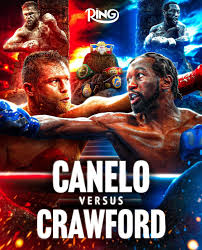
    @Theboxingmadman /   @theboxingmadman.bsky.social

  • Two legends, one ring…

    The landscape of modern boxing is often marked by anticipation, negotiation, and sometimes, frustration. Yet, every so often, the stars align to create a contest that transcends the typical championship bout, a fight that captures the imagination of the entire sporting world. Later this year, on September 12th in the glittering boxing capital of Las Vegas, such an event is set to unfold. Saul ‘Canelo’ Alvarez, the reigning, undisputed king of the super-middleweight division, will defend the Ring Magazine, WBA, WBC, IBF, and WBO titles against none other than Terence ‘Bud’ Crawford, the undefeated maestro who has conquered multiple weight classes below. It’s a clash of titans, a battle for pound-for-pound supremacy, and a fight layered with intrigue, legacy implications, and no small amount of controversy.

    Saul Alvarez, the flame-haired icon from Guadalajara, Jalisco, Mexico, is more than just a boxer; he’s a global phenomenon, the face of the sport for nearly a decade. His journey has been nothing short of remarkable, a testament to skill, resilience, and astute career management. Turning professional at the astonishingly young age of 15 back in 2005, Canelo quickly carved a path through the ranks. His early years were marked by a relentless schedule, honing his craft against older, often overmatched opponents. By 2011, at just 20 years old, he captured his first major world title, the WBC light-middleweight belt, defeating Matthew Hatton. This victory heralded the arrival of a major new force in boxing. Canelo wasn’t just a champion; he possessed a rare combination of power, technical skill, defensive acumen, and crucially, star power. His fanbase grew exponentially, drawn to his exciting style and quiet charisma.

    His reign at 154 pounds saw him unify titles against Austin Trout in 2013, showcasing his ability to adapt against a skilled boxer. That same year, however, he experienced his first taste of defeat, a comprehensive boxing lesson administered by the legendary Floyd Mayweather Jr. For many young fighters, such a high-profile loss could be detrimental. For Canelo, it proved to be a catalyst for evolution. Under the guidance of his long-time trainer Eddy Reynoso, Alvarez refined his style, adding layers to his game, particularly improving his head movement and counter-punching prowess. He moved up to middleweight, engaging in memorable catchweight bouts against fighters like Erislandy Lara, James Kirkland, and Miguel Cotto, defeating the latter in 2015 to capture the WBC and Ring middleweight titles in a fight that felt like a passing of the torch.

    Canelo’s middleweight tenure is perhaps best defined by his epic rivalry with Gennady ‘GGG’ Golovkin. Their first encounter in 2017 ended in a controversial split draw, a result many felt Golovkin deserved. The rematch a year later was another fiercely contested battle, with Canelo securing a narrow majority decision victory, adding the WBA (Super) belt to his collection. These fights showcased Canelo’s chin, his body punching, and his ability to fight effectively on the front foot and the back foot. Never content to rest on his laurels, Canelo continued to seek challenges across weight divisions. He briefly stepped up to super-middleweight to snatch the WBA (Regular) title from Rocky Fielding in 2018, then returned to middleweight to unify the IBF belt against Daniel Jacobs in 2019.

    Perhaps his most audacious move came later that year when he leaped two weight classes to challenge Sergey Kovalev for the WBO light-heavyweight title. Facing a naturally bigger man and a feared puncher, Canelo employed a patient strategy, breaking Kovalev down before delivering a spectacular knockout in the 11th round. This victory made him a four-division world champion, joining an elite club in boxing history. However, it was at 168 pounds, super-middleweight, where Canelo set his sights on ultimate supremacy. In an unprecedented campaign spanning just eleven months from December 2020 to November 2021, Canelo systematically dismantled the division’s best. He outclassed the undefeated Callum Smith to win the WBA (Super) and Ring titles, along with the vacant WBC belt. He forced the slick Billy Joe Saunders to retire on his stool after shattering his orbital bone to add the WBO title. Finally, he methodically broke down Caleb Plant to capture the IBF belt, becoming the first-ever undisputed super-middleweight champion in the four-belt era.

    A subsequent attempt to capture another title at light-heavyweight in May 2022 resulted in his second career loss, a clear unanimous decision defeat to the masterful Dmitry Bivol. Following this setback and a trilogy win over an ageing Golovkin, Canelo focused again on the 168lb division. He defended his undisputed status successfully until being stripped of the IBF belt in 2024 for not facing the mandatory challenger, William Scull. However, just recently in May 2025, Canelo faced and defeated Scull, who had picked up the vacant belt, via unanimous decision in Riyadh, thus becoming a two-time undisputed super-middleweight champion and setting the stage for this colossal showdown with Crawford. With a record now standing at 63 wins, 2 losses, and 2 draws, with 39 knockouts, Canelo Alvarez enters this fight as the established force at 168 pounds, a calculating power-puncher known for his vicious body attacks, educated pressure, and superb counter-punching ability.

    Facing him across the ring will be a man widely considered his equal, if not superior, in pure boxing skill: Terence ‘Bud’ Crawford. Hailing from Omaha, Nebraska, Crawford represents the pinnacle of boxing adaptability and ring intelligence. Like Canelo, Crawford had a solid amateur background, even scoring wins over future champions Mikey and Danny Garcia, though he narrowly missed out on Olympic qualification. He turned professional in 2008, and while his early career didn’t have the immediate spotlight of Canelo’s, he steadily built a reputation as a supremely talented, switch-hitting menace. His breakout performance came in 2014 when he travelled to Scotland to dethrone WBO lightweight champion Ricky Burns in his backyard, showcasing his poise and technical superiority. He defended that title twice, including a thrilling knockout victory over Yuriorkis Gamboa, before deciding to move up.

    It was at light-welterweight (140 pounds) that Crawford truly established himself as an elite force. He captured the vacant WBO title against Thomas Dulorme in 2015 and quickly added the WBC belt by dominating Viktor Postol in 2016. His crowning achievement at the weight came in August 2017 when he faced fellow unified champion Julius Indongo. In a stunning display of destructive precision, Crawford knocked out Indongo in just three rounds to become the undisputed light-welterweight champion, holding all four major belts (WBO, WBC, IBF, WBA) simultaneously. He was the first man to achieve this feat at 140lbs in the four-belt era and only the second male boxer overall at the time, after Bernard Hopkins.

    Having conquered one division, Crawford immediately set his sights on another, moving up to the glamourous welterweight division (147 pounds). Many questioned whether his power and dominance would translate against bigger, stronger opponents. Crawford answered emphatically. In June 2018, he dismantled Jeff Horn to win the WBO welterweight title. He then proceeded to reel off a string of impressive stoppage victories against formidable opposition, including Amir Khan, Kell Brook, and Shawn Porter. His performances were characterised by his seamless ability to switch stances from southpaw to orthodox, his pinpoint accuracy, underrated power, and exceptional finishing instincts. He seemed to dissect opponents, figuring out their weaknesses before clinically exploiting them.

    The fight the world demanded at welterweight was a showdown with fellow undefeated champion Errol Spence Jr. After years of anticipation and negotiation hurdles, the fight finally materialized in July 2023. What was expected to be a competitive, potentially fifty-fifty fight turned into a startlingly one-sided masterclass. Crawford systematically broke Spence down, dropping him multiple times before securing a ninth-round TKO victory. It was a career-defining performance that cemented Crawford’s status as the undisputed welterweight champion and, in the eyes of many, the pound-for-pound best fighter on the planet. This historic win also made Crawford the first male boxer ever to become undisputed in two different weight classes in the four-belt era, a truly remarkable achievement.

    Following the Spence triumph, Crawford further demonstrated his ambition by moving up again, this time to super-welterweight (154 pounds). In August 2024, he faced the dangerous Israil Madrimov for the WBA and interim WBO titles, winning a comfortable unanimous decision. Now, holding those belts and an immaculate record of 41 wins, no losses, with 31 knockouts, Crawford is taking arguably the biggest gamble of his career. He is skipping the middleweight division entirely and jumping straight to super-middleweight (168 pounds) to challenge the established king, Canelo Alvarez. It’s a move fraught with risk, requiring him to overcome a significant size and natural weight disadvantage against one of the most powerful and proven fighters in the sport.

    The stylistic matchup is utterly fascinating, a classic confrontation between contrasting philosophies and physical attributes. Canelo, the orthodox fighter, is a master of calculated aggression. He stalks his opponents, applying educated pressure, cutting off the ring effectively. His defence relies heavily on upper body and head movement, slipping and rolling with punches while staying in position to unleash devastating counter-hooks, particularly to the body. His left hook to the liver is legendary, a weapon that has debilitated numerous opponents. He possesses genuine one-punch knockout power in either hand and is incredibly strong physically at 168 pounds. He is patient, often taking the early rounds to download information before increasing his offensive output.

    Crawford, primarily a southpaw, also comfortable fighting orthodox, is the epitome of fluidity and adaptability. His defence is built on footwork, distance control, and sharp reflexes. He uses his long reach and exceptional jab to dictate the range, often frustrating opponents before they can even get into position to punch. His ability to switch stances seamlessly disrupts rhythm and creates unusual angles for his attacks. Crawford is a clinical counter-puncher himself, possessing deceptive power and hand speed. His ring IQ is considered among the best in the sport; he makes adjustments on the fly, identifies openings with uncanny precision, and possesses a killer instinct when he senses an opponent is hurt. He isn’t just technically brilliant; he’s mean in the ring, willing to trade when necessary, always with calculated intent.

    The tactical battle promises to be a high-stakes chess match. Canelo’s path to victory likely involves negating Crawford’s movement and speed advantage. He must effectively cut off the ring, forcing Crawford towards the ropes or corners where his elusiveness is diminished. Once in range, Canelo needs to invest heavily in body work early and often. Attacking Crawford’s body could slow down his legs, reduce his ability to switch stances effectively, and potentially create openings upstairs later in the fight. Canelo needs to impose his strength and power, making Crawford feel the difference in weight classes, forcing him into exchanges where Canelo’s heavier hands could be decisive. Patience will be key, avoiding reckless lunges that Crawford could expertly counter.

    For Crawford, the challenge is immense, however, far from insurmountable. His primary weapon will be his movement and boxing IQ. He needs to utilize lateral movement, angles, and feints to keep Canelo turning and resetting, preventing the Mexican star from planting his feet to deliver power shots. Establishing his jab, from both stances, will be crucial for controlling distance and disrupting Canelo’s rhythm. Crawford must resist the urge to stand and trade for prolonged periods, instead focusing on sharp, accurate counter-punching, exploiting the openings Canelo presents when he commits to his own offence. Speed will be his ally – speed of hand and speed of foot. He might look to outwork Canelo, potentially targeting the champion’s perceived tendency to fade slightly in the later rounds. The biggest question mark remains whether Crawford’s power will be sufficient to earn Canelo’s respect at 168 pounds and whether his chin can withstand Canelo’s proven power at this weight.

    While the boxing world eagerly anticipates this incredible matchup, the fight doesn’t exist in a vacuum. Its announcement immediately sparked discussion about another fighter: David Benavidez. Known as ‘The Mexican Monster’, Benavidez is an undefeated (30-0, 24 KOs) former two-time WBC super-middleweight champion, known for his relentless pressure, volume punching, and concussive power. He holds the record as the youngest super-middleweight champion in history. Many purists and hardcore fans believe Benavidez, a natural 168-pounder (though recently moved up to light-heavyweight himself, capturing WBA and WBC titles there) with Mexican heritage, represents the biggest and most dangerous challenge to Canelo in the division. For years, calls for a Canelo vs. Benavidez fight have grown louder, fueled by Benavidez’s impressive performances and outspoken desire for the bout.

    The perception among critics is that Canelo has actively avoided facing Benavidez, opting instead for challenges perceived as less threatening or, in Crawford’s case, significantly smaller. Benavidez himself has voiced this frustration, suggesting Canelo sees him as the “most dangerous fighter” and is unwilling to take the risk. Canelo, for his part, has dismissed these claims, questioning Benavidez’s resume and stating he’s earned the right to choose his opponents after fighting “all the best” at 168. Choosing to fight Crawford, a fighter moving up two weight classes, over the man many see as his prime divisional rival, has undeniably cast a shadow over this super-fight for some observers. They see it as Canelo potentially cherry-picking a smaller, albeit supremely skilled, opponent while avoiding the brute force and natural size of Benavidez.

    Regardless of the Benavidez situation, the Canelo vs. Crawford fight is undeniably a mega-event with the potential to shatter records. Pitting two of the sport’s biggest stars, both consistently ranked at the apex of pound-for-pound lists, against each other for the undisputed super-middleweight championship guarantees enormous global interest. Pay-per-view numbers are expected to be colossal, and the gate receipts in Las Vegas could reach historic levels. It’s the kind of fight that transcends the boxing bubble and captures mainstream attention. Crawford, despite his incredible credentials and undefeated record, will likely enter the ring as a slight underdog, purely due to the physical realities of moving up 14 pounds from his last undisputed weight class to face an established and powerful champion like Canelo. He is the current WBA and interim WBO Super-Welterweight champion, although the leap to 168 is significant.

    The stakes could not be higher. For Canelo Alvarez, a victory would add another legendary name to his already Hall of Fame resume, silencing doubters about his willingness to face elite P4P challengers (even if the weight disparity remains a talking point) and further solidifying his reign at 168 pounds. It would be another massive commercial success, reinforcing his position as boxing’s cash king. A loss, however, particularly to a smaller man moving up, would be a significant blow to his legacy. For Terence Crawford, this fight represents an opportunity for transcendent greatness. A victory would be arguably one of the most audacious and impressive feats in modern boxing history – becoming undisputed in a third weight class, defeating the face of boxing who is naturally much larger. It would catapult him into the conversation of the greatest fighters of all time, achieving something truly unprecedented in the four-belt era. Defeat would tarnish his perfect record, although it likely wouldn’t diminish his standing significantly, given the immense challenge he’s undertaken.

    On September 12th, Las Vegas will witness a collision of styles, eras, and ambitions. Will Canelo’s power, strength, and calculated pressure prove too much for the smaller man? Or will Crawford’s sublime skill, speed, and adaptability conquer the size difference and shock the world? It’s power versus precision, size versus speed, undisputed versus undisputed ambition. Amidst the glamour, the potential records, and the lingering shadow of David Benavidez, two legends will step into the ring to answer these questions and etch another unforgettable chapter into the annals of boxing history.

    It’s going to be classic, not seen for decades…

    The Boxingmadman – follow me on X (Twitter) / Bluesky

    @Theboxingmadman /   @theboxingmadman.bsky.social

  • The air crackled with an electricity decades in the making last night in London.

    Under the bright lights of the Tottenham Hotspur Stadium, a grudge match steeped in family history, controversy, and immense pressure finally reached its boiling point. Chris Eubank Jr and Conor Benn, sons of British boxing legends Chris Eubank Sr and Nigel Benn, met on Saturday, April 26th, 2025, to write their own chapter in a rivalry that has captivated the nation for over 30 years. Plagued by delays, accusations, and dramatic weight stipulations, the fight almost never happened. Yet, last night, it delivered a contest worthy of the name, a brutal and enthralling 12-round battle that saw Eubank Jr emerge victorious via unanimous decision, handing Benn his first professional defeat.

    This wasn’t just a fight; it was a saga reaching a dramatic climax, leaving fans breathless and already debating the inevitable question: what happens next?

    To understand the magnitude of last night’s event, we must revisit the chaotic collapse of the originally scheduled bout in October 2022. Billed as “Born Rivals,” the fight was set to take place at a catchweight of 157lbs – a middle ground between Benn’s natural welterweight (147lbs) and Eubank Jr’s preferred middleweight (160lbs). The weight itself was a major talking point. Eubank Jr, who had competed as high as super-middleweight (168lbs), was cutting down significantly. Concerns were voiced, most notably by his own father, Chris Eubank Sr, who publicly pleaded for the fight not to happen, fearing the detrimental effects of the weight cut on his son’s health and citing the dangers inherent in the sport. Adding another layer of complexity was a strict rehydration clause, reportedly limiting the weight gain allowed between the official weigh-in and a check weigh-in on fight morning, designed to prevent Eubank Jr from gaining too significant a size advantage.

    However, these weight concerns were utterly eclipsed just days before the scheduled 2022 fight. News broke that Conor Benn had returned two positive voluntary drug tests for the banned substance Clomifene. The tests, conducted by VADA, sent shockwaves through the sport. Despite Benn protesting his innocence, the British Boxing Board of Control (BBBofC) declared the contest “prohibited.” Although promoters explored ways to proceed, the fight was officially cancelled just 48 hours before the first bell. The fallout was immense. Benn faced fierce criticism and a provisional suspension. His team launched an investigation, leading the WBC controversially suggested months later that a “highly elevated consumption of eggs” might explain the findings – a conclusion met with widespread skepticism. Benn remained sidelined in the UK, however, kept active with two fights in the US while his situation was resolved. Eventually, after legal challenges, his suspension was lifted, clearing the path for him to potentially resume his career in Britain and revisit the Eubank Jr fight.

    With Benn cleared, talk inevitably turned back to the Eubank Jr showdown. The appetite remained, perhaps even intensified. Negotiations resumed, and a new date was set: April 26th, 2025, at the much larger Tottenham Hotspur Stadium. The terms were slightly different, with the fight contracted at the official middleweight limit of 160lbs. This suited Eubank Jr better, though Benn still had to move up significantly. Crucially, a rehydration clause remained, reportedly limiting fight-day weight to 170lbs. The build-up was predictably intense. Press conferences were fiery, highlighted by Eubank Jr slapping Benn with an egg in February, referencing the earlier controversy. The weigh-in brought more drama: Benn made weight comfortably, Eubank Jr missed the 160lb mark fractionally, incurring a reported £375,000 fine payable to Benn. Despite this, the fight proceeded. Both fighters successfully made the 170lb limit at the fight-day check weigh-in. In a final, unexpected twist, Chris Eubank Sr, previously estranged and critical of the fight, appeared alongside his son for a dramatic ring walk, electrifying the stadium.

    As the first bell rang, the roar inside Tottenham Hotspur Stadium was deafening. Eubank Jr, vaulting the ropes in signature style, looked focused. Benn appeared equally intense. Early rounds saw Eubank Jr use his size and reach, establishing the jab. Benn looked to close the distance and unleash his power, landing sharp counters and a notable right cross in the opening round. The fight developed into a fascinating, brutal tactical battle. Eubank Jr mixed disciplined boxing with showmanship, while Benn pressed aggressively. It became a test of wills. The middle rounds were fiercely contested, both men landing telling blows. It was a high-octane, back-and-forth affair praised by pundits for its heart and action. Entering the championship rounds, the pace remained incredibly high. Eubank Jr finished stronger, his conditioning holding up well as he landed cleaner shots in the final stages. The 12th round was particularly wild, a fittingly chaotic end to a fight that lived up to the hype, both men clearly exhausted it felt like family pride was keeping them, both upright, in the process proving the sons could craft their own compelling chapter in the Eubank-Benn story.

    After 12 grueling rounds, the decision went to the judges. Michael Buffer announced a unanimous decision for Chris Eubank Jr, with all three judges scoring the bout 116-112. The verdict reflected the view that Eubank Jr’s stronger finish and cleaner work edged a highly competitive fight. Post-fight, Eubank Jr admitted underestimating Benn, however, he still celebrated upholding the family name, clearly moved by his father’s presence. Conor Benn, tasting defeat for the first time (now 23-1), cited inactivity and immediately called for a rematch. Nigel Benn expressed pride for his son.

    The dust has barely settled… so what does the future hold? For Chris Eubank Jr (now 35-3), this victory is massive, revitalising his career. He showed resilience and skill, boosting his stock significantly. The most obvious option is the rematch with Benn – commercially huge and desired by many. World title ambitions at middleweight are reignited, and whispers of a lucrative fight against Canelo Alvarez, potentially facilitated by Turki Alalshikh, persist. For Conor Benn (now 23-1), the first loss is a setback, although his valiant performance against a bigger man keeps him relevant. The rematch is his clear preference. Alternatively, he could return to welterweight (147lbs) where he was highly ranked, or campaign at light-middleweight (154lbs). A rebuilding fight might also be considered.

    Should there be a rematch? Absolutely.

    This fight demanded it – compelling, action-packed, and close enough. The narrative, rivalry, and commercial appeal make it almost inevitable. Expect Eubank Jr vs Benn II to be announced before long.

    Last night wasn’t just about settling scores; it was about legacy. Chris Eubank Jr stepped out from his father’s shadow, delivering a career-defining performance under immense pressure. Conor Benn, despite the loss, showed heart and skill, proving his mettle. They resurrected a rivalry and made it their own, delivering a fight that transcended the drama. From the chaos of 2022 to last night’s final bell, the Eubank Jr-Benn saga has once again been pure boxing theatre.

    It feels less like an ending and more like the explosive end of Act One, with the promise of an equally dramatic Act Two waiting in the wings.

    The rivalry isn’t over; it has simply entered a new, fascinating phase.

    The Boxingmadman – follow me on X (Twitter) / Bluesky

    @Theboxingmadman /   @theboxingmadman.bsky.social

  • Boxing loves a trilogy.

    There’s something inherently dramatic about two fighters locked in a rivalry that demands a decisive third act. When the score stands level at one win apiece, the rubber match becomes less about just winning a fight and more about defining legacies, settling debates, and charting the future course of two careers.

    This Saturday, April 26th, 2025, we get exactly that kind of high-stakes drama as Anthony Yarde and Lyndon Arthur prepare to collide for the third, and likely final, time. Adding to the occasion, this pivotal light heavyweight clash unfolds under the bright lights of the magnificent Tottenham Hotspur Stadium in London, serving as chief support to the explosive Chris Eubank Jr. vs Conor Benn encounter, all live on DAZN PPV.

    Forget the main event for a moment; for many hardcore UK fight fans, Yarde-Arthur III is where the real, tangible P4P implications lie.

    It’s a rivalry that has simmered for years, rooted in contrasting styles and punctuated by definitive, yet opposing, outcomes in their first two meetings. Pride isn’t just on the line; it’s woven into the fabric of this fight. Add crucial world rankings and the burning desire for another shot at global glory, and you have a recipe for a potentially classic encounter. So, how did this story unfold, what have these fighters been through since their last meeting, and why does this third chapter feel so significant right now?

    Let’s rewind to December 5th, 2020. The setting was the unique, somewhat sterile environment of Church House in London, dictated by pandemic restrictions. Anthony Yarde, the explosive power-puncher from East London, entered the ring as the clear favourite. Lyndon ‘King’ Arthur, the slick boxer from Manchester, was seen by many as a capable domestic operator but perhaps lacking the X-factor to derail ‘The Beast’. What transpired over 12 rounds confounded expectations. Arthur produced a career-best performance built entirely around his superb left jab. It was a piston-like weapon, fired relentlessly, controlling the distance, disrupting Yarde’s rhythm, and preventing him from setting his feet to unleash his vaunted power. Yarde looked uncharacteristically hesitant, almost passive. While he later spoke movingly about the devastating personal losses he’d suffered due to Covid-19 impacting his mental state, tactically, he seemed unable to adapt or find a way inside Arthur’s ramrod defence. Round after round, Arthur banked points, frustrating his opponent and the viewers expecting fireworks. The judges were split, but the decision rightly went Arthur’s way. He retained his Commonwealth title and added the vacant WBO Inter-Continental strap, pulling off a significant upset and throwing Yarde’s world title trajectory into question.

    The narrative immediately shifted. Was Yarde overrated? Had Arthur been underestimated? The demand for a rematch was instant, fuelled by Yarde’s insistence that the real Anthony Yarde hadn’t shown up. He promised revenge, and exactly 364 days later, on December 4th, 2021, at the Copper Box Arena, he delivered. From the opening bell, this was a different Anthony Yarde. Gone was the hesitancy; replaced by focused, intelligent aggression. He wasn’t just winging power shots; he was cutting off the ring, working the body, and systematically dismantling the jab that had befuddled him a year prior. Arthur, perhaps expecting a similar pattern, seemed unprepared for the ferocity and calculated pressure coming his way. Yarde targeted the body relentlessly, visibly hurting Arthur and slowing his movement. In the fourth round, Yarde trapped Arthur on the ropes and unloaded a vicious volley of punches. Arthur crumpled to the canvas, unable to beat the count. The referee waved it off. Yarde roared in triumph, the score emphatically levelled at 1-1, reclaiming the same Commonwealth and WBO Inter-Continental titles he’d lost. The rivalry had its balance, setting the stage perfectly for an eventual decider.

    However, that decider has taken nearly three and a half years to materialise. In the interim, both fighters have navigated the treacherous waters of the light heavyweight division, tasting both success and bitter disappointment at the world level. Anthony Yarde secured his mandatory position and challenged the fearsome unified champion Artur Beterbiev in January 2023. In a thrilling, back-and-forth contest at Wembley Arena, Yarde displayed incredible heart and courage, troubling the champion and landing significant punches. He was arguably up on some scorecards before Beterbiev’s relentless pressure and concussive power eventually told in the eighth round, forcing Yarde’s corner to rightly signal the end. Despite the TKO loss, Yarde emerged with immense credit, proving he belonged at the elite level. Since then, he’s rebuilt patiently, dispatching Jorge Silva and Marko Nikolic via early KOs before outpointing the durable Ralfs Vilcans last October.

    Lyndon Arthur also earned his shot at the top tier. After rebuilding with wins over Walter Gabriel Sequeira and Joel McIntyre, he captured the vacant IBO world title with a dramatic late knockout of Braian Nahuel Suarez in September 2023. This propelled him into a unification fight against WBA Super Champion Dmitry Bivol in Saudi Arabia just before Christmas 2023, as part of the ‘Day of Reckoning’ card. Facing one of the modern masters of boxing, Arthur found himself thoroughly outclassed. Bivol’s sublime footwork, hand speed, and ring intelligence proved too much, resulting in a shutout points decision loss for Arthur, though he showed toughness to survive a late knockdown and hear the final bell. Like Yarde, Arthur sought to bounce back, returning in June 2024 to edge out Liam Cameron via split decision, picking up the WBA Inter-Continental title in the process.

    And so, here we are. Two fighters, both now 33 years old, both battle-hardened by world championship experiences, both knowing that this third fight is likely their best, perhaps last, chance to force their way back into genuine world title contention. The landscape they survey is dominated by the masterful Dmitry Bivol, who recently unified further by beating Beterbiev and holds the WBA, IBF, and WBO belts, and the dangerous David Benavidez, the new WBC champion who moved up from super middleweight. Below them sits a chasing pack brimming with talent – Joshua Buatsi, David Morrell, Albert Ramirez, Callum Smith, Oleksandr Gvozdyk, Willy Hutchinson – all vying for position. The winner of Yarde vs Arthur III doesn’t just gain bragging rights; they gain crucial leverage and momentum in arguably boxing’s most competitive division right now.

    What will decide it? It’s the classic power vs skill dynamic, revisited. Yarde needs to replicate the intelligent pressure he applied in the rematch. He must use feints, cut off the ring effectively, and punish Arthur’s body to slow him down before unleashing those fight-ending shots upstairs. He cannot afford to simply follow Arthur around or wait too long, as he did in their first meeting. The Beterbiev fight showed his heart is undeniable, but also perhaps reinforced questions about his stamina over 12 hard rounds, although his recent points win over Vilcans suggests improvement there.

    For Arthur, the blueprint remains the jab. It has to be sharp, consistent, and commanding from the outset. He needs impeccable footwork to control the range, frustrate Yarde, and avoid getting trapped on the ropes. He showed immense toughness against Bivol but lacked the offensive output to trouble him. Against Yarde, he needs to be busier, perhaps incorporating more right hands and combinations off the jab, without lingering in punching range. He must prove the knockout loss in the rematch was an anomaly and that his chin can withstand Yarde’s power if he sticks rigidly to his game plan. He has spoken about being “lackadaisical” in the past and vows that won’t happen this time.

    Beyond the tactical battle, there are the intangibles. The pressure of a trilogy can weigh heavily. Who handles the unique atmosphere of a stadium fight better? Both men have faced down adversity in world title fights; has that experience forged greater resilience or left deeper scars? Yarde seems to feed off the big occasion, while Arthur is perhaps the more reserved character. How these psychological factors play out could be just as important as the physical contest.

    The winner catapults themselves right back into the mix. A huge domestic clash with Joshua Buatsi, long talked about, becomes a very real possibility. Depending on rankings and boxing politics, a shot at one of the champions or a final eliminator against another top contender isn’t out of the question. They stay relevant, they stay in the conversation, they keep the dream alive.

    For the loser, the road ahead looks considerably tougher. Another defeat, especially to a domestic rival, significantly damages their standing. Rebuilding becomes a longer, harder process, and the window for securing another world title opportunity narrows considerably. It’s not necessarily career-ending, but it represents a monumental hurdle to overcome.

    This Saturday, therefore, offers more than just another fight. It’s the culmination of a rivalry, a test of wills, a battle for future relevance. Will it be Yarde’s power and aggression that prevails once more, or can Arthur’s boxing skill and discipline regain the upper hand? It’s a fascinating clash that promises tension, drama, and potentially explosive action.

    Whatever happens under the lights at Tottenham Hotspur Stadium, the story of Anthony Yarde and Lyndon Arthur will have its definitive final chapter written.

    Who do you see taking it? Let the debate begin…

  • Portman Road Promises Fireworks

    The world of heavyweight boxing thrives on narratives, on clashes of style and personality, on moments where destiny seems tangibly close. On June 7th, 2025, Portman Road, the hallowed turf of Ipswich Town Football Club, will become an extraordinary crucible for precisely such a moment. For the first time, this stadium will swap the roar of football fans for the thunderous echoes of leather on leather as local hero Fabio Wardley steps into the ring against the controversial and formidable American, Jarrell ‘Big Baby’ Miller. This isn’t just another fight; it’s a collision course laden with significance, pitting Wardley’s astonishingly rapid, unconventional ascent against Miller’s turbulent quest for redemption and a final grasp at elite contention. The prize on the line, the WBA Interim Heavyweight title, only adds fuel to a fire already burning intensely, promising a spectacle that could define the next chapter for both men.

    Fabio Wardley’s journey to this point is nothing short of remarkable, a tale seemingly ripped from the pages of a boxing fantasy. In a sport steeped in tradition, where pedigrees are often forged through lengthy amateur careers and carefully managed professional introductions, Wardley stands as a stark anomaly. His foundation wasn’t built in national championships or international tournaments; it was laid under the brighter, less refined lights of the white-collar boxing scene. With just four bouts in that sphere, lacking any formal amateur background whatsoever, Wardley took the audacious leap into the professional ranks. Many observers scoffed, predicting a swift and brutal reality check. Yet, fight by fight, Wardley has systematically dismantled those predictions, replacing scepticism with awe.

    Managed by former heavyweight contender Dillian Whyte and meticulously guided by trainer Robert Hodgins, Wardley has carved a path defined by explosive power and an improving ring intelligence. Standing at an imposing six feet five inches with a 78-inch reach, the Ipswich native possesses the physical attributes of a modern heavyweight, it’s the devastating impact of his punches that has truly marked his rise. His record, as of early 2025, speaks volumes: eighteen victories against zero losses, with a solitary draw, and a staggering seventeen of those wins coming by way of knockout. This isn’t just power; it’s fight-ending, concussive force that has overwhelmed opponent after opponent.

    His climb through the domestic ranks has been impressively swift. The acquisition of the vacant English heavyweight title came in August 2020 with a third-round demolition of Simon Vallily. This victory served notice that Wardley was more than just a raw puncher; he possessed poise and finishing instincts. The real breakthrough, however, arrived in November 2022. Facing the highly-regarded Nathan Gorman for the vacant British heavyweight title, Wardley delivered a career-best performance. He dropped Gorman multiple times before forcing a corner stoppage in the third round, claiming the prestigious Lonsdale Belt in emphatic fashion. This wasn’t just a win; it was a statement – Wardley had arrived.

    The momentum continued into 2023. In October, on the undercard of the colossal Tyson Fury vs. Francis Ngannou event in Saudi Arabia, Wardley faced domestic rival David Adeleye in a highly anticipated grudge match. With the British title on the line, alongside the vacant Commonwealth championship and WBO European belt, the stakes were immense. Amidst considerable pre-fight animosity, Wardley showcased his power and resilience, stopping Adeleye in the seventh round after overcoming some challenging moments. This victory added more silverware to his collection – the Commonwealth, WBA Continental, and WBO European titles joined his British crown – and further solidified his standing as the clear number one heavyweight in Britain outside of the established world-level elite.

    However, the path hasn’t been without its tests. In March 2024, Wardley faced his toughest challenge to date against Olympic bronze medallist Frazer Clarke. In a brutal, back-and-forth encounter that captivated fans and was later lauded as the British Boxing Board of Control’s ‘Fight of the Year’, neither man could secure the definitive edge. Wardley tasted the canvas, however, showed tremendous heart to recover, battling Clarke on ferocious terms throughout the twelve rounds. The judges ultimately rendered a split draw, a fair reflection of a contest where both men left everything in the ring. While the draw momentarily halted his knockout streak, the fight arguably enhanced Wardley’s reputation, proving his toughness, heart, and ability to compete at a higher level against a technically proficient boxer. It demonstrated that he could dig deep, weather storms, and fight effectively even when his signature power wasn’t producing an early night. This experience, this gruelling twelve-round war, likely provided invaluable lessons as he targets genuine world honours.

    Now, the stage is set for the biggest night of his career, fighting for a version of a world title in his hometown, at the stadium he has supported since childhood. “As a proud Tractor Boy born and bred in Ipswich, this is a dream come true for me,” Wardley has stated, the emotion palpable. “Fighting for a world title at Portman Road means everything to me.” This homecoming isn’t just symbolic; it’s the culmination of an improbable dream, a testament to self-belief and relentless dedication against the odds. His style, often characterised by controlled aggression and seeking out the knockout, promises entertainment, although facing Miller presents a unique set of challenges he hasn’t encountered before.

    Across the ring stands Jarrell ‘Big Baby’ Miller, a fighter whose career narrative is as complex and controversial as Wardley’s is inspirational. Miller is a physical anomaly himself, often weighing in well north of 300 pounds, carrying immense bulk on his six-foot-four-inch frame. Hailing from Brooklyn, New York, Miller’s background includes kickboxing before transitioning fully to boxing. His style is built on relentless pressure, suffocating volume punching, and using his sheer size to lean on and wear down opponents. He is loud, brash, and has never shied away from incendiary trash talk, embodying the ‘villain’ role with gusto.

    For a period, Miller looked poised to crash the heavyweight title picture. He amassed an unbeaten record, punctuated by stoppage victories over respected names like Gerald Washington, Mariusz Wach, Johann Duhaupas, and Tomasz Adamek. His high-volume, walk-forward style, combined with his personality, made him a marketable, albeit divisive, figure. He talked his way into a lucrative world title shot against Anthony Joshua, then the unified champion, scheduled for Madison Square Garden in June 2019. It was the opportunity Miller had craved, the chance to back up his boasts on the grandest stage.

    Then, disaster struck. In the lead-up to the fight, Miller failed multiple pre-fight drug tests, testing positive for a cocktail of banned substances including GW1516, EPO, and HGH. The lucrative Joshua fight collapsed, leaving his reputation in tatters and resulting in a suspension. It was a catastrophic fall from grace, robbing him of a life-changing payday and championship opportunity. His protestations of innocence or ignorance fell on deaf ears, the evidence damning.

    After serving his initial suspension, Miller plotted a comeback, only to fall foul of the testers again in 2020 ahead of a planned return fight against Jerry Forrest. Another positive test, this time for GW1516 again, led to a further, longer ban imposed by the Nevada State Athletic Commission. These repeated infractions cemented his pariah status in the eyes of many fans and pundits. The narrative shifted from promising contender to cautionary tale, a symbol of talent squandered through poor choices and attempts to cheat the system. Trust was shattered, and his future in the sport looked bleak.

    Yet, Miller persevered. Following the expiration of his second significant ban, he returned to the ring in mid-2022. He secured low-key comeback wins before stepping up slightly in March 2023 to face former WBA ‘regular’ champion Lucas Browne in Dubai. Miller showcased his trademark pressure and volume, eventually stopping the faded Browne in the sixth round. It was a necessary win, demonstrating he still possessed offensive firepower, however, against an opponent far removed from his prime.

    His momentum faced a significant check in December 2023. Sharing the ring with rising British contender Daniel Dubois on the ‘Day of Reckoning’ card in Saudi Arabia, Miller started aggressively, imposing his size and throwing barrages of punches. However, as the fight progressed, Dubois’s superior conditioning, power, and boxing discipline began to tell. Miller, visibly tiring and absorbing heavy shots, was eventually stopped on his feet in the tenth and final round. It was the first stoppage loss of Miller’s professional career and raised serious questions about his stamina and ability to compete with younger, more athletic heavyweights over the championship distance.

    Most recently, Miller fought to a majority draw against former unified world champion Andy Ruiz Jr. in August 2024. Reports from that bout suggested a competitive affair where Miller’s pressure had moments of success, Ruiz’s faster hands and combination punching also found their mark. The draw kept Miller relevant and didn’t erase the doubts lingering from the Dubois defeat. His activity level has been sporadic, and his performances, while occasionally showing flashes of his old offensive prowess, haven’t consistently suggested he is back to the form that earned him the initial Joshua shot.

    Compounding the questions surrounding his recent form is the controversy regarding his rapid ascent in the WBA rankings. Despite the Dubois loss and the Ruiz draw, Miller found himself elevated significantly by the sanctioning body, moving from 13th to 4th, a jump that raised eyebrows across the boxing community. This climb, culminating in the sanctioning of this interim title fight against Wardley, has led to accusations of preferential treatment and further scrutiny of boxing’s often-criticised ranking systems, especially given Miller’s checkered past with performance-enhancing drugs. For Miller, this fight isn’t just about capturing a belt; it’s about proving his legitimacy, silencing the critics, demonstrating he can still compete at the highest level without banned substances, and perhaps securing one last chance at a major payday and undisputed title contention.

    The stylistic matchup itself is fascinating, a classic contrast. Wardley brings speed, athleticism, and proven one-punch knockout power. He has shown improvement in his boxing technique, footwork, and defence, particularly evident in the Adeleye fight and the Clarke war. However, he has never faced anyone with Miller’s sheer size, relentless pressure, and willingness to absorb punishment to inflict his own. Wardley will need to use his movement, establish his jab, and counter Miller’s aggression effectively. He cannot afford to stand stationary and allow Miller to lean on him, sap his energy, and unload his high-volume attacks, particularly to the body. Wardley’s power is his ace, and landing cleanly on the historically durable, albeit recently stopped, Miller will be key.

    Miller, conversely, must impose his physical advantages from the opening bell. He needs to cut off the ring, force Wardley into exchanges, and make it an ugly, attritional fight. His best path to victory lies in overwhelming Wardley with volume, testing his stamina and resilience in the trenches. Miller’s engine, however, is a significant question mark, especially over twelve rounds against a younger, seemingly better-conditioned athlete. He faded noticeably against Dubois, and while he went the distance with Ruiz, he wasn’t facing the same level of consistent power threat that Wardley presents. Furthermore, Miller’s defence can be porous; he relies on his chin and sheer bulk to absorb shots, a risky strategy against someone with Wardley’s knockout ratio. The psychological element also looms large. Wardley fights with the fervent backing of his hometown crowd, a factor that can lift a fighter immeasurably. Miller enters as the clear antagonist, needing to block out the hostility and focus solely on executing his game plan.

    Predicting the outcome requires weighing Wardley’s momentum, power, and home advantage against Miller’s size, experience, and desperation. Miller’s best chances likely lie in the early to mid-rounds. If he can successfully bully Wardley, trap him on the ropes, and unload sustained combinations, he could potentially overwhelm the Ipswich man or build a significant lead on the scorecards. His sheer mass makes him difficult to manoeuvre and tie up, and his inside fighting can be effective if he closes the distance consistently. He will undoubtedly test Wardley’s chin and resolve in a way no previous opponent has.

    However, the smart money, and the narrative arc of both careers, seems to favour Fabio Wardley, particularly as the fight progresses into the later rounds. Wardley has demonstrated the ability to carry his power late, as seen in the Adeleye fight. While the Clarke fight went the distance, it proved Wardley could navigate twelve hard rounds and maintain a high work rate. Miller, on the other hand, has shown clear vulnerabilities in terms of stamina. The Dubois fight exposed his tendency to slow dramatically under pressure and sustained attack. Even in victory against Browne, he absorbed punches, and the Ruiz draw showed he could be out-boxed for stretches.

    Wardley’s speed advantage, both hand and foot, should allow him to create angles and land damaging shots as Miller plods forward. While Miller’s chin has historically been solid, the stoppage loss to Dubois suggests it may not be impregnable, especially after years of absorbing punishment and the potential long-term effects of past PED use wearing off. Wardley hits exceptionally hard, and unlike Dubois who perhaps focused more on breaking Miller down systematically, Wardley possesses the kind of one-shot power that can change a fight in an instant.

    It is probable that Miller will have success early, making the opening rounds uncomfortable and perhaps even dangerous for Wardley. He will push the pace, throw punches in bunches, and try to impose his will through brute force and size. Wardley will need to be disciplined, use his footwork, weather the inevitable storm, and pick his shots carefully. As the rounds wear on, Miller’s output is likely to decrease, his movements becoming more laboured. This is where Wardley’s superior conditioning and explosive power should come into play. Expect Wardley to begin finding a home for his right hand and left hook with increasing frequency from the middle rounds onwards. As Miller tires and his defensive discipline wanes, openings will appear. Wardley has shown the killer instinct to capitalize on such moments.

    The only outcome I see is a Fabio Wardley victory by stoppage, likely occurring somewhere between the eighth and tenth rounds. Miller’s initial onslaught will test Wardley, ultimately, the combination of Wardley’s power, speed, conditioning, and the emotionally charged atmosphere of Portman Road will prove too much for the ageing and controversial American. Miller’s resilience will likely see him through the first half of the fight, however the sustained accuracy and power of Wardley, coupled with Miller’s questionable gas tank, points towards a late finish.

    June 7th promises to be more than just a boxing match; it’s a potential coronation for Wardley, the ultimate validation of his unique path, celebrated on home soil. For Miller, it represents perhaps the final, defiant stand in a career defined by extremes – immense potential marred by self-inflicted wounds. When the bell rings at Portman Road, two vastly different heavyweight narratives will collide, and only one man will emerge with his trajectory pointing firmly towards the pinnacle of the division. The roar of the crowd will be deafening, the stakes immense, and the action inside the ropes promises to be explosive.

    Fabio Wardley’s fairytale journey looks set to gain its most dramatic chapter yet.

    Greatness awaits…

    The Boxingmadman – follow me on X (Twitter) / Bluesky
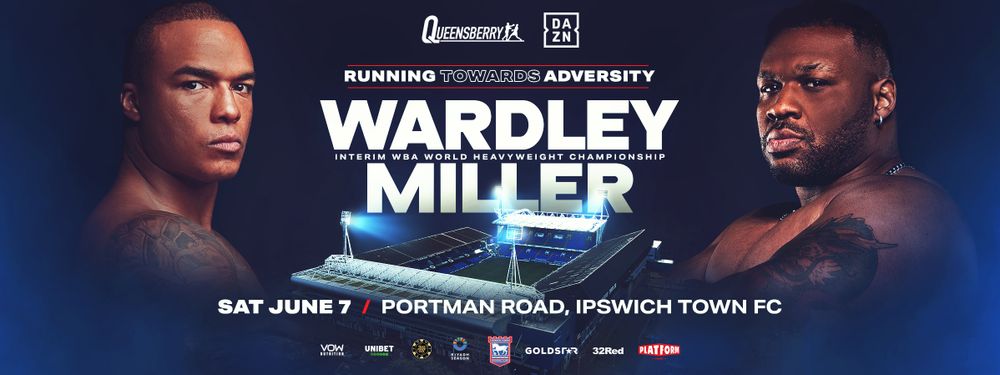
    @Theboxingmadman /   @theboxingmadman.bsky.social

  • The heavyweight division, a realm perpetually simmering with anticipation and the promise of earth-shattering collisions, is poised for another significant chapter as the formidable Joe “The Juggernaut” Joyce locks horns with the relentless Filip “El Animal” Hrgovic. This is not merely another fight; it’s a collision of contrasting styles, a test of wills forged in the fires of numerous battles, and a pivotal moment for both men as they navigate the treacherous landscape towards world title contention. The air crackles with the electricity of expectation, and the boxing world holds its breath, eager to witness which of these heavyweight behemoths will emerge victorious, their aspirations emboldened, and which will face the harsh reality of a setback on their journey to the pinnacle of the sport.

    Joe Joyce, a man who has earned his moniker through sheer durability and an unwavering commitment to relentless pressure, presents a unique challenge to any opponent. His strengths are as undeniable as his imposing physique. Foremost among these is his remarkable punch resistance. Joyce has absorbed tremendous punishment throughout his career, often walking through shots that would crumple lesser fighters. This granite chin allows him to implement his primary weapon: a suffocating, high-volume attack. He possesses a tireless engine, constantly marching forward, throwing a steady stream of punches from a variety of angles. His power, while perhaps not of the one-punch knockout variety, is cumulative and debilitating. Opponents often find themselves overwhelmed by the sheer volume and relentless nature of his assault, their defences gradually eroding under the constant barrage. Joyce’s southpaw stance further complicates matters for many orthodox fighters, forcing them to adjust their usual strategies and opening up different avenues of attack for the Briton. His big wins speak volumes about his capabilities. The emphatic stoppage of Daniel Dubois, a highly touted prospect at the time, showcased Joyce’s ability to withstand early pressure and ultimately break down a powerful opponent. His victory against Joseph Parker, resulting in a knockout, demonstrated his ability to outwork and ultimately stop a former world champion known for his speed and movement. Even in his recent losses to Zhilei Zhang and Derek Chisora, Joyce displayed his incredible resilience, absorbing significant damage before succumbing to the relentless power of both fighters. It’s these fights, both wins and losses, have served to solidify Joyce’s reputation as a tough, durable, and relentlessly aggressive force in the heavyweight division.

    However, even the most formidable fighters have vulnerabilities, and Joyce is no exception. His primary weakness lies in his relatively slow footwork and head movement. While his chin allows him to withstand punishment, this can also lead to him absorbing unnecessary shots. Faster, more mobile opponents with sharp counter-punching skills have the potential to exploit this aspect of his game. While his work rate is a strength, sometimes his punches can lack a certain snap and precision, relying more on volume and attrition. The two losses to Zhilei Zhang exposed this vulnerability. Zhang, with his significant power and accurate southpaw shots, was able to land cleanly and repeatedly, eventually overwhelming Joyce. These defeats served as a stark reminder that while durability is a valuable asset, it cannot be relied upon indefinitely against elite-level power.

    On the other side of the ring stands Filip Hrgovic, a fighter who embodies the classic European amateur pedigree blended with a professional hunger for success. His strengths lie in his fundamentally sound boxing skills. Hrgovic possesses a crisp and powerful jab, a weapon he utilises effectively to control distance and set up his other attacks. His right hand is a potent force, capable of ending fights with a single well-placed blow. He demonstrates good footwork and ring generalship, allowing him to navigate the ring effectively and create openings for his punches. Hrgovic’s amateur background, which includes a bronze medal at the 2016 Rio Olympics, has instilled in him a strong foundation in the fundamentals of boxing. He is a composed and calculated fighter, often picking his shots with precision and exhibiting a high boxing IQ. His notable victories include a hard-fought and somewhat controversial win against Zhilei Zhang, a dominant performance against Demsey McKean, and a decisive knockout of Amir Mansour. These wins highlight his ability to overcome adversity, control fights with his jab, and deliver knockout blows when the opportunity arises.

    Despite his impressive skillset, Hrgovic also has areas where he can be exploited. Questions have been raised about his stamina in the later rounds of fights. While he typically starts strong, there have been instances where he has appeared to tire as the bout progresses, potentially leaving him vulnerable against a high-pressure fighter like Joyce. Furthermore, while he possesses a good chin, it has been tested in the past, most notably in his amateur loss to Tony Yoka. Against a relentless puncher like Joyce, Hrgovic will need to maintain his focus and avoid getting drawn into a prolonged slugfest where Joyce’s durability could become a decisive factor. The victory over Zhang, while significant, also revealed a potential vulnerability to sustained pressure, particularly in the later rounds where Zhang began to find more success.

    When these two contrasting styles collide, the resulting encounter promises to be a fascinating tactical battle. Joyce will undoubtedly look to impose his will early, marching forward, absorbing shots, and unleashing his relentless barrage of punches. His goal will be to wear down Hrgovic, test his stamina, and eventually overwhelm him with his sheer volume and pressure. Hrgovic, on the other hand, will likely aim to utilise his superior boxing skills and footwork to keep Joyce at bay. He will need to establish his jab early and often, using it to control the distance and create openings for his powerful right hand. Counter-punching will be a crucial element of Hrgovic’s strategy, as he looks to capitalise on Joyce’s slower footwork and make him pay for his forward momentum.

    The potential outcomes of this fight are varied and intriguing. One possibility is that Joyce’s relentless pressure and durability prove too much for Hrgovic. If Joyce can consistently close the distance, absorb Hrgovic’s shots, and maintain his high work rate into the later rounds, he could potentially wear down the Croatian and secure a late stoppage or a victory on points. His ability to take punishment and keep coming forward is a significant asset that could ultimately break Hrgovic’s resistance.

    Conversely, Hrgovic’s superior boxing skills and power could see him dictate the pace and control the fight from the outside. If he can effectively utilise his jab and right hand, maintain his footwork, and avoid getting drawn into a prolonged brawl, he could outbox Joyce over the distance and potentially score a knockout if he can land cleanly and consistently. His amateur pedigree and technical proficiency give him the tools to frustrate Joyce and exploit his defensive vulnerabilities.

    Another potential scenario is a gruelling, back-and-forth battle where both fighters have their moments of success. In this case, the fight could come down to who has the greater stamina and will in the championship rounds. Joyce’s proven ability to absorb punishment and maintain a high work rate could give him an edge in a war of attrition, while Hrgovic’s boxing skills and power could allow him to land the more telling blows.

    Considering their respective strengths and weaknesses, and their recent performances, predicting the outcome of this fight is a challenging task. Joyce’s relentless pressure and incredible durability are always a significant factor, and he has shown the ability to overcome skilled opponents through sheer will and attrition. However, Hrgovic possesses the sharper boxing skills, a more potent jab, and arguably greater one-punch knockout power. His amateur pedigree suggests a higher level of technical proficiency, which could be crucial in neutralising Joyce’s aggressive approach.

    The key for Hrgovic will be to maintain his discipline, stick to his game plan, and avoid getting drawn into a slugfest. He needs to utilise his footwork to stay out of range, establish his jab to control the distance, and pick his moments to land his powerful right hand. If he can execute this strategy effectively and maintain his stamina throughout the fight, he has a strong chance of outboxing Joyce and securing a victory.

    For Joyce, the path to victory lies in imposing his physical will on Hrgovic. He needs to close the distance, absorb Hrgovic’s shots, and unleash his relentless barrage of punches. He needs to make the fight uncomfortable for Hrgovic, test his stamina, and look for opportunities to land his own heavy shots. If he can wear down Hrgovic and turn the fight into a grueling battle of attrition, his durability and relentless pressure could see him emerge victorious.

    Ultimately, this fight is a fascinating clash of styles and a genuine test for both men. It pits the relentless pressure and granite chin of Joe Joyce against the technical skill and power of Filip Hrgovic. The outcome will likely hinge on who can successfully impose their game plan and exploit their opponent’s weaknesses. While Joyce’s durability and relentless pressure cannot be discounted, Hrgovic’s superior boxing skills and power give him a slight edge in this matchup. If he can maintain his composure, utilise his jab effectively, and avoid getting drawn into a prolonged war of attrition, Filip Hrgovic has the potential to outbox Joe Joyce and secure a significant victory in his quest for a world title shot. However, Joe Joyce has proven time and again that he is a force to be reckoned with, and his unwavering pressure could very well overwhelm even the most skilled opponent.

    This is a fight that promises excitement, drama, and a definitive answer to who is the more formidable force in this crucial heavyweight encounter.

    The boxing world waits with bated breath for the bell to ring and the titans to clash.

  • Chisora Vs DuBois

    Soon to fight for the IBF Title

    The upcoming heavyweight clash between Derek “War” Chisora and the current IBF World Heavyweight Champion Daniel “Dynamite” Dubois is a fascinating matchup that pits the seasoned veteran against the powerful young champion. This essay will delve into the careers and experiences of both fighters, analyze their respective strengths and weaknesses, and ultimately offer a prediction on the likely outcome of this intriguing bout.

    Derek Chisora, a Zimbabwean-born British boxer, has carved out a remarkable and often unpredictable career spanning nearly two decades. Turning professional in 2007 at the relatively late age of 23, Chisora quickly established himself as a durable and aggressive fighter, earning the moniker “Del Boy” early in his career before embracing the more fitting “War” as his battles became legendary. His amateur background was brief and sadly successful, culminating in the 2006 ABA super-heavyweight title.   

    Chisora’s professional journey has been a rollercoaster of thrilling highs and frustrating lows. He rose through the ranks, capturing the British and Commonwealth heavyweight titles in 2010 and establishing himself as a force in the domestic scene. His relentless pressure, powerful (albeit sometimes crude) attacks, and incredible durability became his trademarks. Chisora is not known for his technical finesse or defensive skills. Instead, he relies on overwhelming his opponents with sheer will and a constant barrage of punches.   

    Throughout his career, Chisora has consistently sought out the toughest challenges, facing a who’s who of the heavyweight division. His resume reads like a modern history of heavyweight boxing, including names such as Tyson Fury (three times), Vitali Klitschko, David Haye, Robert Helenius, Dillian Whyte (twice), Kubrat Pulev (twice), Oleksandr Usyk, Joseph Parker (twice), and most recently, victories over Gerald Washington and Joe Joyce. While his record of 36 wins and 13 losses might suggest a fighter who has often fallen short at the highest level, it doesn’t fully capture the spirit and excitement he brings to each fight. Many of his losses have been in closely contested battles or against elite-level opposition, and he has consistently pushed these fighters to their limits.

    Chisora’s mental fortitude is arguably his greatest asset. He has weathered numerous storms inside the ring, absorbing tremendous punishment and yet continuing to march forward. This resilience, coupled with his aggressive style, makes him a dangerous opponent for anyone, regardless of their pedigree. His fight against Vitali Klitschko for the WBC world title in 2012, despite ending in a clear unanimous decision loss, showcased his tenacity as he constantly pressured the much larger and more experienced champion, even winning the final round on some scorecards. Similarly, his two fights against Dillian Whyte were brutal and captivating wars, demonstrating his willingness to engage in toe-to-toe battles.

    In recent years, even as he has entered his forties, Chisora has remained a relevant force in the heavyweight division. His split decision victory over Kubrat Pulev in 2022 proved he still possessed the ability to defeat top contenders. While he was comprehensively beaten by Tyson Fury in their trilogy fight later that year, he bounced back with consecutive victories over Gerald Washington and a significant upset win against the previously undefeated Joe Joyce in July 2024. This victory over Joyce, a younger and highly regarded fighter, demonstrated that Chisora’s fighting spirit and ability to cause an upset should never be underestimated. His most recent outing saw him secure a unanimous decision victory over Otto Wallin in February 2025, further solidifying his position as a mandatory challenger for Daniel Dubois’ IBF title.   

    Daniel Dubois, on the other hand, represents the new generation of heavyweight boxers. Born in London in 1997, Dubois turned professional in 2017 after a successful amateur career where he won multiple national junior titles and a British senior title. Known for his imposing physique, standing at 6’5″ with a significant reach, and devastating punching power, Dubois quickly made a name for himself in the professional ranks. His nickname, “Dynamite,” is a testament to the concussive force he carries in his fists, with 21 of his 22 professional wins coming by way of knockout.   

    Dubois’ early career was marked by a string of impressive knockout victories, showcasing his raw power and aggressive style. He captured the WBC Youth heavyweight title, the Southern Area heavyweight title, the English heavyweight title, and the WBO European title in his first few years as a professional. In 2019, at just 21 years old, he became the youngest British heavyweight champion in history by defeating Nathan Gorman. These early successes marked him as one of the brightest prospects in the heavyweight division.   

    However, Dubois faced his first significant setback in November 2020 when he suffered a tenth-round knockout loss to fellow Briton Joe Joyce. In this fight, Dubois’ heart and stamina were questioned as he took a knee due to an eye injury. This loss served as a valuable learning experience and a test of his resilience.   

    Dubois bounced back impressively, stringing together a series of knockout victories, including wins over Trevor Bryan to capture the WBA (Regular) heavyweight title in 2022 and Kevin Lerena in his first defense. His next major challenge came against the unified world heavyweight champion Oleksandr Usyk in August 2023. While Dubois landed a controversial punch that dropped Usyk (ruled a low blow), he ultimately succumbed to Usyk’s superior skill and was stopped in the ninth round. Despite the loss, Dubois showed moments of promise and his power clearly posed a threat to even an elite fighter like Usyk.   

    Following the Usyk defeat, Dubois embarked on a career resurgence. He secured a dominant tenth-round TKO victory over the experienced Jarrell Miller in December 2023 and then captured the interim IBF heavyweight title by stopping Filip Hrgovic in the eighth round in May 2024. His most significant victory to date came in September 2024 when he faced former two-time unified world champion Anthony Joshua. In a stunning upset, Dubois knocked down Joshua multiple times before finishing him in the fifth round to claim the full IBF world heavyweight title. This victory not only cemented his status as a world champion, it also demonstrated his significant improvement and ability to perform under immense pressure against a top-tier opponent.   

    Now, as the IBF world heavyweight champion, Dubois faces a mandatory challenge from the veteran Derek Chisora. This matchup presents a clash of generations, styles, and experience. Chisora brings his relentless aggression, durability, and vast experience against top-level fighters. Dubois possesses youth, significant power, and a growing confidence following his recent impressive victories.   

    Analyzing the stylistic matchup, Chisora’s best chance of success lies in his ability to pressure Dubois from the opening bell, testing his stamina and chin. Chisora will likely look to close the distance, work the body, and turn the fight into a messy, close-quarters battle where his experience and toughness could give him an edge. He will need to be wary of Dubois’ powerful punches, particularly his right hand, however, his strategy will likely revolve around trying to overwhelm the younger champion with volume and intensity.

    Dubois, on the other hand, will need to utilize his height and reach advantages to keep Chisora at bay. His superior punching power is his key weapon, and he will be looking to land clean shots that can stop the durable veteran. Dubois has shown improvements in his jab and footwork in recent fights, and he will need to employ these skills to control the distance and create openings for his power punches. The question mark for Dubois remains his stamina and his ability to withstand sustained pressure. While he has shown improvements, Chisora’s relentless attack will be a stern test in this regard.

    Considering their recent form and career trajectories, Daniel Dubois enters this fight as the clear favorite. His knockout victory over Anthony Joshua was a statement performance, showcasing his power and potential. While Chisora’s upset win over Joe Joyce was impressive, Joyce is a different style of fighter than Dubois, relying more on volume and pressure than outright one-punch knockout power.

    Dubois’ youth, power, and physical advantages are significant factors in this matchup. While Chisora’s experience and durability cannot be discounted, he has absorbed a lot of punishment throughout his long career, and it remains to be seen how much he has left to withstand the heavy blows of a younger, powerful champion like Dubois.

    It is likely that Dubois will look to establish his jab early, maintain distance, and pick his moments to unleash his powerful combinations. If he can avoid getting drawn into a prolonged brawl at close range, his power should eventually tell. Chisora will undoubtedly push forward and try to impose his will, however, Dubois’ improved footwork and shot selection should allow him to control the fight more effectively than some of Chisora’s previous opponents.

    While Chisora has the heart and determination to make this a difficult fight for Dubois, it is hard to see him ultimately overcoming the significant advantages in youth, power, and recent form that Dubois possesses.

    A late stoppage or a clear unanimous decision victory for Daniel Dubois seems the most probable outcome. Chisora’s warrior spirit will ensure he gives it his all, however, “Dynamite” Dubois is expected to retain his IBF world heavyweight title in what could be a memorable, albeit ultimately decisive, encounter.

    The boxing world eagerly awaits this clash of generations to see if the veteran can pull off another improbable upset or if the young champion will continue his reign of power.

    The Boxingmadman – follow me on X (Twitter) / Bluesky

    @Theboxingmadman /   @theboxingmadman.bsky.social

  • Why Tyson Fury’s Retirement is a Distraction

    Tyson Fury – The Gypsy King

    Tyson Fury’s boxing career has been a captivating blend of extraordinary talent, turbulent personal struggles, and a relentless pursuit of greatness. His recent pronouncements of retirement, particularly in the aftermath of two losses to Oleksandr Usyk, feel less like a final farewell and more like a calculated strategic manoeuvre. The desire for redemption burns brightly within Fury, and he appears to have identified Anthony Joshua as the key to reclaiming his lost prestige and silencing his critics. This article will delve into why Fury’s retirement claims should be met with scepticism, examining his motivations, the context of his defeats, the epic Wilder trilogy, and the significance of a potential clash with Joshua as a path to redemption.

    Fury’s ascent to boxing stardom has been anything other than predictable. He emerged as a brash, unconventional challenger, defying expectations with his unorthodox style, imposing physique, and larger-than-life personality. From his stunning upset of Wladimir Klitschko, which dethroned a long-reigning champion, to his unforgettable trilogy with Deontay Wilder, Fury has consistently delivered moments of both breathtaking skill and raw, visceral drama. However, his journey has also been marked by personal struggles, including well-documented battles with mental health and significant weight fluctuations, adding layers of complexity to his public persona and making his narrative all the more compelling.

    Despite these challenges, Fury has always possessed an indomitable spirit and a deep-seated need for validation. This inner drive has propelled him through periods of adversity and fueled his relentless pursuit of excellence. The two defeats to Usyk, while undoubtedly significant setbacks, have only intensified this inner fire, creating a sense of unfinished business that he seems determined to resolve.

    The two fights with Oleksandr Usyk represent a pivotal chapter in Fury’s career. Usyk, a former undisputed cruiserweight champion and Olympic gold medallist, presented a unique and incredibly difficult challenge. His exceptional footwork, technical precision, ring IQ, and strategic brilliance proved to be a complex puzzle for Fury to solve. Usyk’s ability to control distance, land precise combinations, and effectively neutralise Fury’s size and power advantages exposed vulnerabilities in the Gypsy King’s approach.

    It is crucial to contextualise these defeats. Usyk is not just a good heavyweight; he is a generational talent, a master boxer operating at the peak of his powers. His victories over Fury should not be interpreted as a complete dismantling of Fury’s abilities, rather as a testament to Usyk’s exceptional skillset and tactical acumen. The stylistic clash between the two fighters played a significant role in the outcomes, with Usyk’s technical mastery often negating Fury’s physical advantages. Fury struggled to impose his usual physicality and often found himself outmanoeuvred by Usyk’s superior movement and ring generalship. This is not to diminish Usyk’s achievements, rather to provide a balanced perspective on Fury’s losses.

    Before the Usyk fights, Fury engaged in a trilogy of epic battles with Deontay Wilder, which further cemented his status as a modern boxing legend. These fights were characterised by dramatic knockdowns, incredible resilience, and a captivating narrative of two contrasting styles colliding in the ring. The first fight ended in a controversial draw, with many believing Fury had done enough to win despite being knocked down twice. The second fight saw Fury deliver a dominant performance, stopping Wilder in the seventh round. The third fight was an absolute war, with both fighters hitting the canvas multiple times before Fury ultimately secured the knockout victory in the eleventh round.

    The Wilder trilogy showcased Fury’s incredible heart, resilience, and adaptability. He demonstrated his ability to overcome adversity, adjust his strategy, and rise to the occasion in the face of immense pressure. These fights not only entertained millions, they also solidified Fury’s reputation as a true warrior and a fighter who never gives up. The experience gained in these gruelling battles, particularly the ability to recover from knockdowns and maintain composure under pressure, is invaluable and will undoubtedly serve him well should he return to the ring.

    At the core of Fury’s perceived path to redemption lies the long-awaited showdown with Anthony Joshua. This fight has been a tantalising prospect for years, a clash of two British heavyweight giants with contrasting styles, compelling narratives, and massive global appeal. Fury believes that a victory over Joshua would not only erase the sting of the Usyk losses, it would also solidify his place as the dominant force in British boxing history and restore his image as an unbeatable force.

    The rivalry between Fury and Joshua has been a slow burn, fuelled by verbal sparring, failed negotiations, and constant speculation about their potential clash. For Fury, Joshua represents more than just another opponent; he embodies the opportunity to reclaim the public’s perception of him as an invincible force. A victory over Joshua would be seen as a symbolic reclaiming of his throne, a definitive statement that he remains the king of the heavyweight division. This fight is seen by many, including Fury himself, as the biggest fight in British boxing history, and the potential for redemption on such a grand stage is a powerful motivator. The narrative of two British superstars colliding in a historic showdown adds another layer of intrigue and makes this fight an irresistible proposition for both fighters and fans alike.

    Beyond the external pressures and the clamour of the fans, Fury’s internal drive for validation is a powerful force. He is a fighter who constantly seeks to prove himself, to overcome adversity, and to defy expectations. The two losses to Usyk have undoubtedly wounded his pride, creating a sense of unfinished business that he feels compelled to address. He is not content to end his career on a losing streak, especially against an opponent he believes he is capable of defeating. The Wilder fights proved his ability to adapt and overcome, and he likely believes he can do the same against Usyk, or failing that, against Joshua.

    Fury’s personality is complex, marked by both immense self-confidence and moments of vulnerability. The defeats to Usyk have likely amplified these internal conflicts, fuelling a burning desire to silence his critics and reaffirm his own belief in his abilities. This internal struggle is a significant factor driving his potential return to the ring. He needs to prove to himself, as much as to anyone else, that he is still the best heavyweight in the world, and a victory over Joshua would be a powerful statement to that effect.

    Fury has cultivated a strong connection with his fanbase, who are drawn to his charismatic personality, his unpredictable behaviour, and his thrilling fighting style. His fights are more than just sporting events; they are spectacles, filled with drama, entertainment, and a sense of shared experience. He has become a popular figure not just in boxing, also in British popular culture, and his fans are eager to see him back in action, especially against Joshua.

    The fans, too, crave the Fury-Joshua showdown. It is a fight that transcends national borders, a clash of two global boxing icons that promises to be a historic event. The anticipation surrounding this potential matchup is immense, and the fans’ desire to see it happen is a significant factor influencing Fury’s decision-making process. They see this fight as a defining moment for British boxing, a chance to witness a true clash of titans, and the potential for Fury to redeem himself after the Usyk losses adds even more weight to this narrative.

    The financial incentives surrounding a Fury-Joshua fight are undeniable. It is a box office behemoth, a guaranteed sell-out event that would generate massive revenue for all involved. The sheer financial allure of this matchup is a powerful motivator for both fighters, and it plays a significant role in the ongoing negotiations and speculation. The fight would likely shatter pay-per-view records in the UK and generate enormous interest worldwide, making it one of the most lucrative events in boxing history.

    While Fury’s motivations are undoubtedly driven by more than just money, the financial rewards associated with a fight against Joshua cannot be ignored. The potential payday is a significant factor that will weigh heavily on his decision to return to the ring. The business side of boxing is a powerful force, and the sheer financial magnitude of a Fury-Joshua fight makes it almost inevitable.

    One of the defining characteristics of Fury’s career has been his unpredictability. He has consistently defied expectations, making dramatic pronouncements and then reversing course, keeping the boxing world constantly guessing. His retirement announcements should be viewed with a degree of scepticism, given his history of making similar pronouncements in the past. He has a history of using these announcements as a negotiating tactic or as a way to generate publicity and maintain public interest.

    It would not be surprising to see Fury orchestrate a dramatic comeback, fuelled by his desire for redemption and the enormous financial rewards associated with a fight against Joshua. The heavyweight landscape is too compelling, the narrative too rich, for Fury to simply walk away. His unpredictable nature is a key part of his persona, and it adds to the intrigue surrounding his future.

    If Fury does return, the path to redemption is clear: Anthony Joshua. This fight represents the perfect opportunity for Fury to reclaim his status and silence his doubters.

    A victory over Joshua would not only avenge his losses to Usyk in the eyes of many fans it would also cement his legacy as one of the greatest British heavyweights of all time. 

    It is a chance to rewrite the narrative and emerge, in his opinion, as the all time king of British boxing.

    The Boxingmadman – follow me on X (Twitter) / Bluesky
    @Theboxingmadman /   @theboxingmadman.bsky.social

  • The WBO have mandated that Usyk defend against Parker

    A contest between Joseph Parker and Oleksandr Usyk would be a captivating study in contrasts, a clash of styles that would test the very essence of heavyweight boxing. Parker, the rugged New Zealander, embodies the traditional heavyweight archetype: power, resilience, and a relentless pursuit of victory. Usyk, the Ukrainian maestro, represents the modern paradigm: technical brilliance, tactical acumen, and an almost ethereal grace in the ring. This essay will dissect their respective journeys, analyse their strengths and weaknesses, and ultimately predict the likely outcome of this hypothetical encounter.

    Joseph Parker’s career has been a testament to his tenacity and adaptability. His journey began in the Pacific Islands, where he honed his skills and developed a reputation for raw power. His professional debut marked the beginning of a steady climb, punctuated by victories that showcased his burgeoning talent. The acquisition of the WBO heavyweight title against Andy Ruiz Jr. was a watershed moment, solidifying his place among the division’s elite. However, the subsequent losses to Anthony Joshua and Dillian Whyte served as stark reminders of the unforgiving nature of top-tier heavyweight boxing.

    These defeats, rather than shattering his confidence, ignited a process of self-reflection and refinement. Under the tutelage of Andy Lee, Parker has undergone a transformation, evolving from a primarily power-punching brawler into a more nuanced and tactically astute fighter. His recent victories, particularly the double over Derek Chisora and his decisive win against Deontay Wilder, demonstrate a fighter who has learned from his past experiences and emerged stronger.

    Parker’s strengths lie in his formidable punching power, particularly his right hand, and his remarkable durability. He possesses a solid jab, effective combination punching, and an ability to absorb significant punishment. His recent improvements in footwork and head movement have made him a more elusive target, enhancing his defensive capabilities. His mental fortitude and unwavering determination are also significant assets, allowing him to persevere through adversity.

    However, Parker’s weaknesses include occasional lapses in concentration, a tendency to rely on single power shots, and a sometimes predictable rhythm. Against a fighter of Usyk’s calibre, these vulnerabilities could be ruthlessly exploited. His ability to cut off the ring, and consistently pressure his opponent, will be tested against a master of movement.

    Oleksandr Usyk’s career is a masterclass in technical boxing, a symphony of skill and strategy. His amateur pedigree, culminating in Olympic gold, laid the foundation for his professional success. His cruiserweight dominance, marked by his undisputed championship reign, was a testament to his exceptional talent and unwavering dedication. His transition to the heavyweight division was seamless, demonstrating his adaptability and versatility.

    Usyk’s victories over Derek Chisora and Anthony Joshua (twice) have solidified his position as one of the pound-for-pound best boxers in the world. His ability to outmaneuver and outthink his opponents is unparalleled. His southpaw stance, coupled with his exceptional footwork and lateral movement, makes him an incredibly elusive target. His ring generalship is exemplary, allowing him to control the pace and distance of a fight. His combination punching is fluid and precise, and his stamina is remarkable.

    Usyk’s strengths are manifold. His technical mastery, ring IQ, and footwork are second to none. His ability to switch angles, land precise punches, and maintain a high work rate makes him a formidable opponent. His mental fortitude and unwavering focus are also significant assets, honed through years of amateur and professional experience.

    However, Usyk’s relative lack of one-punch knockout power in the heavyweight division, compared to some of his peers, could be considered a minor weakness. While he possesses the ability to wear down opponents with accumulated punishment, he may struggle to finish a durable fighter like Parker. Also, his size, while sufficient, is not as imposing as some of the larger heavyweights, which may be a slight disadvantage against a powerful puncher.

    The essence of this potential matchup lies in the clash of contrasting styles. Parker’s aggression and power would be pitted against Usyk’s elusiveness and technical brilliance. Parker would likely adopt a pressure-oriented approach, attempting to close the distance, apply relentless pressure, and land his powerful punches. He would need to disrupt Usyk’s rhythm, force him into a brawl, and capitalize on any openings.

    Usyk, on the other hand, would look to utilize his superior footwork and lateral movement to maintain distance and control the fight. He would employ his jab to establish range, dictate the pace, and create openings for his combinations. Usyk would aim to frustrate Parker, exploiting his occasional lapses in concentration and capitalizing on his predictable patterns. His ability to switch angles and land precise punches would be crucial in dismantling Parker’s defenses.

    The tactical battle would be a fascinating spectacle. Parker’s team would likely focus on developing strategies to negate Usyk’s movement and create opportunities for Parker to land his power punches. They would emphasise Parker’s footwork, head movement, and combination punching. Usyk’s team would likely focus on developing strategies to exploit Parker’s weaknesses and capitalise on Usyk’s strengths. They would emphasise Usyk’s movement, angles, and precision, ensuring that he maintains control of the fight and avoids Parker’s power punches.

    In a fight of this magnitude, the mental game plays a crucial role. Both fighters possess the mental fortitude and championship pedigree to handle the pressure. Parker’s recent resurgence and victories over tough opponents have undoubtedly boosted his confidence. Usyk’s unwavering focus and mental discipline are legendary, honed through years of amateur and professional experience.

    Parker’s mental approach would likely focus on maintaining composure and executing his game plan. He would need to avoid getting frustrated by Usyk’s movement and maintain his focus throughout the fight. His recent improvements in mental toughness will be crucial in this regard. Usyk’s mental approach would likely focus on maintaining control and executing his game plan with precision. He would need to avoid complacency and maintain his focus throughout the fight. His experience in high-pressure situations will be a significant advantage.

    Psychological warfare can also play a role in the lead-up to the fight. Both fighters’ teams may attempt to gain a mental edge through trash talk, media appearances, and strategic leaks. However, both Parker and Usyk are known for their professionalism and focus, so the impact of psychological warfare may be minimal.

    Despite Usyk’s clear advantages, the heavyweight division is known for its unpredictability. One punch can change the course of a fight. Parker possesses the power to trouble any heavyweight, and if he can land a significant blow, he could potentially alter the outcome. Parker’s recent victory over Wilder demonstrated his ability to land powerful punches against elite opposition. This puncher’s chance is a significant factor in any heavyweight fight, and it cannot be discounted.

    However, Usyk’s ability to negate Parker’s power punches with his movement and counter-punching would be a decisive factor. Parker, while durable, may struggle to land clean shots against Usyk’s elusive style. Furthermore, Usyk’s superior stamina and ability to maintain a high work rate throughout the fight would likely wear down Parker as the rounds progress.

    A likely scenario would see Usyk controlling the fight from a distance, utilising his jab and movement to frustrate Parker and prevent him from landing his power punches. Usyk’s superior stamina and ability to maintain a high work rate would likely wear down Parker as the rounds progress, leading to a unanimous decision victory or a late stoppage due to accumulated punishment.

    In conclusion, a potential clash between Joseph Parker and Oleksandr Usyk would be a captivating spectacle, a testament to the diverse and compelling nature of boxing, irrespective of weight class.

    Usyk’s technical mastery, ring IQ, and overall mastery of the sweet science would likely prevail, but Parker’s power and determination would make it a compelling contest. It would be a fight that showcases the best of boxing: skill, strategy, and the raw power that makes the heavyweight division so captivating.

    It would be an immense fight and one that should be made sooner rather than later.

    The Boxingmadman – follow me on X (Twitter) / Bluesky

    @Theboxingmadman / @theboxingmadman.bsky.social

  • The Rise of the YouTube Boxers: A New Era for the Sweet Science?

    The world of boxing has always been a stage for the unexpected. From the rags-to-riches stories of champions like Rocky Marciano to the controversial moments that have defined the sport, boxing thrives on drama and spectacle. 

    In recent years, a new phenomenon has emerged, blurring the lines between sport and entertainment: the rise of the YouTube boxers…

    These social media personalities, with their legions of online followers, have stepped into the ring, bringing with them a new wave of attention and controversy to the sport. While some see them as a breath of fresh air, attracting a younger audience and injecting much-needed excitement into boxing, others criticise their lack of traditional boxing experience and fear that they are diluting the sport’s integrity.

    This article delves into the world of YouTube boxing, exploring the successes of its most prominent figures, including Jake Paul, KSI, and Logan Paul. We will examine the reasons behind their popularity, the impact they have had on the sport, and the ongoing debate about whether they are ultimately good or bad for the future of boxing.

    The YouTube boxing phenomenon can arguably be traced back to KSI, a British rapper and internet personality. In 2018, KSI faced fellow YouTuber Joe Weller in a highly publicised amateur boxing match, which he won by TKO. This event, streamed live on YouTube, drew millions of viewers and sparked a wave of interest in influencer boxing.

    KSI’s success paved the way for other YouTubers to try their hand at the sport, most notably the Paul brothers, Jake and Logan. These American social media stars, known for their controversial stunts and larger-than-life personalities, quickly embraced the world of boxing, turning it into a lucrative business venture.

    Logan Paul faced KSI in two highly anticipated matches, the first an amateur draw and the second a professional bout that KSI won by split decision. These fights generated significant buzz and attracted a mainstream audience, further solidifying the popularity of YouTube boxing.

    Jake Paul, the younger of the two brothers, has arguably become the most successful YouTube boxer to date. He has compiled a professional record of 6 wins and 1 loss, with notable victories over former UFC fighters Ben Askren and Tyron Woodley. While his opponents have often been criticised for their lack of boxing experience, Paul’s dedication to the sport and his ability to generate massive pay-per-view numbers cannot be denied.

    The appeal of YouTube boxing lies in its unique blend of sport, entertainment, and celebrity culture. For many viewers, it is not just about the boxing itself, more about the spectacle surrounding it. The trash talk, the rivalries, and the sheer novelty of seeing famous YouTubers step into the ring all contribute to the excitement.

    These events often feel more like reality TV shows than traditional boxing matches, with story lines and characters that resonate with a younger, internet-savvy audience. The Paul brothers, in particular, have mastered the art of self-promotion, using their social media platforms to build hype and generate interest in their fights.

    Another factor contributing to the popularity of YouTube boxing is the accessibility of the fighters. Unlike professional boxers who have spent years honing their craft in gyms and competitions, YouTube boxers are often seen as relatable figures who have risen to fame through their online presence. This relatability makes them more appealing to a younger audience who may not be familiar with traditional boxing.

    The rise of YouTube boxing has been a polarising topic within the boxing community. Some see it as a positive development, bringing new fans to the sport and generating much-needed revenue. Others worry that it is a fad that will eventually fade away, leaving behind a legacy of diluted standards and damaged credibility.

    One of the main criticisms of YouTube boxing is the lack of experience and skill of the fighters. While some, like Jake Paul, have shown a genuine commitment to training and improving their boxing abilities, others are seen as mere celebrities cashing in on their fame. This has led to concerns that YouTube boxing is undermining the hard work and dedication of professional boxers who have dedicated their lives to the sport.

    However, it is also undeniable that YouTube boxing has brought a new level of attention and excitement to the sport. The Paul brothers, in particular, have been instrumental in attracting a younger audience to boxing, many of whom may have never watched a traditional boxing match before. This influx of new fans could potentially lead to long-term growth for the sport.

    Moreover, YouTube boxing has provided a platform for some professional boxers to gain more exposure and earn larger paydays. While some may criticise the involvement of seasoned professionals in these events, it is a mutually beneficial arrangement that can help both the boxers and the YouTube personalities involved.

    The question of whether YouTube boxing is a lasting trend or a passing fad remains open for debate. While the initial novelty may wear off eventually, there are several factors that suggest it could have a longer lifespan.

    Firstly, the business model of YouTube boxing is highly lucrative. These events generate significant revenue through pay-per-view sales, sponsorships, and merchandise. As long as the money continues to flow, there will be an incentive for YouTubers and promoters to keep organising these fights.

    Secondly, the rise of social media has fundamentally changed the way people consume entertainment. YouTube and other online platforms have become major players in the sports and entertainment industry, and it is likely that influencer boxing will continue to be a part of this landscape.

    Finally, the success of YouTube boxing has shown that there is a demand for this type of content. As long as viewers are interested in watching these fights, there will be a market for them.

    Among the most prominent figures in YouTube boxing, Jake Paul stands out for his ambition and dedication to the sport. While he initially faced criticism for his lack of experience and the calibre of his opponents, Paul has consistently improved his skills and taken on increasingly challenging fights.

    His ultimate goal, as he has stated on numerous occasions, is to become a legitimate boxing champion. While this may seem like a distant dream to some, Paul’s determination and work ethic cannot be questioned. He has assembled a team of experienced trainers and advisers, and he is constantly working to hone his skills in the ring.

    One of Paul’s most ambitious goals is to eventually face Canelo Alvarez, the current pound-for-pound king of boxing. While this may seem like a far-fetched idea at this stage, Paul believes that with hard work and dedication, he can eventually reach the level where he can compete with the best in the world.

    Whether he achieves his ultimate goal remains to be seen, however Jake Paul’s journey from YouTube star to professional boxer is a testament to the changing landscape of the sport. His rise has shown that with enough dedication and self-promotion, anyone can make a name for themselves in the world of boxing, regardless of their background or experience.

    The Jake Paul versus Mike Tyson boxing match generated immense attention, marked by a significant age disparity and substantial controversy. Held at AT&T Stadium, the event, streamed on Netflix, drew a massive global audience. Paul’s victory via unanimous decision sparked debates about the fight’s legitimacy, with some alleging it was staged. Pre-fight tensions escalated during the weigh-in, involving a physical altercation. The event also faced technical difficulties with the Netflix livestream. Despite criticisms, the fight achieved record-breaking viewership and financial success, further highlighting the crossover appeal of celebrity boxing.

    The rise of YouTube boxing has undoubtedly shaken up the traditional world of the sweet science. While some may see it as a threat to the sport’s integrity, others believe it is a necessary evolution that is bringing new fans and excitement to boxing.

    Whether you love it or hate it, YouTube boxing is here to stay, at least for the foreseeable future. It has become a legitimate part of the boxing landscape, and it is likely to continue to evolve and grow in the years to come.

    As the lines between sport and entertainment continue to blur, it is important for the boxing community to embrace these changes and find ways to adapt. YouTube boxing may not be everyone’s cup of tea, however it has undoubtedly brought a new level of attention and interest to the sport.

    Ultimately, the success or failure of YouTube boxing will depend on whether it can continue to attract viewers and generate revenue. However, regardless of its longevity, it has already left an indelible mark on the world of boxing, ushering in a new era where social media stars can become legitimate contenders in the ring.

    Whatever the purist fan may think, the digital pugilist is here to stay.

    The Boxingmadman – follow me on X (Twitter) / Bluesky
    @Theboxingmadman / @theboxingmadman.bsky.social

  • The anticipation is palpable. The air crackles with a mixture of excitement, nostalgia, and a touch of scepticism. Conor Benn and Chris Eubank Jr., scions of two of British boxing’s most iconic and controversial figures, are set to collide in what promises to be a blockbuster event. Their fathers, Nigel Benn and Chris Eubank Sr., waged a series of epic battles in the 1990s, contests that transcended the sport and captivated the nation. Now, decades later, their sons are reigniting the rivalry, stepping into the ring under the weight of immense expectation and the shadows of their legendary sires. But is this a genuine clash of future stars, a battle for supremacy and legacy, or is it primarily a lucrative spectacle, a carefully crafted narrative designed to maximize profits by exploiting the enduring allure of the Benn-Eubank name?

    The comparisons are inevitable. From their physical attributes to their fighting styles, Conor and Chris Jr. are constantly measured against their fathers. Nigel Benn, “The Dark Destroyer,” was a ferocious puncher with a relentless aggression that made him a fan favorite. His fights were often brutal, short, and explosive. Chris Eubank Sr., “Simply the Best,” was a more flamboyant and enigmatic figure, a master of psychological warfare with a unique, unorthodox style that confounded opponents. Their contrasting personalities and approaches made their rivalry one of the most compelling in British boxing history.

    Conor Benn, while possessing some of his father’s raw power, is a more measured and technical fighter. He has honed his skills under the tutelage of experienced trainers and has shown a willingness to learn and adapt. He is not simply a carbon copy of his father; he is forging his own path, developing his own identity in the ring. However, the shadow of Nigel Benn looms large, and Conor is constantly striving to live up to the legacy he inherited. The pressure is immense, and every performance is scrutinized, compared, and contrasted with his father’s legendary exploits.

    Chris Eubank Jr., on the other hand, seems to embrace the comparisons with his father. He has adopted some of his father’s mannerisms and pronouncements, cultivating a persona that echoes the “Simply the Best” mantra. He possesses a similar air of confidence, bordering on arrogance, and has shown flashes of his father’s brilliance in the ring. However, he has also faced criticism for his perceived lack of top-level opposition and for relying too heavily on his natural athleticism rather than developing a more refined skillset. While he has achieved a respectable level of success, he has yet to truly break out of his father’s shadow and establish himself as a truly elite fighter.

    The question of legacy versus money hangs heavy over this fight. Both fighters are undoubtedly aware of the financial implications of this event. The hype surrounding the fight is generating significant interest, and the potential for a lucrative payday is a major driving force. However, both Benn and Eubank Jr. insist that their primary motivation is not money, but the desire to prove themselves, to etch their names into boxing history, and to continue the family legacy.

    For Conor Benn, the fight represents an opportunity to solidify his position as a legitimate contender and to step out of his father’s shadow. A victory over Eubank Jr. would be a significant statement, proving that he is more than just the son of a legend. It would also open doors to bigger fights and potentially a world title shot. For Chris Eubank Jr., this fight is a chance to finally fulfill his potential and to prove that he is more than just a celebrity boxer. A win over Benn would not only be a massive boost to his career but would also validate his claims of being one of the best fighters in the world.

    However, the shadow of controversy hangs over Conor Benn. His reputation has been tarnished by accusations of using performance-enhancing drugs (PEDs). These allegations, which surfaced prior to their originally scheduled bout, have cast a pall over the fight and raised serious questions about the integrity of the sport. Benn has vehemently denied the accusations and has vowed to clear his name. However, the cloud of suspicion remains, and it will likely follow him throughout his career. This controversy adds another layer of intrigue to the fight, making it even more compelling for viewers. Will Benn be able to overcome the accusations and deliver a performance that silences his critics? Or will the pressure of the situation prove too much, affecting his performance in the ring?

    Chris Eubank Jr.’s career, while less controversial, has also been marked by its share of challenges. He has been accused of being too selective in his opponents, avoiding tough matchups in favor of easier fights. His career has also been somewhat derailed by managerial issues, hindering his progress and preventing him from reaching his full potential. This fight against Benn represents a chance for Eubank Jr. to put all that behind him and to finally establish himself as a genuine force in the middleweight division.

    Will the fight live up to the hype? Will it be a classic like their fathers’ battles, or will it be a disappointing affair? It’s difficult to say. Both fighters have the potential to deliver a thrilling contest. Benn’s aggressive style and knockout power make him a dangerous opponent for anyone. Eubank Jr.’s unorthodox approach and superior reach could pose problems for Benn. The fight could be a tactical chess match, with both fighters cautiously probing for weaknesses. Or it could be a brutal slugfest, with both fighters trading heavy blows until one man falls.

    The styles of the two fighters suggest that the fight will be competitive. Benn is a come-forward fighter who likes to apply pressure and look for the knockout. Eubank Jr. is more of a counter-puncher who prefers to use his speed and athleticism to outmaneuver his opponents. This clash of styles could make for an exciting and unpredictable fight.

    However, there are also concerns that the fight could be a letdown. Both fighters have shown vulnerabilities in the past, and there is a possibility that one of them could be exposed. There is also the risk that the fight could be too cautious, with both fighters reluctant to take risks. Ultimately, the quality of the fight will depend on the mindset and approach of both fighters. If they both come to fight, determined to win, then we are in for a treat.

    Regardless of the outcome, the Benn vs. Eubank Jr. fight is a significant event in British boxing. It is a clash of generations, a battle of legacies, and a testament to the enduring appeal of the Benn-Eubank name. Whether it lives up to the hype or not, it is sure to generate headlines and capture the attention of the boxing world.

    What lies ahead for the winner? For Conor Benn, a victory would solidify his position as a top contender and open doors to world title opportunities. He would be able to stake a claim to being one of the best fighters in the welterweight division and would be in line for some big paydays. For Chris Eubank Jr., a win would be a career-defining moment, proving that he is finally fulfilling his potential. It would elevate him to the top of the middleweight division and put him in contention for world titles.

    Regardless of who wins, the loser will face a difficult road back. For Conor Benn, a loss would raise further questions about his ability to compete at the highest level and would make it difficult for him to escape the shadow of his father. For Chris Eubank Jr., a defeat would be a major setback, potentially derailing his career and confirming the suspicions of his critics.

    The Benn vs. Eubank Jr. fight is more than just a boxing match. It is a cultural event, a collision of two families, and a reminder of the rich history of British boxing. It is a fight that has captured the imagination of the public and has generated a level of excitement that has been missing from the sport for too long. Whether it lives up to the hype or not, it is sure to be a memorable occasion. The echoes of legends will reverberate through the arena, as two young fighters attempt to write their own chapter in the Benn-Eubank saga.

    The question remains: will it be a chapter worthy of the name, or simply a footnote in a story already told?

    Only time will tell – that time is soon…

    The Boxingmadman – follow me on X (Twitter) / Bluesky
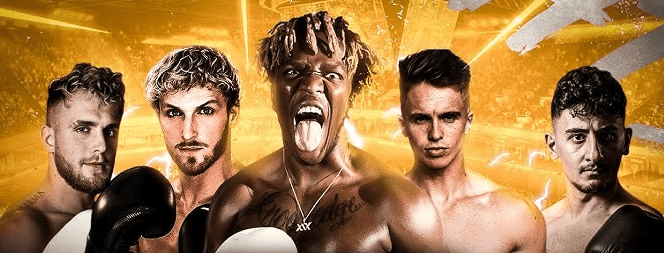
    @Theboxingmadman / @theboxingmadman.bsky.social